With commentry by Swami Shivananda
Author: Krishna
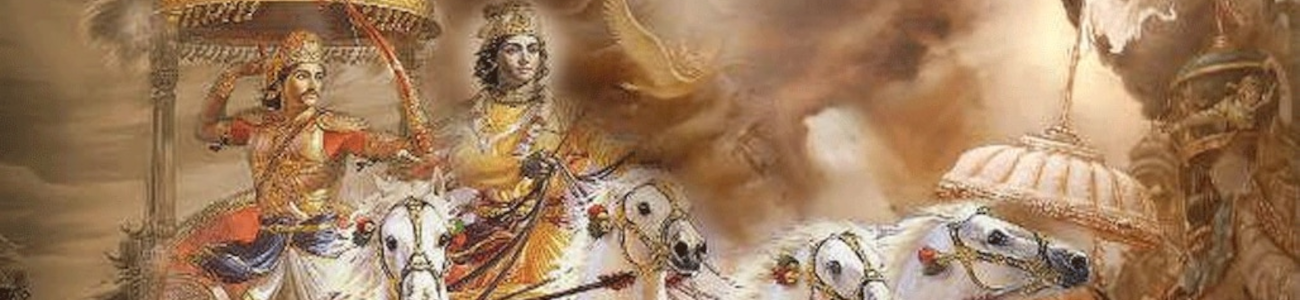
The Bhagavad Gita, often called the "Song of God," is a 700-verse sacred Hindu scripture embedded within the ancient Indian epic, the Mahabharata. It is a philosophical dialogue between the warrior Arjuna and his charioteer, the god Krishna, offering profound guidance on duty, ethics, and spiritual liberation.
Chapter 5: Karma Sanyasa Yoga
The Yoga of Action and Renunciation
Verse #1
अर्जुन उवाच संन्यासं कर्मणां कृष्ण पुनः |
योगं च शंससि यत् श्रेयः एतयोः |
एकं तत् मे ब्रूहि सुनिश्चितम् ||
arjuna uvāca saṃnyāsaṃ karmaṇāṃ kṛṣṇa punaḥ |
yogaṃ ca śaṃsasi yat śreyaḥ etayoḥ |
ekaṃ tat me brūhi suniścitam ||
arjuna uvaca sanyasa karmana ksna puna |
yoga ca sasasi yat sreya etayo |
eka tat me bruhi suniscitam ||
Arjuna said: Renunciation-of-actions, O Krishna, You praise and again YOGA --- performance-of-actions. Tell me conclusively that which is the better of the two.
Verse #2
श्रीभगवानुवाच संन्यासः कर्मयोगः च |
निःश्रेयसकरौ उभौ तयोः तु |
कर्मसंन्यासात् कर्मयोगः विशिष्यते ||
śrībhagavānuvāca saṃnyāsaḥ karmayogaḥ ca |
niḥśreyasakarau ubhau tayoḥ tu |
karmasaṃnyāsāt karmayogaḥ viśiṣyate ||
sribhagavanuvaca sanyasa karmayoga ca |
nisreyasakarau ubhau tayo tu |
karmasanyasat karmayoga visisyate ||
The Blessed Lord said: Renunciation of action and YOGA -of-action both lead to the highest bliss; but of the two , YOGA -of-action is superior to the renunciation-of-action.
Verse #3
ज्ञेयः स नित्यसंन्यासी यः न द्वेष्टि न |
काङ्क्षति निर्द्वन्द्वः हि महाबाहो सुखम् बन्धात् प्रमुच्यते ||
jñeyaḥ sa nityasaṃnyāsī yaḥ na dveṣṭi na |
kāṅkṣati nirdvandvaḥ hi mahābāho sukham bandhāt pramucyate ||
jneya sa nityasanyasi ya na dvesti na |
kanksati nirdvandva hi mahabaho sukham bandhat pramucyate ||
He should be known as a perpetual SAMNYASI who neither hates nor desires; for, free from the pairs-of-opposites, O Mighty-armed, he is easily set free from bondage.
Verse #4
साङ्ख्ययोगौ पृथक् बालाः प्रवदन्ति न पण्डिताः एकम् |
अपि आस्थितः सम्यक् उभयोः विन्दते फलम् ||
sāṅkhyayogau pṛthak bālāḥ pravadanti na paṇḍitāḥ ekaṃ |
api āsthitaḥ samyak ubhayor vindate phalam ||
sankhyayogau pthak bala pravadanti na panita eka |
api asthita samyak ubhayor vindate phalam ||
Children, not the wise, speak of SANKHYA (Knowledge) and YOGA (YOGA -of-action) as distinct; he who is truly established even in one, obtains the fruits of both.
Verse #5
यत् साङ्ख्यैः प्राप्यते स्थानं तत् योगैः अपि गम्यते एकं |
साङ्ख्यं च योगं च यः पश्यति स पश्यति ||
yat sāṅkhyaiḥ prāpyate sthānam tat yogaiḥ api gamyate ekaṃ |
sāṅkhyaṃ ca yogaṃ ca yaḥ paśyati sa paśyati ||
yat sankhyai prapyate sthanam tat yogai api gamyate eka |
sankhya ca yoga ca ya pasyati sa pasyati ||
That place which is reached by the SANKHYAS (JNANIS) is also reached by the YOGINS (KARMA-YOGINS) . He sees who sees SANKHYA and YOGA as one.
Verse #6
संन्यासः तु महाबाहो दुःखम् आप्तुम् अयोगतः |
योगयुक्तः मुनिः ब्रह्म न चिरेण अधिगच्छति ||
saṃnyāsaḥ tu mahābāho duḥkham āptum ayogataḥ |
yogayuktaḥ muniḥ brahma na cireṇa adhigacchati ||
sanyasa tu mahabaho dukham aptum ayogata |
yogayukta muni brahma na cirena adhigacchati ||
But renunciation, O mighty-armed, is hard to attain without YOGA; the YOGA -harmonised man of (steady) contemplation quickly goes to BRAHMAN.
Verse #7
योगयुक्तः विशुद्धात्मा विजितात्मा जितेन्द्रियः सर्वभूतात्मभूतात्मा |
कुर्वन् अपि न लिप्यते ||
yogayuktaḥ viśuddhātmā vijitātmā jitendriyaḥ sarvabhūtātmabhūtātmā |
kurvan api na lipyate ||
yogayukta visuddhatma vijitatma jitendriya sarvabhutatmabhutatma |
kurvan api na lipyate ||
He who is devoted to the Path-of-action, whose mind is quite pure, who has conquered the self, who has subdued his senses, who realises his Self as the Self in all beings, though acting, is not tainted.
Verse #8
न एव किञ्चित् करोमि इति युक्तः मन्येत तत्त्ववित् |
पश्यन् शृण्वन् स्पृशन् जिघ्रन् अश्नन् गच्छन् स्वपन् श्वसन् ||
na eva kiñcit karomi yuktaḥ manyeta tattvavit |
paśyan śṛṇvan spṛśan jighran aśnan gacchan svapan śvasan ||
na eva kincit karomi yukta manyeta tattvavit |
pasyan snvan spsan jighran asnan gacchan svapan svasan ||
I do nothing at all thus would the harmonised knower of Truth think seeing, hearing, touching, smelling, eating, going, sleeping, breathing,
Verse #9
प्रलपन विसृजन गृह्णन् उन्मिषन् निमिषन् अपि |
इन्द्रियाणि इन्द्रियार्थेषु वर्तन्त इति धारयन् ||
pralapan visṛjan gṛhṇan unmiṣan nimiṣan api |
indriyāṇi indriyārtheṣu vartanta dhārayan ||
pralapan visjan ghnan unmisan nimisan api |
indriyani indriyarthesu vartanta dharayan ||
Speaking, letting go, seizing, opening and closing the eyes --- convinced that the senses move among the sense-objects.
Verse #10
ब्रह्मणि आधाय कर्माणि सङ्गं त्यक्त्वा करोति यः |
लिप्यते न स पापेन पद्मपत्रम् इव अम्भसा ||
brahmaṇi ādhāya karmāṇi saṅgam tyaktvā karoti yaḥ |
lipyate na sa pāpena padmapatram iva ambhasā ||
brahmani adhaya karmani sangam tyaktva karoti ya |
lipyate na sa papena padmapatram iva ambhasa ||
He who does actions, offering them to BRAHMAN, abandoning attachment, is not tainted by sin, just as a lotus leaf remains unaffected by the water on it.
Verse #11
कायेन मनसा बुद्ध्या केवलैः इन्द्रियैः अपि |
योगिनः कर्म कुर्वन्ति सङ्गं त्यक्त्वा आत्मशुद्धये ||
kāyena manasā buddhyā kevalaiḥ indriyaiḥ api |
yoginaḥ karma kurvanti saṅgam tyaktvā ātmaśuddhaye ||
kayena manasa buddhya kevalai indriyai api |
yogina karma kurvanti sangam tyaktva atmasuddhaye ||
YOGIS, having abandoned attachment, perform actions merely by the body, mind, intellect and senses, for the purification of the self (ego) .
Verse #12
युक्तः कर्मफलं त्यक्त्वा शान्तिम् आप्नोति नैष्ठिकीम् |
अयुक्तः कामकारेण फले सक्तः निबध्यते ||
yuktaḥ karmaphalaṃ tyaktvā śāntim āpnoti naiṣṭhikīm |
ayuktaḥ kāmakāreṇa phale saktaḥ nibadhyate ||
yukta karmaphala tyaktva santim apnoti naisthikim |
ayukta kamakarena phale sakta nibadhyate ||
The united one (the well-poised or the harmonised) , having abandoned the fruit of action, attains Eternal Peace; the non-united (the unsteady or the unbalanced) , impelled by desire and attached to the fruit, is bound.
Verse #13
सर्वकर्माणि मनसा संन्यस्य आस्ते सुखं वशी नवद्वारे |
पुरे देही नैव कुर्वन् न कारयन् ||
sarvakarmāṇi manasā saṃnyasya āste sukhaṃ vaśī navadvāre |
pure dehī naiva kurvan na kārayan ||
sarvakarmani manasa sanyasya aste sukha vasi navadvare |
pure dehi naiva kurvan na karayan ||
Mentally renouncing all actions and fully self-controlled, the embodied one rests happily in the nine-gate city neither acting nor causing others (body and senses) to act.
Verse #14
न कर्तृत्वं न कर्माणि लोकस्य सृजति |
प्रभुः न कर्मफलसंयोगं स्वभावः तु प्रवर्तते ||
na kartṛtvaṃ na karmāṇi lokasya sṛjati |
prabhuḥ na karmaphalasaṃyogaṃ svabhāvaḥ tu pravartate ||
na karttva na karmani lokasya sjati |
prabhu na karmaphalasayoga svabhava tu pravartate ||
Neither agency nor actions does the Lord create for the world, nor union with the fruits of actions. But it is Nature that acts.
Verse #15
न आदत्ते कस्यचित् पापं न च एव सुकृतं |
विभुः अज्ञानेन आवृतं ज्ञानं तेन मुह्यन्ति जन्तवः ||
na ādatte kasyacit pāpaṃ na ca eva sukṛtaṃ |
vibhuḥ ajñānena āvṛtaṃ jñānaṃ tena muhyanti jantavaḥ ||
na adatte kasyacit papa na ca eva sukta |
vibhu ajnanena avta jnana tena muhyanti jantava ||
The Lord takes neither the demerit not even the merit of any; knowledge is enveloped by ignorance, thereby beings are deluded.
Verse #16
ज्ञानेन तु तत् अज्ञानं येषां नाशितम् आत्मनः |
तेषाम् आदित्यवत् ज्ञानं प्रकाशयति तत् परम् ||
jñānena tu tat ajñānaṃ yeṣām nāśitam ātmanaḥ |
teṣām ādityavat jñānaṃ prakāśayati tat param ||
jnanena tu tat ajnana yesam nasitam atmana |
tesam adityavat jnana prakasayati tat param ||
But to those whose ignorance is destroyed by the Knowledge of the Self, like the sun, to them Knowledge reveals the Supreme (BRAHMAN) .
Verse #17
तद्बुद्धयः तदात्मानः तन्निष्ठाः तत्परायणाः |
गच्छन्ति अपुनरावृत्तिं ज्ञाननिर्धूतकल्मषाः ||
tadbuddhayaḥ tadātmānaḥ tanniṣṭhāḥ tatparāyaṇāḥ |
gacchanti apunarāvṛttiṃ jñānanirdhūtakalmaṣāḥ ||
tadbuddhaya tadatmana tannistha tatparayana |
gacchanti apunaravtti jnananirdhutakalmasa ||
Intellect absorbed in that, their Self being That, established in that, with That for their Supreme Goal, they go whence there is no return, their sins dispelled by Knowledge.
Verse #18
विद्याविनयसम्पन्ने ब्राह्मणे गवि हस्तिनि शुनि च |
एव श्वपाके च पण्डिताः समदर्शिनः ||
vidyāvinayasampanne brāhmaṇe gavi hastini śuni ca |
eva śvapāke ca paṇḍitāḥ samadarśinaḥ ||
vidyavinayasampanne brahmane gavi hastini suni ca |
eva svapake ca panita samadarsina ||
Sages look with an equal eye upon a BRAHMANA endowed with learning and humility, on a cow, on an elephant, and even on a dog and an outcaste.
Verse #19
इह एव तैः जितः सर्गः येषाम् साम्ये स्थितं मनः |
निर्दोषं हि समं ब्रह्म तस्मात् ब्रह्मणि ते स्थिताः ||
iha eva taiḥ jitaḥ sargaḥ yeṣām sāmye sthitaṃ manaḥ |
nirdoṣaṃ hi samaṃ brahma tasmāt brahmaṇi te sthitāḥ ||
iha eva tai jita sarga yesam samye sthita mana |
nirdosa hi sama brahma tasmat brahmani te sthita ||
Even here (in this world) , birth (everything) is overcome by those whose minds rest in equality; BRAHMAN is spotless indeed and equal; therefore they are established in BRAHMAN.
Verse #20
न प्रहृष्येत् प्रियं प्राप्य नोद्विजेत् प्राप्य च |
अप्रियं स्थिरबुद्धिः असम्मूढः ब्रह्मविद् ब्रह्मणि स्थितः ||
na prahṛṣyet priyaṃ prāpya nodvijet prāpya ca |
apriyam sthirabuddhiḥ asammūḍhaḥ brahmavid brahmaṇi sthitaḥ ||
na prahsyet priya prapya nodvijet prapya ca |
apriyam sthirabuddhi asammuha brahmavid brahmani sthita ||
Resting in BRAHMAN, with steady intellect and undeluded, the knower of BRAHMAN neither rejoices on obtaining what is pleasant, nor grieves on obtaining what is unpleasant.
Verse #21
बाह्यस्पर्शेषु असक्तात्मा विन्दति आत्मनि यत् सुखम् |
स ब्रह्मयोगयुक्तात्मा सुखम् अक्षयम् अश्नुते ||
bāhyasparśeṣu asaktātmā vindati ātmani yat sukham |
sa brahmayogayuktātmā sukham akṣayam aśnute ||
bahyasparsesu asaktatma vindati atmani yat sukham |
sa brahmayogayuktatma sukham aksayam asnute ||
With the self unattached to external contacts, he finds happiness in the Self; with the self engaged in the meditation of BRAHMAN, he attains endless happiness.
Verse #22
ये हि संस्पर्शजा भोगाः दुःखयोनयः एव ते |
आद्यन्तवन्तः कौन्तेय न तेषु रमते बुधः ||
ye hi saṃsparśajā bhogāḥ duḥkhayonayaḥ eva te |
ādyantavantaḥ kaunteya na teṣu ramate budhaḥ ||
ye hi sasparsaja bhoga dukhayonaya eva te |
adyantavanta kaunteya na tesu ramate budha ||
The enjoyments that are born of contacts are only generators of pain, for they have a beginning and an end. O son of Kunti, the wise do not rejoice in them.
Verse #23
शक्नोति इह एव यः सोढुं प्राक् शरीरविमोक्षणात् |
कामक्रोधोद्भवम् वегं स युक्तः स सुखी नरः ||
śaknoti iha eva yaḥ soḍhum prāk śarīravimokṣaṇāt |
kāmakrodhodbhavam vegam sa yuktaḥ sa sukhī naraḥ ||
saknoti iha eva ya sohum prak sariravimoksanat |
kamakrodhodbhavam vegam sa yukta sa sukhi nara ||
He who is able, while still here (in this world) to withstand, before the liberation from the body (death) , the impulse born out of desire and anger, he is a YOGIN , he is a happy man.
Verse #24
यः अन्तःसुखः अन्तरारामः तथा अन्तर्ज्योतिः एव |
यः सः योगी ब्रह्मनिर्वाणम् ब्रह्मभूतः अधिगच्छति ||
yaḥ antaḥsukhaḥ antarārāmaḥ tathā antarjyotiḥ eva |
yaḥ saḥ yogī brahmanirvāṇam brahmabhūtaḥ adhigacchati ||
ya antasukha antararama tatha antarjyoti eva |
ya sa yogi brahmanirvanam brahmabhuta adhigacchati ||
He who is happy within, who rejoices within, who is illuminated within, that YOGI attains Absolute Freedom or MOKSHA, himself becomin g BRAHMAN.
Verse #25
लभन्ते ब्रह्मनिर्वाणम् ऋषयः क्षीणकल्मषाः |
छिन्नद्वैधाः यतात्मानः सर्वभूतहिते रताः ||
labhante brahmanirvāṇam ṛṣayaḥ kṣīṇakalmaṣāḥ |
chinnadvaidhāḥ yatātmānaḥ sarvabhūtahite ratāḥ ||
labhante brahmanirvanam saya ksinakalmasa |
chinnadvaidha yatatmana sarvabhutahite rata ||
Those RISHIS obtain Absolute Freedom or MOKSHA --- whose sins have been destroyed, whose dualities are torn asunder, who are self-controlled and intent on the welfare of all beings.
Verse #26
कामक्रोधवियुक्तानां यतीनां यतचेतसाम् अभितः |
ब्रह्मनिर्वाणं वर्तते विदितात्मनाम् ||
kāmakrodhaviyuktānāṃ yatīnām yatacetasām abhitaḥ |
brahmanirvāṇam vartate viditātmanām ||
kamakrodhaviyuktana yatinam yatacetasam abhita |
brahmanirvanam vartate viditatmanam ||
Absolute Freedom (or BRAHMIC Bliss) exists on all sides for those self-controlled ascetics, who are free from desire and anger, who have controlled their thoughts and who have realised the Self.
Verse #27
स्पर्शान् कृत्वा बहि:बाह्यान् चक्षु:च एव अन्तरे |
भ्रुवोः प्राणापानौ समौ कृत्वा नासाभ्यन्तरचारिणौ ||
sparśān kṛtvā bahirbāhyān cakṣuśca eva antare |
bhruvoḥ prāṇāpānau samau kṛtvā nāsābhyantaracāriṇau ||
sparsan ktva bahirbahyan caksusca eva antare |
bhruvo pranapanau samau ktva nasabhyantaracarinau ||
Shutting out (all) external contacts and fixing the gaze (as though) between the eye-brows, equalising the outgoing and incoming breath moving within the nostrils,
Verse #28
यत इन्द्रिय मन बुद्धि मुनिः मोक्षपरायणः विगत इच्छा |
भय क्रोध यः सदा मुक्त एव सः ||
yata indriya mana buddhi muniḥ mokṣaparāyaṇaḥ vigata icchā |
bhaya krodha yaḥ sadā mukta eva saḥ ||
yata indriya mana buddhi muni moksaparayana vigata iccha |
bhaya krodha ya sada mukta eva sa ||
With senses, mind and intellect (ever) controlled, having liberation as his Supreme Goal, free from desire, fear and anger --- the sage is verily liberated for ever.
Verse #29
भोक्तारं |
यज्ञतपसां |
सर्वलोकमहेश्वरम् |
सुहृदं |
सर्वभूतानां ज्ञात्वा मां शान्तिम् ऋच्छति ||
bhoktāram |
yajñatapasām |
sarvalokamaheśvaram |
suhṛdam |
sarvabhūtānāṃ jñātvā māṃ śāntim ṛcchati ||
bhoktaram |
yajnatapasam |
sarvalokamahesvaram |
suhdam |
sarvabhutana jnatva ma santim cchati ||
Knowing Me as Enjoyer of sacrifices and austerities, the Great Lord of all worlds, the friend of all beings, he attains Peace.<br><br>Thus in the Upanishads of the glorious Bhagavad Gita, the science of the Eternal, the scripture of Yoga, the dialogue between Sri Krishna and Arjuna, ends the fifth discourse entitled "The Yoga of Renunciation."