With commentry by Swami Shivananda
Author: Krishna
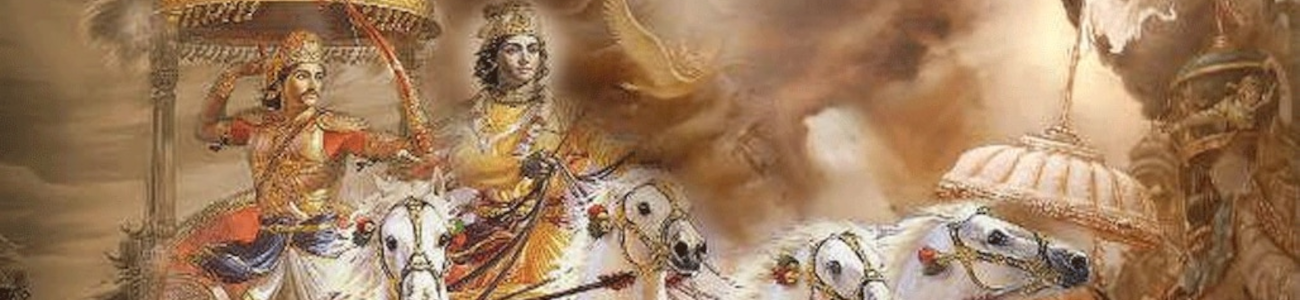
The Bhagavad Gita, often called the "Song of God," is a 700-verse sacred Hindu scripture embedded within the ancient Indian epic, the Mahabharata. It is a philosophical dialogue between the warrior Arjuna and his charioteer, the god Krishna, offering profound guidance on duty, ethics, and spiritual liberation.
Chapter 16: Daivasura Sampad Vibhaga Yoga
The Divine and Demoniac Natures
Verse #1
श्रीभगवान् उवाच अभयम् सत्त्वसंशुद्धिः |
ज्ञानयोगव्यवस्थितिः दानम् दमः च यज्ञः |
च स्वाध्यायः तपः आर्जवम् ||
śrībhagavān uvāca abhayam sattvasaṃśuddhiḥ |
jñānayogavyavasthitiḥ dānam damaḥ ca yajñaḥ |
ca svādhyāyaḥ tapaḥ ārjavam ||
sribhagavan uvaca abhayam sattvasasuddhi |
jnanayogavyavasthiti danam dama ca yajna |
ca svadhyaya tapa arjavam ||
The Blessed Lord said: Fearlessness, purity of heart, steadfastness in the YOGA -of-Knowledge, alms-giving, control of the senses, sacrifice, study of the SHASTRAS, and straightforwardness . . .
Verse #2
अहिंसा सत्यं अक्रोधः त्यागः शान्तिः अपैशुनम् |
दया भूतेषु अलोलुप्त्वं मार्दवम् ह्रीः अचापलम् ||
ahiṃsā satyaṃ akrodhaḥ tyāgaḥ śāntiḥ apaiśunam |
dayā bhūteṣu aloluptvaṃ mārdavam hrīḥ acāpalam ||
ahisa satya akrodha tyaga santi apaisunam |
daya bhutesu aloluptva mardavam hri acapalam ||
Harmlessness, truth, absence of anger, renunciation, peacefulness, absence of crookedness, compassion to beings, non-covetousness, gentleness, modesty, absence of fickle-ness . . .
Verse #3
तेजः क्षमा धृतिः शौचम् अद्रोहः न |
अतिमानिता भवन्ति सम्पदं दैवीम् अभिजातस्य भारत ||
tejaḥ kṣamā dhṛtiḥ śaucam adrohaḥ na |
atimānitā bhavanti sampadam daivīm abhijātasya bhārata ||
teja ksama dhti saucam adroha na |
atimanita bhavanti sampadam daivim abhijatasya bharata ||
Vigour, forgiveness, fortitude, purity, absence of hatred, absence of pride --- these belong to the one born for the Divine Estate, O Bharata.
Verse #4
दम्भः दर्पः अभिमानः च क्रोधः पारुष्यम् एव |
च अज्ञानम् च अभिजातस्य पार्थ सम्पदम् आसुरीम् ||
dambhaḥ darpaḥ abhimānaḥ ca krodhaḥ pāruṣyam eva |
ca ajñānam ca abhijātasya pārtha sampadam āsurīm ||
dambha darpa abhimana ca krodha parusyam eva |
ca ajnanam ca abhijatasya partha sampadam asurim ||
Hypocrisy, arrogance and self-conceit, anger, and also harshness and ignorance, belong to one who is born, O Partha, for a demoniac-Estate.
Verse #5
दैवी सम्पत् विमोक्षाय निबन्धाय आसुरी मता मा |
शुचः सम्पदं दैवीम् अभिजातः असि पाण्डव ||
daivī sampat vimokṣāya nibandhāya āsurī matā mā |
śucaḥ sampadam daivīm abhijātaḥ asi pāṇḍava ||
daivi sampat vimoksaya nibandhaya asuri mata ma |
suca sampadam daivim abhijata asi panava ||
The divine nature is deemed for liberation, the demoniacal for bondage; grieve not, O Pandava, you are born with divine qualities.
Verse #6
द्वौ भूतसर्गौ लोके अस्मिन् दैव आसुर एव च |
दैवः विस्तरशः प्रोक्त आसुरम् पार्थ मे शृणु ||
dvau bhūtasargau loke asmin daiva āsura eva ca |
daivaḥ vistaraśaḥ prokta āsuram pārtha me śṛṇu ||
dvau bhutasargau loke asmin daiva asura eva ca |
daiva vistarasa prokta asuram partha me snu ||
There are two types of beings, in this world, the divine and the demoniacal; the divine have been described at length; hear from Me, O Partha, of the demoniacal.
Verse #7
प्रवृत्तिं च निवृत्तिं च जनाः न विदुः असुराः न |
शौचं न अपि च आचारः न सत्यं तेषु विद्यते ||
pravṛttiṃ ca nivṛttiṃ ca janāḥ na viduḥ asurāḥ na |
śaucaṃ na api ca ācāraḥ na satyaṃ teṣu vidyate ||
pravtti ca nivtti ca jana na vidu asura na |
sauca na api ca acara na satya tesu vidyate ||
The demoniac know not what to do and what to refrain from; neither purity, nor right conduct, nor truth is found in them.
Verse #8
असत्यम् अप्रतिष्ठम् ते जगत् आहुः |
अनिश्वरम् अपरस्परसम्भूतम् किम् अन्यत् कामहैतुकम् ||
asatyam apratiṣṭham te jagat āhuḥ |
anīśvaram aparasparasambhūtam kim anyat kāmahaitukam ||
asatyam apratistham te jagat ahu |
anisvaram aparasparasambhutam kim anyat kamahaitukam ||
They say, the universe is without truth without (moral) basis without a God; not brought about by any regular causal sequence with lust for its cause; what else?
Verse #9
एताम् दृष्टिम् अवष्टभ्य नष्टात्मानः अल्पबुद्धयः |
प्रभवन्ति उग्रकर्माणः क्षयाय जगतः अहिताः ||
etām dṛṣṭim avaṣṭabhya naṣṭātmānaḥ alpabuddhayaḥ |
prabhavanti ugrakarmāṇaḥ kṣayāya jagataḥ ahitāḥ ||
etam dstim avastabhya nastatmana alpabuddhaya |
prabhavanti ugrakarmana ksayaya jagata ahita ||
Holding this view, these ruined souls of small intellect and fierce deeds, come forth as the enemies of the world, for its destruction.
Verse #10
कामम् आश्रित्य दुष्पूरम् दम्भ मान मद अन्विताः |
मोहात् गृहीत्वा असत् ग्राहान् प्रवर्तन्ते अशुचि व्रताः ||
kāmam āśritya duṣpūram dambha māna mada anvitāḥ |
mohāt gṛhītvā asat grāhān pravartante aśuci vratāḥ ||
kamam asritya duspuram dambha mana mada anvita |
mohat ghitva asat grahan pravartante asuci vrata ||
Filled with insatiable desires, full of hypocrisy, pride and arrogance, holding evil ideas through delusion, they work with impure resolves.
Verse #11
चिन्ताम् अपरिमेयाम् च प्रलयान्ताम् उपाश्रिताः |
कामोपभोगपरमाः एतावत् इति निश्चिताः ||
cintām aparimeyām ca pralayāntām upāśritāḥ |
kāmopabhogaparamāḥ etāvat niścitāḥ ||
cintam aparimeyam ca pralayantam upasrita |
kamopabhogaparama etavat niscita ||
Giving themselves over to immeasurable cares ending only with death, regarding gratification of lust as their highest aim, and feeling sure that, that is all (that matters) .
Verse #12
आशापाशशतैः बद्धाः कामक्रोधपरायणाः ईहन्ते |
कामभोगार्थम् अन्यायेन अर्थसञ्चयान् ||
āśāpāśaśataiḥ baddhāḥ kāmakrodhaparāyaṇāḥ īhante |
kāmabhogārtham anyāyena arthasañcayān ||
asapasasatai baddha kamakrodhaparayana ihante |
kamabhogartham anyayena arthasancayan ||
Bound by a hundred ties of hope, given to lust and anger, they do strive to obtain, by unlawful means, hoards of wealth for sensual enjoyments.
Verse #13
इदम् अद्य मया लब्धम् इमम् प्राप्स्ये मनोरथम् इदम् |
अस्ति इदम् अपि मे भविष्यति पुनः धनम् ||
idam adya mayā labdham imam prāpsye manoratham idam |
asti idam api me bhaviṣyati punaḥ dhanam ||
idam adya maya labdham imam prapsye manoratham idam |
asti idam api me bhavisyati puna dhanam ||
This has to-day been gained by me --- this desire I shall obtain --- this is mine --- and this wealth shall also be mine in future.
Verse #14
असौ मया हतः शत्रुः हनिष्ये च अपरान् अपि |
ईश्वरः अहम् अहम् भोगी सिद्धः अहम् बलवान् सुखी ||
asau mayā hataḥ śatruḥ haniṣye ca aparān api |
īśvaraḥ aham aham bhogī siddhaḥ aham balavān sukhī ||
asau maya hata satru hanisye ca aparan api |
isvara aham aham bhogi siddha aham balavan sukhi ||
That enemy has been slain by me --- and others also shall I destroy --- I am the Lord --- I am the enjoyer --- I am perfect powerful and happy.
Verse #15
आढ्यः अभिजनवान् अस्मि कः अन्यः अस्ति सदृशः |
मया यक्ष्ये दास्यामि मोदिष्य इति अज्ञानविमोहिताः ||
āḍhyaḥ abhijanavān asmi kaḥ anyaḥ asti sadṛśaḥ |
mayā yakṣye dāsyāmi modiṣya ajñānavimohitāḥ ||
ahya abhijanavan asmi ka anya asti sadsa |
maya yaksye dasyami modisya ajnanavimohita ||
I am rich and well-born --- Who else is equal to me? --- I will give (alms money) --- I will rejoice. Thus are they deluded by ignorance.
Verse #16
अनेकचित्तविभ्रान्ता मोहजालसमावृताः प्रसक्ताः कामभोगेषु |
पतन्ति नरके अशुचौ ||
anekacittavibhrāntā mohajālasamāvṛtāḥ prasaktāḥ kāmabhogeṣu |
patanti narake aśucau ||
anekacittavibhranta mohajalasamavta prasakta kamabhogesu |
patanti narake asucau ||
Bewildered by many a fancy, entangled in the snare of delusion, addicted to the gratification of lust, they fall into a foul hell.
Verse #17
आत्मसम्भाविताः स्तब्धाः धनमानमदान्विताः यजन्ते |
नामयज्ञैः ते दम्भेन अविधिपूर्वकम् ||
ātmasambhāvitāḥ stabdhāḥ dhanamānamadānvitāḥ yajante |
nāmayajñaiḥ te dambhena avidhipūrvakam ||
atmasambhavita stabdha dhanamanamadanvita yajante |
namayajnai te dambhena avidhipurvakam ||
Self-conceited, stubborn, filled with pride and drunk with wealth, they perform sacrifices in name (only) out of ostentation, contrary to scriptural ordinance.
Verse #18
अहङ्कारं बलं दर्पं कामं क्रोधं च |
संश्रिताः माम् आत्मपरदेहेषु प्रद्विषन्तः अभ्यसूयकाः ||
ahaṅkāraṃ balaṃ darpaṃ kāmaṃ krodhaṃ ca |
saṃśritāḥ mām ātmaparadeheṣu pradviṣantaḥ abhyasūyakāḥ ||
ahankara bala darpa kama krodha ca |
sasrita mam atmaparadehesu pradvisanta abhyasuyaka ||
Given to egoism, power, haughtiness, lust and anger, these malicious people hate Me in their own bodies, and in those of others.
Verse #19
तान् अहम् द्विषतः क्रूरान् संसारेषु नराधमान् |
क्षिपामि अजस्रम् अशुभान् आसुरीषु एव योनिṣu ||
tān aham dviṣataḥ krūrān saṃsāreṣu narādhamān |
kṣipāmi ajasram aśubhān āsurīṣu eva yoniṣu ||
tan aham dvisata kruran sasaresu naradhaman |
ksipami ajasram asubhan asurisu eva yonisu ||
These cruel haters, worst among men in the world, I hurl these evil-doers for ever into the wombs of the demons only.
Verse #20
आसुरीं योनिम् आपन्नाः मूढाः जन्मनि जन्मनि माम् |
अप्राप्य एव कौन्तेय ततः यान्ति अधमाम् गतिम् ||
āsurīm yonim āpannāḥ mūḍhāḥ janmani janmani mām |
aprāpya eva kaunteya tataḥ yānti adhamām gatim ||
asurim yonim apanna muha janmani janmani mam |
aprapya eva kaunteya tata yanti adhamam gatim ||
Entering into demoniacal wombs, and deluded, not attaining to Me, birth after birth, they thus fall, O Kaunteya, into a condition still lower than that.
Verse #21
त्रिविधं नरकस्य इदं द्वारं नाशनम् आत्मनः कामः |
क्रोधः तथा लोभः तस्मात् एतत् त्रयम् त्यजेत् ||
trividhaṃ narakasya idaṃ dvāraṃ nāśanam ātmanaḥ kāmaḥ |
krodhaḥ tathā lobhaḥ tasmāt etat trayam tyajet ||
trividha narakasya ida dvara nasanam atmana kama |
krodha tatha lobha tasmat etat trayam tyajet ||
These three are the gates of hell, destructive of the Self --- lust, anger and greed; therefore, one should abandon these three.
Verse #22
एतैः विमुक्तः कौन्तेय तमोद्वारैः त्रिभिः नरः आचरति |
आत्मनः श्रेयः ततः याति पराम् गतिम् ||
etaiḥ vimuktaḥ kaunteya tamodvāraiḥ tribhiḥ naraḥ ācarati |
ātmanaḥ śreyaḥ tataḥ yāti parām gatim ||
etai vimukta kaunteya tamodvarai tribhi nara acarati |
atmana sreya tata yati param gatim ||
A man who is liberated from these three gates to darkness, O Kaunteya, practises what is good for him and thus goes to the Supreme Goal.
Verse #23
यः शास्त्रविधिमुत्सृज्य वर्तते कामकारतः न स सिद्धिम् |
अवाप्नोति न सुखम् न पराम् गतिम् ||
yaḥ śāstravidhimutsṛjya vartate kāmakārataḥ na sa siddhim |
avāpnoti na sukham na parām gatim ||
ya sastravidhimutsjya vartate kamakarata na sa siddhim |
avapnoti na sukham na param gatim ||
He who, having cast aside the ordinance of the scriptures, acts under the impulse of desire, attains neither perfection, nor happiness, nor the Supreme Goal.
Verse #24
तस्मात् शास्त्रं प्रमाणं ते |
कार्याकार्यव्यवस्थितौ ज्ञात्वा शास्त्रविधानोक्तं कर्म कर्तुम् |
इह अर्हसि ॐ तत्सत् |
इति श्रीमद्भगवद्गीतासूपनिषत्सु ब्रह्मविद्यायां योगशास्त्रे श्रीकृष्णार्जुनसंवादे |
दैवासुरसम्पद्विभागयोगः नाम षोडशः अध्यायः ||
tasmāt śāstraṃ pramāṇaṃ te |
kāryākāryavyavasthitau jñātvā śāstravidhānoktaṃ karma kartum |
iha arhasi oṃ tatsat |
śrīmadbhagavadgītāsūpaniṣatsu brahmavidyāyāṃ yogaśāstre śrīkṛṣṇārjunasaṃvāde |
daivāsurasampadvibhāgayogaḥ nāma ṣoḍaśaḥ adhyāyaḥ ||
tasmat sastra pramana te |
karyakaryavyavasthitau jnatva sastravidhanokta karma kartum |
iha arhasi o tatsat |
srimadbhagavadgitasupanisatsu brahmavidyaya yogasastre sriksnarjunasavade |
daivasurasampadvibhagayoga nama soasa adhyaya ||
Therefore, let the Scriptures be your authority, in determining what ought to be done and what ought not to be done. Having known what is said in the commandments of the Scripture, you should act here (in this world) .<br><br>Thus in the Upanishads of the glorious Bhagavad Gita, the science of the Eternal, the scripture of Yoga, the dialogue between Sri Krishna and Arjuna, ends the sixteenth discourse entitled "The Yoga of Divine and Demonic Qualities."