With commentry by Swami Shivananda
Author: Krishna
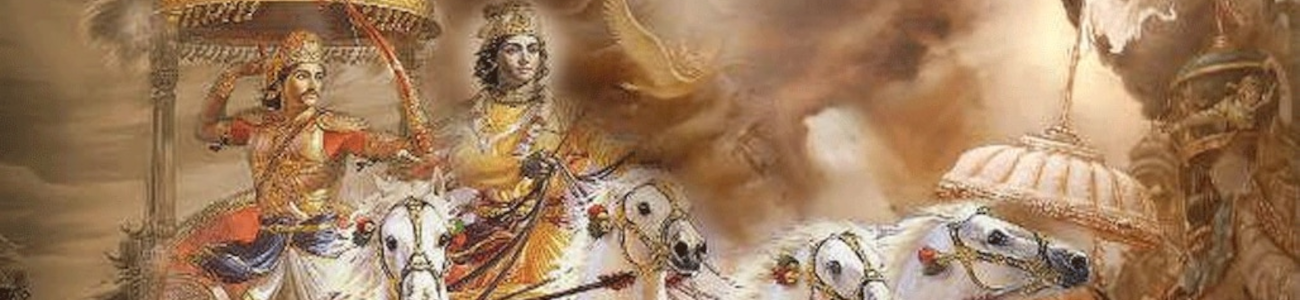
The Bhagavad Gita, often called the "Song of God," is a 700-verse sacred Hindu scripture embedded within the ancient Indian epic, the Mahabharata. It is a philosophical dialogue between the warrior Arjuna and his charioteer, the god Krishna, offering profound guidance on duty, ethics, and spiritual liberation.
Chapter 15: Purushottama Yoga
The Yoga of the Supreme Person
Verse #1
श्रीभगवानुवाच ऊर्ध्वमूलम् अधःशाखम् अश्वत्थम् प्राहुः |
अव्ययम् छन्दांसि यस्यम् पर्णानि यः |
तम् वेद सः वेदवित् ||
śrībhagavānuvāca ūrdhvamūlam adhaḥśākham aśvattham prāhuḥ |
avyayam chandāṃsi yasya parṇāni yaḥ |
tam veda saḥ vedavit ||
sribhagavanuvaca urdhvamulam adhasakham asvattham prahu |
avyayam chandasi yasya parnani ya |
tam veda sa vedavit ||
The Blessed Lord said: They (wise people) speak of the indestructible ASHWATTHA tree as having its roots above and branches below, whose leaves are the VEDAS; he who knows it, is alone a Veda-knower.
Verse #2
अधः च ऊर्ध्वं प्रसृताः |
तस्य शाखाः गुणप्रवृद्धाः |
विषयप्रवालाः अधः च मूलानि |
अनुसन्ततानि कर्मानुबन्धीनि मनुष्यलोके ||
adhaḥ ca ūrdhvaṃ prasṛtāḥ |
tasya śākhāḥ guṇapravṛddhāḥ |
viṣayapravālāḥ adhaḥ ca mūlāni |
anusantatāni karmānubandhīni manuṣyaloke ||
adha ca urdhva prasta |
tasya sakha gunapravddha |
visayapravala adha ca mulani |
anusantatani karmanubandhini manusyaloke ||
Below and above are spread its branches, nourished by the GUNAS; sense-objects are its buds; and below, in the world of men, stretch forth the roots, originating in action.
Verse #3
न रूपम् अस्य इह तथा |
उपलभ्यते न अन्तः न च |
आदि न च सम्प्रतिष्ठा अश्वत्थम् |
एनम् सुविरूढमूलम् असङ्गशस्त्रेण दृढेन छित्त्वा ||
na rūpam asya iha tathā |
upalabhyate na antaḥ na ca |
ādi na ca sampratiṣṭhā aśvattham |
enam suvirūḍhamūlam asaṅgaśastreṇa dṛḍhena chittvā ||
na rupam asya iha tatha |
upalabhyate na anta na ca |
adi na ca sampratistha asvattham |
enam suviruhamulam asangasastrena dhena chittva ||
Its form is not perceived here as such, neither its end, nor its origin, nor its foundation, nor its resting-place; having cut asunder this firm-rooted ASHWATTHA -tree with the strong axe of non-attachment. . .
Verse #4
ततः पदं तत् परिमार्गितव्यं यस्मिन्गता |
न निवर्तन्ति भूयः तम् |
एव च आद्यं पुरुषं प्रपद्ये |
यतः प्रवृत्तिः प्रसृता पुराणी ||
tataḥ padaṃ tat parimārgitavyaṃ yasmin gatā |
na nivartanti bhūyaḥ tam |
eva ca ādyaṃ puruṣaṃ prapadye |
yataḥ pravṛttiḥ prasṛtā purāṇī ||
tata pada tat parimargitavya yasmin gata |
na nivartanti bhuya tam |
eva ca adya purusa prapadye |
yata pravtti prasta purani ||
Then that Goal should be sought after, where having gone, none returns again. I seek refuge in that primeval PURUSHA from which streamed forth, from time immemorial, all activity (or energy) .
Verse #5
निर्मानमोहा |
जितसङ्गदोषा |
अध्यात्मनित्या |
विनिवृत्तकामाः द्वन्द्वैः विमुक्ताः सुखदुःखसंज्ञैः गच्छन्ति अमूढाः पदमव्ययं तत् ||
nirmānamohā |
jitasaṅgadoṣā |
adhyātmanityā |
vinivṛttakāmāḥ dvandvaiḥ vimuktāḥ sukhaduḥkhasaṃjñaiḥ gacchanti amūḍhāḥ padamavyayaṃ tat ||
nirmanamoha |
jitasangadosa |
adhyatmanitya |
vinivttakama dvandvai vimukta sukhadukhasajnai gacchanti amuha padamavyaya tat ||
Free from pride and delusion, victorious over the evil of attachment, dwelling constantly in the Self, their desires having completely retired, freed from the pairs-of-opposites --- such as pleasure and pain --- the undeluded reach that Goal Eternal.
Verse #6
न तत् भासयते सूर्यः न शशाङ्कः न पावकः |
यत् गत्वा न निवर्तन्ते तत् धाम परमम् मम ||
na tat bhāsayate sūryaḥ na śaśāṅkaḥ na pāvakaḥ |
yat gatvā na nivartante tat dhāma paramam mama ||
na tat bhasayate surya na sasanka na pavaka |
yat gatva na nivartante tat dhama paramam mama ||
Nor does the Sun shine there, nor the moon, nor fire; to which having gone they return not; that is My Supreme Abode.
Verse #7
मम एव अंशः जीवलोके जीवभूतः |
सनातनः मनःषष्ठानि इन्द्रियाणि प्रकृतिस्थानि कर्षति ||
mama eva aṃśaḥ jīvaloke jīvabhūtaḥ |
sanātanaḥ manaḥṣaṣṭhāni indriyāṇi prakṛtisthāni karṣati ||
mama eva asa jivaloke jivabhuta |
sanatana manasasthani indriyani praktisthani karsati ||
An eternal portion of Myself, having become a living soul in the world of life, and abiding in PRAKRITI, draws (to itself) the (five) senses, with mind for the sixth.
Verse #8
शरीरं यत् अवाप्नोति यत् च अपि उत्क्रामति ईश्वरः |
गृहीत्वा एतानि संयाति वायुः गन्धान् इव आशयात् ||
śarīraṃ yat avāpnoti yat ca api utkrāmati īśvaraḥ |
gṛhītvā etāni saṃyāti vāyuḥ gandhān iva āśayāt ||
sarira yat avapnoti yat ca api utkramati isvara |
ghitva etani sayati vayu gandhan iva asayat ||
When the Lord obtains a body, and when He leaves it, He takes these and goes (with them) as the wind takes the scents from their seats (the flowers) .
Verse #9
श्रोत्रं चक्षुः स्पर्शनं च रसनं घ्राणम् एव |
च अधिष्ठाय मनः च अयम् विषयान् उपसेवते ||
śrotram cakṣuḥ sparśanam ca rasanam ghrāṇam eva |
ca adhiṣṭhāya manaḥ ca ayam viṣayān upasevate ||
srotram caksu sparsanam ca rasanam ghranam eva |
ca adhisthaya mana ca ayam visayan upasevate ||
Presiding over the ear, the eye, the touch, the taste and the smell, so also the mind, He enjoys the sense-objects.
Verse #10
उत्क्रामन्तं स्थितं वा अपि भुञ्जानं वा |
गुणान्वितम् विमूढाः न अनुपश्यन्ति पश्यन्ति ज्ञानचक्षुषः ||
utkrāmantaṃ sthitaṃ vā api bhuñjānaṃ vā |
guṇānvitam vimūḍhāḥ na anupaśyanti paśyanti jñānacakṣuṣaḥ ||
utkramanta sthita va api bhunjana va |
gunanvitam vimuha na anupasyanti pasyanti jnanacaksusa ||
Him, who departs, stays and enjoys, who is united with GUNAS, the deluded do not see; but they do behold Him, who posses the eye-of-Knowledge.
Verse #11
यतन्तः योगिनः च एनम् पश्यन्ति आत्मनि अवस्थितम् |
यतन्तः अपि अकृतात्मानः न एनम् पश्यन्ति अचेतसः ||
yatantaḥ yoginaḥ ca enam paśyanti ātmani avasthitam |
yatantaḥ api akṛtātmānaḥ na enam paśyanti acetasaḥ ||
yatanta yogina ca enam pasyanti atmani avasthitam |
yatanta api aktatmana na enam pasyanti acetasa ||
The seekers striving (for Perfection) behold Him dwelling in the Self; but, the unrefined and unitelligent, even though striving, see Him not.
Verse #12
यत् आदित्यगतं तेजः जगत् भासयते अखिलम् यत् चन्द्रमसि |
यत् च अग्नौ तत् तेजः विद्धि मामकम् ||
yat ādityagataṃ tejaḥ jagat bhāsayate akhilam yat candramasi |
yat ca agnau tat tejaḥ viddhi māmakam ||
yat adityagata teja jagat bhasayate akhilam yat candramasi |
yat ca agnau tat teja viddhi mamakam ||
That Light which is residing in the Sun and which illumines the whole world, and that which is in the moon and in the fire --- know that Light to be Mine.
Verse #13
गाम् आविश्य च भूतानि धारयामि अहम् ओजसा |
पुष्णामि च औषधीः सर्वाः सोमः भूत्वा रसात्मकः ||
gām āviśya ca bhūtāni dhārayāmi aham ojasā |
puṣṇāmi ca auṣadhīḥ sarvāḥ somaḥ bhūtvā rasātmakaḥ ||
gam avisya ca bhutani dharayami aham ojasa |
pusnami ca ausadhi sarva soma bhutva rasatmaka ||
Permeating the earth I support all beings by (My) energy; and having become the liquid moon, I nourish all herbs.
Verse #14
अहम् वैश्वानरः भूत्वा प्राणिनाम् देहम् |
आश्रितः प्राणापानसमायुक्तः पचामि अन्नम् चतुर्विधम् ||
aham vaiśvānaraḥ bhūtvā prāṇinām deham |
āśritaḥ prāṇāpānasamāyuktaḥ pacāmi annam caturvidham ||
aham vaisvanara bhutva praninam deham |
asrita pranapanasamayukta pacami annam caturvidham ||
Having become (the Fire) VAISHVAANARA , I abide in the body of beings, and associated with PRANA and APANA, digest the four-fold food.
Verse #15
सर्वस्य च अहम् हृदि सन्निविष्टः |
मत्तः स्मृतिः ज्ञानम् अपोहनं च |
वेदैः च सर्वैः अहम् एव वेद्यः |
वेदान्तकृत् वेदविद् एव च अहम् ||
sarvasya ca aham hṛdi sanniviṣṭaḥ |
mattaḥ smṛtiḥ jñānam apohanaṃ ca |
vedaiḥ ca sarvaiḥ aham eva vedyaḥ |
vedāntakṛt vedavid eva ca aham ||
sarvasya ca aham hdi sannivista |
matta smti jnanam apohana ca |
vedai ca sarvai aham eva vedya |
vedantakt vedavid eva ca aham ||
And I am seated in the hearts of all, from Me are memory, knowledge, as well as their absence. I am verily that which has to be known in all the VEDAS; I am indeed the author of VEDANTA, and, the knower of the VEDAS am I.
Verse #16
द्वौ इमौ पुरुषौ लोके क्षरः च अक्षर एव |
च क्षरः सर्वाणि भूतानि कूटस्थः अक्षर उच्यते ||
dvau imau puruṣau loke kṣaraḥ ca akṣara eva |
ca kṣaraḥ sarvāṇi bhūtāni kūṭasthaḥ akṣara ucyate ||
dvau imau purusau loke ksara ca aksara eva |
ca ksara sarvani bhutani kutastha aksara ucyate ||
Two PURUSHAS are there in this world, the Perishable and the Imperishable. All beings are the Perishable and the KOOTASTHAH is called the Imperishable.
Verse #17
उत्तमः पुरुषः तु अन्यः परमात्मा इति उदाहृतः |
यः लोकत्रयम् आविश्य बिभर्ति अव्ययः ईश्वरः ||
uttamaḥ puruṣaḥ tu anyaḥ paramātmā udāhṛtaḥ |
yaḥ lokatrayam āviśya bibharti avyayaḥ īśvaraḥ ||
uttama purusa tu anya paramatma udahta |
ya lokatrayam avisya bibharti avyaya isvara ||
But distinct is the Supreme PURUSHA called the Highest Self, the Indestructible Lord, who, pervading the three worlds (waking, dream and deep-sleep) , sustains them.
Verse #18
यस्मात् क्षरम् अतीतः अहम् अक्षरात् अपि च उत्तमः |
अतः अस्मि लोके वेदे च प्रथितः पुरुषोत्तमः ||
yasmāt kṣaram atītaḥ aham akṣarāt api ca uttamaḥ |
ataḥ asmi loke vede ca prathitaḥ puruṣottamaḥ ||
yasmat ksaram atita aham aksarat api ca uttama |
ata asmi loke vede ca prathita purusottama ||
As I transcend the perishable and I am even Higher than the Imperishable, I am declared as the PURUSHOTTAMA (the Highest -PURUSHA) in the world and in the VEDAS.
Verse #19
यः माम् एवम् असम्मूढः जानाति पुरुषोत्तमम् |
सः सर्ववित् भजति माम् सर्वभावेन भारत ||
yaḥ mām evam asammūḍhaḥ jānāti puruṣottamam |
saḥ sarvavit bhajati mām sarvabhāvena bhārata ||
ya mam evam asammuha janati purusottamam |
sa sarvavit bhajati mam sarvabhavena bharata ||
He who undeluded, thus knows Me, the Supreme PURUSHA , he, all-knowing, worships Me with his whole being, O Bharata.
Verse #20
इति गुह्यतमं शास्त्रम् इदम् उक्तं |
मया अनघ एतत् बुद्ध्वा बुद्धिमान् स्यात् |
कृतकृत्यः च भारत ॐ तत् |
सत् इति श्रीमद्भगवद्गीतासूपनिषत्सु ब्रह्मविद्यायां योगशास्त्रे श्रीकृष्णार्जुन |
संवादे पुरुषोत्तमयोगः नाम पञ्चदशः अध्यायः ||
guhyatamam śāstram idam uktam |
mayā anagha etat buddhvā buddhimān syāt |
kṛtakṛtyaḥ ca bhārata oṃ tat |
sat śrīmadbhagavadgītāsūpaniṣatsu brahmavidyāyāṃ yogaśāstre śrīkṛṣṇārjuna |
saṃvāde puruṣottamayogaḥ nāma pañcadaśaḥ adhyāyaḥ ||
guhyatamam sastram idam uktam |
maya anagha etat buddhva buddhiman syat |
ktaktya ca bharata o tat |
sat srimadbhagavadgitasupanisatsu brahmavidyaya yogasastre sriksnarjuna |
savade purusottamayoga nama pancadasa adhyaya ||
Thus, this most secret science (teaching) , has been taught by Me, O sinless one. On knowing this (a man) becomes wise, and all his duties are accomplished, O Bharata.<br><br>Thus in the Upanishads of the glorious Bhagavad Gita, the science of the Eternal, the scripture of Yoga, the dialogue between Sri Krishna and Arjuna, ends the fifteenth discourse entitled "The Yoga of the Supreme Person."