With commentry by Swami Shivananda
Author: Krishna
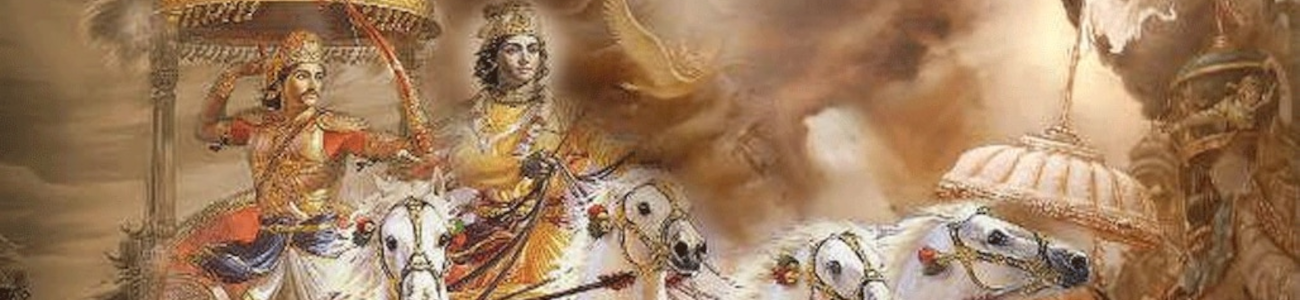
The Bhagavad Gita, often called the "Song of God," is a 700-verse sacred Hindu scripture embedded within the ancient Indian epic, the Mahabharata. It is a philosophical dialogue between the warrior Arjuna and his charioteer, the god Krishna, offering profound guidance on duty, ethics, and spiritual liberation.
Chapter 14: Gunatraya Vibhaga Yoga
The Three Modes of Material Nature
Verse #1
श्रीभगवानुवाच परं भूयः प्रवक्ष्यामि |
ज्ञानानां ज्ञानमुत्तमम् यज्ज्ञात्वा मुनयः सर्वे |
परां सिद्धिम् इतो गताः ||
śrībhagavānuvāca paraṃ bhūyaḥ pravakṣyāmi |
jñānānāṃ jñānamuttamam yajjñātvā munayaḥ sarve |
parāṃ siddhim ito gatāḥ ||
sribhagavanuvaca para bhuya pravaksyami |
jnanana jnanamuttamam yajjnatva munaya sarve |
para siddhim ito gata ||
The Blessed Lord said: I will again declare (to you) that Supreme Knowledge, the best of all knowledges, having known which, all the sages have attained Supreme Perfection after this life.
Verse #2
इदं ज्ञानम् उपाश्रित्य मम साधर्म्यम् आगताः सर्गे |
अपि न उपजायन्ते प्रलये न व्यथन्ति च ||
idaṃ jñānam upāśritya mama sādharmyam āgatāḥ sarge |
api na upajāyante pralaye na vyathanti ca ||
ida jnanam upasritya mama sadharmyam agata sarge |
api na upajayante pralaye na vyathanti ca ||
They who, having refuge in this Knowledge have attained to My Being, are neither born at the time of Creation, nor are they disturbed at the time of dissolution.
Verse #3
मम योनिः महद् ब्रह्म तस्मिन् गर्भम् दधामि |
अहम् सम्भवः सर्वभूतानाम् ततः भवति भारत ||
mama yoniḥ mahad brahma tasmin garbham dadhāmi |
aham sambhavaḥ sarvabhūtānām tataḥ bhavati bhārata ||
mama yoni mahad brahma tasmin garbham dadhami |
aham sambhava sarvabhutanam tata bhavati bharata ||
My womb is the great BRAHMAN (MULA PRAKRITI); in that I place the germ; from which, O Bharata, is the birth of all beings.
Verse #4
सर्वयोनिषु कौन्तेय मूर्तयः सम्भवन्ति याः तासां |
ब्रह्म महद्योनिः अहम् बीजप्रदः पिता ||
sarvayoniṣu kaunteya mūrtayaḥ sambhavanti yāḥ tāsāṃ |
brahma mahadyoniḥ aham bījapradaḥ pitā ||
sarvayonisu kaunteya murtaya sambhavanti ya tasa |
brahma mahadyoni aham bijaprada pita ||
Whatever forms are produced, O Kaunteya, in all the wombs whatsoever, the great BRAHMA is their womb, and I the seed-giving Father.
Verse #5
सत्त्वं रजः तमः इति गुणाः प्रकृतिसम्भवाः |
निबध्नन्ति महाबाहो देहे देहिनम् अव्ययम् ||
sattvaṃ rajaḥ tamaḥ guṇāḥ prakṛtisambhavāḥ |
nibadhnanti mahābāho dehe dehinam avyayam ||
sattva raja tama guna praktisambhava |
nibadhnanti mahabaho dehe dehinam avyayam ||
Purity, passion, and inertia --- these qualities (GUNAS) , O! mighty-armed, born of PRAKRITI bind the Indestructible Embodied one fast in the body.
Verse #6
तत्र सत्त्वं निर्मलत्वात् प्रकाशकम् अनामयम् |
सुखसङ्गेन बध्नाति ज्ञानसङ्गेन च अनघ ||
tatra sattvaṃ nirmalatvāt prakāśakam anāmayam |
sukhasaṅgena badhnāti jñānasaṅgena ca anagha ||
tatra sattva nirmalatvat prakasakam anamayam |
sukhasangena badhnati jnanasangena ca anagha ||
Of these, SATTWA which because of its stainlessness is luminous and healthy (unobstructive) . It binds by (creating) attachment to happiness and attachment to knowledge O sinless one.
Verse #7
रजः रागात्मकम् विद्धि तृष्णा सङ्ग समुद्भवम् |
तत् निबध्नाति कौन्तेय कर्मसङ्गेन देहिनम् ||
rajaḥ rāgātmakaṃ viddhi tṛṣṇā saṅga samudbhavam |
tat nibadhnāti kaunteya karmasaṅgena dehinam ||
raja ragatmaka viddhi tsna sanga samudbhavam |
tat nibadhnati kaunteya karmasangena dehinam ||
Know thou RAJAS (to be) of the nature of passion the source of thirst and attachment; it binds fast O Kaunteya the embodied one by attachment to action.
Verse #8
तमः तु अज्ञानजम् विद्धि मोहनम् |
सर्वदेहिनाम् प्रमादालस्यनिद्राभिः तत् निबध्नाति भारत ||
tamaḥ tu ajñānajam viddhi mohanam |
sarvadehinām pramādālasyanidrābhiḥ tat nibadhnāti bhārata ||
tama tu ajnanajam viddhi mohanam |
sarvadehinam pramadalasyanidrabhi tat nibadhnati bharata ||
But, know thou TAMAS is born of ignorance, deluding all embodied beings, it binds fast, O Bharata, by heedless-ness, indolence and sleep.
Verse #9
सत्त्वं सुखे सञ्जयति रजः कर्मणि भारत ज्ञानम् |
आवृत्य तु तमः प्रमादे सञ्जयति उत ||
sattvaṃ sukhe sañjayati rajaḥ karmaṇi bhārata jñānam |
āvṛtya tu tamaḥ pramāde sañjayati uta ||
sattva sukhe sanjayati raja karmani bharata jnanam |
avtya tu tama pramade sanjayati uta ||
ATTWA attaches to happiness, RAJAS to action, O Bharata, while TAMAS, verily, shrouding knowledge, attaches to heedlessness.
Verse #10
रजः तमः च अभिभूय सत्त्वं भवति भारत रजः |
सत्त्वं तमः च एव तमः सत्त्वं रजः तथा ||
rajaḥ tamaḥ ca abhibhūya sattvaṃ bhavati bhārata rajaḥ |
sattvaṃ tamaḥ ca eva tamaḥ sattvaṃ rajaḥ tathā ||
raja tama ca abhibhuya sattva bhavati bharata raja |
sattva tama ca eva tama sattva raja tatha ||
Now SATTWA rises (prevails) , O Bharata, having over-powered RAJAS and inertia (TAMAS); now RAJAS, having over-powered SATTWA and inertia; and inertia (TAMAS) , having over-powered SATTWA and RAJAS.
Verse #11
सर्वद्वारेषु देहे अस्मिन् प्रकाश उपजायते ज्ञानं यदा |
तदा विद्यात् विवृद्धं सत्त्वम् इति उत ||
sarvadvāreṣu dehe asmin prakāśa upajāyate jñānaṃ yadā |
tadā vidyāt vivṛddhaṃ sattvam uta ||
sarvadvaresu dehe asmin prakasa upajayate jnana yada |
tada vidyat vivddha sattvam uta ||
When, through every gate (sense) in this body, the light-of-intelligence shines, then it may be known that SATTWA is predominant.
Verse #12
लोभः प्रवृत्तिः आरम्भः कर्मणाम् अशमः स्पृहा |
रजसि एतानि जायन्ते विवृद्धे भरतर्षभ ||
lobhaḥ pravṛttiḥ ārambhaḥ karmaṇām aśamaḥ spṛhā |
rajasi etāni jāyante vivṛddhe bharatarṣabha ||
lobha pravtti arambha karmanam asama spha |
rajasi etani jayante vivddhe bharatarsabha ||
Greed, activity, undertaking of actions, restless-ness longing --- these arise when RAJAS is predominant, O best in the Bharata family.
Verse #13
अप्रकाशः अप्रवृत्तिः च प्रमादः मोहः एव |
च तमसि एतानि जायन्ते विवृद्धे कुरुनन्दन ||
aprakāśaḥ apravṛttiḥ ca pramādaḥ mohaḥ eva |
ca tamasi etāni jāyante vivṛddhe kurunandana ||
aprakasa apravtti ca pramada moha eva |
ca tamasi etani jayante vivddhe kurunandana ||
Darkness, inertness, heedlessness and delusion --- these arise when TAMAS is predominant, O descendant-of-Kuru.
Verse #14
यदा सत्त्वे प्रवृद्धे तु प्रलयम् याति |
देहभृत् तदा उत्तमविदाम् लोकान् अमलान् प्रतिपद्यते ||
yadā sattve pravṛddhe tu pralayam yāti |
dehabhṛt tadā uttamavidām lokān amalān pratipadyate ||
yada sattve pravddhe tu pralayam yati |
dehabht tada uttamavidam lokan amalan pratipadyate ||
If the embodied one meets with death when SATTWA is predominant, then he attains to the spotless worlds of the Knowers of the Highest.
Verse #15
रजसि प्रलयम् गत्वा कर्मसङ्गिषु जायते |
तथा प्रलीनः तमसि मूढयोनिषु जायते ||
rajasi pralayam gatvā karmasaṅgiṣu jāyate |
tathā pralīnaḥ tamasi mūḍhayoniṣu jāyate ||
rajasi pralayam gatva karmasangisu jayate |
tatha pralina tamasi muhayonisu jayate ||
Meeting death in RAJAS, he is born among those attached to action; and dying in TAMAS, he is born in the womb of the senseless.
Verse #16
कर्मणः सुकृतस्य आहुः सात्त्विकं निर्मलं फलम् रजसः |
तु फलं दुःखम् अज्ञानं तमसः फलम् ||
karmaṇaḥ sukṛtasya āhuḥ sāttvikaṃ nirmalaṃ phalam rajasaḥ |
tu phalam duḥkham ajñānaṃ tamasaḥ phalam ||
karmana suktasya ahu sattvika nirmala phalam rajasa |
tu phalam dukham ajnana tamasa phalam ||
The fruit of good action, they say, is SATTVIC and pure; verily, the fruit of RAJAS is pain, and the fruit of TAMAS is ignorance.
Verse #17
सत्त्वात् सञ्जायते ज्ञानं रजसः लोभ एव च |
प्रमादमोहौ तमसः भवतः अज्ञानम् एव च ||
sattvāt sañjāyate jñānaṃ rajasaḥ lobha eva ca |
pramādamohau tamasaḥ bhavataḥ ajñānam eva ca ||
sattvat sanjayate jnana rajasa lobha eva ca |
pramadamohau tamasa bhavata ajnanam eva ca ||
Knowledge arises from SATTWA, greed from RAJAS, heedlessness, delusion and also ignorance arise from TAMAS.
Verse #18
ऊर्ध्वम् गच्छन्ति सत्त्वस्था मध्ये तिष्ठन्ति |
राजसाः जघन्यगुणवृत्तिस्थाः अधः गच्छन्ति तामसाः ||
ūrdhvam gacchanti sattvasthā madhye tiṣṭhanti |
rājasāḥ jaghanyaguṇavṛttisthāḥ adhaḥ gacchanti tāmasāḥ ||
urdhvam gacchanti sattvastha madhye tisthanti |
rajasa jaghanyagunavttistha adha gacchanti tamasa ||
Those who are abiding in SATTWA go upwards; the RAJASIC dwell in the middle; and the TAMASIC, abiding in the function of the lowest GUNA, go downwards.
Verse #19
न अन्यम् गुणेभ्यः कर्तारम् यदा द्रष्टा अनुपश्यति |
गुणेभ्यः च परम् वेत्ति मद्भावम् सः अधिगच्छति ||
na anyam guṇebhyaḥ kartāram yadā draṣṭā anupaśyati |
guṇebhyaḥ ca param vetti madbhāvam saḥ adhigacchati ||
na anyam gunebhya kartaram yada drasta anupasyati |
gunebhya ca param vetti madbhavam sa adhigacchati ||
When the Seer beholds no agent other than the GUNAS and knows him who is higher than the GUNAS, he attains to My Being.
Verse #20
गुणान् एतान् अतीत्य त्रीन् देही देहसमुद्भवान् जन्म |
मृत्यु जरा दुःखैः विमुक्तः अमृतम् अश्नुते ||
guṇān etān atītya trīn dehī dehasamudbhavān janma |
mṛtyu jarā duḥkhaiḥ vimuktaḥ amṛtam aśnute ||
gunan etan atitya trin dehi dehasamudbhavan janma |
mtyu jara dukhai vimukta amtam asnute ||
The embodied-one having crossed beyond these three GUNAS out of which the body is evolved, is freed from birth, death, decay and pain, and attains to Immortality.
Verse #21
अर्जुन उवाच कैः लिङ्गैः त्रीन् गुणान् |
एतान् अतीतः भवति प्रभो किम् आचारः |
कथम् च एतान् त्रीन् गुणान् अतिवर्तते ||
arjuna uvāca kaiḥ liṅgaiḥ trīn guṇān |
etān atītaḥ bhavati prabho kim ācāraḥ |
katham ca etān trīn guṇān ativartate ||
arjuna uvaca kai lingai trin gunan |
etan atita bhavati prabho kim acara |
katham ca etan trin gunan ativartate ||
Arjuna said: What are the marks of him who has crossed over the three GUNAS, O Lord? What is his conduct, and how does he go beyond these three GUNAS?
Verse #22
श्रीभगवान् उवाच प्रकाशम् च प्रवृत्तिम् |
च मोहम् एव च पाण्डव न |
द्वेष्टि सम्प्रवृत्तानि न निवृत्तानि काङ्क्षति ||
śrībhagavān uvāca prakāśam ca pravṛttim |
ca moham eva ca pāṇḍava na |
dveṣṭi sampravṛttāni na nivṛttāni kāṅkṣati ||
sribhagavan uvaca prakasam ca pravttim |
ca moham eva ca panava na |
dvesti sampravttani na nivttani kanksati ||
The Blessed Lord said: Light, activity, and delusion, when present, O Pandava, he hates not, nor longs for them when absent.
Verse #23
उदासीनवत् आसीनः गुणैः यः न विचाल्यते गुणाः |
वर्तन्ते इति एवम् यः अवतिष्ठति न इङ्गते ||
udāsīnavat āsīnaḥ guṇaiḥ yaḥ na vicālyate guṇāḥ |
vartante evam yaḥ avatiṣṭhati na iṅgate ||
udasinavat asina gunai ya na vicalyate guna |
vartante evam ya avatisthati na ingate ||
He who, seated like one unconcerned, is not moved by the GUNAS, who, knowing that the GUNAS operate, is self-centred and swerves not . . .
Verse #24
समदुःखसुखः स्वस्थः समलोष्टाश्मकाञ्चनः |
तुल्यप्रियाप्रियः धीरः तुल्यनिन्दात्मसंस्तुतिः ||
samaduḥkhasukhaḥ svasthaḥ samaloṣṭāśmakāñcanaḥ |
tulyapriyāpriyaḥ dhīraḥ tulyanindātmasaṃstutiḥ ||
samadukhasukha svastha samalostasmakancana |
tulyapriyapriya dhira tulyanindatmasastuti ||
Alike in pleasure and pain; who dwells in the Self; to whom a clod of earth, a precious stone and gold are alike; to whom the dear and the not-dear are the same; firm; the same in censure and self-praise. . . .
Verse #25
मानापमानयोः तुल्यः तुल्यः मित्रारिपक्षयोः |
सर्वारम्भपरित्यागी गुणातीतः स उच्यते ||
mānāpamānayoḥ tulyaḥ tulyaḥ mitrāripakṣayoḥ |
sarvārambhaparityāgī guṇātītaḥ sa ucyate ||
manapamanayo tulya tulya mitraripaksayo |
sarvarambhaparityagi gunatita sa ucyate ||
The same in honour and dishonour; the same to friend and foe; abandoning all undertakings --- he is said to have crossed beyond the GUNAS.
Verse #26
माम् च यः अव्यभिचारेण भक्तियोगेन सेवते |
सः गुणान् समतीत्य एतान् ब्रह्मभूयाय कल्पते ||
mām ca yaḥ avyabhicāreṇa bhaktiyogena sevate |
saḥ guṇān samatītya etān brahmabhūyāya kalpate ||
mam ca ya avyabhicarena bhaktiyogena sevate |
sa gunan samatitya etan brahmabhuyaya kalpate ||
And he, serving Me with unswerving devotion, and crossing beyond the GUNAS, is fit to become BRAHMAN.
Verse #27
ब्रह्मणः हि प्रतिष्ठा अहम् अमृतस्य |
अव्ययस्य च शाश्वतस्य च धर्मस्य |
सुखस्य एकान्तिकस्य च ॐ तत् |
सत् इति श्रीमद्भगवद्गीतासूपनिषत्सु ब्रह्मविद्यायाम् योगशास्त्रे |
श्रीकृष्णार्जुनसंवादे गुणत्रयविभागयोगः नाम चतुर्दशः अध्यायः ||
brahmaṇaḥ hi pratiṣṭhā aham amṛtasya |
avyayasya ca śāśvatasya ca dharmasya |
sukhasya ekāntikasya ca oṃ tat |
sat śrīmadbhagavadgītāsūpaniṣatsu brahmavidyāyām yogaśāstre |
śrīkṛṣṇārjunasaṃvāde guṇatrayavibhāgayogaḥ nāma caturdaśaḥ adhyāyaḥ ||
brahmana hi pratistha aham amtasya |
avyayasya ca sasvatasya ca dharmasya |
sukhasya ekantikasya ca o tat |
sat srimadbhagavadgitasupanisatsu brahmavidyayam yogasastre |
sriksnarjunasavade gunatrayavibhagayoga nama caturdasa adhyaya ||
For I am the Abode of BRAHMAN, the Immortal and the Immutable, of everlasting DHARMA and of Absolute Bliss.<br><br>Thus in the Upanishads of the glorious Bhagavad Gita, the science of the Eternal, the scripture of Yoga, the dialogue between Sri Krishna and Arjuna, ends the fourteenth discourse entitled "The Yoga of the Division of the Three Guṇas."