With commentry by Swami Shivananda
Author: Krishna
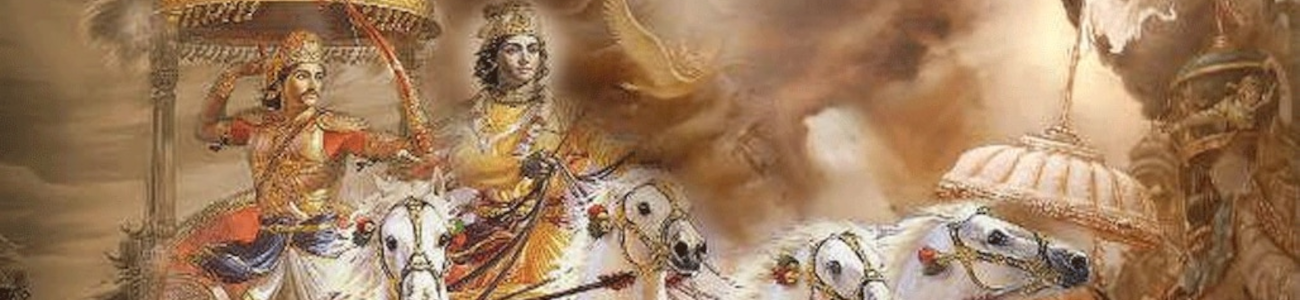
The Bhagavad Gita, often called the "Song of God," is a 700-verse sacred Hindu scripture embedded within the ancient Indian epic, the Mahabharata. It is a philosophical dialogue between the warrior Arjuna and his charioteer, the god Krishna, offering profound guidance on duty, ethics, and spiritual liberation.
Chapter 2: Sankhya Yoga
The Yoga of Knowledge
Verse #1
सञ्जय उवाच तम् तथा |
कृपया आविष्टम् अश्रुपूर्णाकुलेक्षणम् विषीदन्तम् |
इदं वाक्यम् उवाच मधुसूदनः ||
sañjaya uvāca tam tathā |
kṛpayā āviṣṭam aśrupūrṇākulekṣaṇam viṣīdantam |
idaṃ vākyam uvāca madhusūdanaḥ ||
sanjaya uvaca tam tatha |
kpaya avistam asrupurnakuleksanam visidantam |
ida vakyam uvaca madhusudana ||
Sanjaya said: To him who was thus overcome with pity and despondency, with eyes full of tears and agitated, Madhusudana spoke these words.
Verse #2
श्रीभगवान् उवाच कुतः त्वा |
कश्मलम् इदं विषमे समुपस्थितम् |
अनार्यजुष्टम् अस्वर्ग्यम् अकीर्तिकरम् अर्जुन ||
śrībhagavān uvāca kutaḥ tvā |
kaśmalam idaṃ viṣame samupasthitam |
anāryajuṣṭam asvargyam akīrtikaram arjuna ||
sribhagavan uvaca kuta tva |
kasmalam ida visame samupasthitam |
anaryajustam asvargyam akirtikaram arjuna ||
The Blessed Lord said: Whence is this perilous condition come upon thee, this dejection, un-Aryan-like, heaven-excluding, disgraceful, O Arjuna?
Verse #3
क्लैब्यं मा स्म गमः पार्थ न एतत् |
त्वयि उपपद्यते क्षुद्रं हृदयदौर्बल्यं त्यक्त्वा उत्तिष्ठ परन्तप ||
klaibyaṃ mā sma gamaḥ pārtha na etat |
tvayi upapadyate kṣudraṃ hṛdayadaurbalyaṃ tyaktvā uttiṣṭha parantapa ||
klaibya ma sma gama partha na etat |
tvayi upapadyate ksudra hdayadaurbalya tyaktva uttistha parantapa ||
Yield not to impotence, O Partha! It does not befit thee, Cast off this mean weakness of heart! Stand up, O Parantapa (O scorcher of foes) !
Verse #4
अर्जुन उवाच कथं भीष्मम् |
अहम् सङ्ख्ये द्रोणम् च मधुसूदन |
इषुभिः प्रतियोत्स्यामि पूजार्हौ अरिसूदन ||
arjuna uvāca kathaṃ bhīṣmam |
aham saṅkhye droṇam ca madhusūdana |
iṣubhiḥ pratiyotsyāmi pūjārhau arisūdana ||
arjuna uvaca katha bhismam |
aham sankhye dronam ca madhusudana |
isubhi pratiyotsyami pujarhau arisudana ||
Arjuna said: How, O Madhusudana, shall I, in battle, fight with arrows against Bhishma and Drona, who are fit to be worshipped, O destroyer of enemies!
Verse #5
गुरून् अहत्वा हि महानुभावान् श्रेयः |
भोक्तुम् भैक्ष्यम् अपि इह लोके |
हत्वा अर्थकामान् तु गुरून् इह |
एव भुञ्जीय भोगान् रुधिरप्रदिग्धान् ||
gurūn ahatvā hi mahānubhāvān śreyaḥ |
bhoktum bhaikṣyam api iha loke |
hatvā arthakāmān tu gurūn iha |
eva bhuñjīya bhogān rudhirapradigdhān ||
gurun ahatva hi mahanubhavan sreya |
bhoktum bhaiksyam api iha loke |
hatva arthakaman tu gurun iha |
eva bhunjiya bhogan rudhirapradigdhan ||
Better indeed, in this world, is to eat even the bread of beggary than to slay the most noble of teachers. But, if I kill them, even in this world, all my enjoyments of wealth and desires will be stained with blood.
Verse #6
न च एतत् विद्मः कतरत् नः |
गरीयः यत् वा जयेम यदि वा |
नः जयेयुः यान् एव हत्वा न |
जिजीविषामः ते अवस्थिताः प्रमुखे धार्तराष्ट्राः ||
na ca etat vidmaḥ katarat naḥ |
garīyaḥ yat vā jayema yadi vā |
naḥ jayeyuḥ yān eva hatvā na |
jijīviṣāmaḥ te avasthitāḥ pramukhe dhārtarāṣṭrāḥ ||
na ca etat vidma katarat na |
gariya yat va jayema yadi va |
na jayeyu yan eva hatva na |
jijivisama te avasthita pramukhe dhartarastra ||
I can scarcely say which will be better, that we should conquer them or that they should conquer us. Even the sons of Dhritarashtra, after slaying whom we do not wish to live, stand facing us.
Verse #7
कार्पण्यदोषोपहतस्वभावः पृच्छामि त्वाम् धर्मसम्मूढचेताः यत् |
श्रेयः स्यात् निश्चितम् ब्रूहि |
तत् मे शिष्यः ते अहम् |
शाधि माम् त्वाम् प्रपन्नम् ||
kārpaṇyadoṣopahatasvabhāvaḥ pṛcchāmi tvām dharmasammūḍhacetāḥ yat |
śreyaḥ syāt niścitam brūhi |
tat me śiṣyaḥ te aham |
śādhi mām tvām prapannam ||
karpanyadosopahatasvabhava pcchami tvam dharmasammuhaceta yat |
sreya syat niscitam bruhi |
tat me sisya te aham |
sadhi mam tvam prapannam ||
My heart is overpowered by the taint of pity; my mind is confused as to duty. I ask Thee. Tell me decisively what is good for me. I am Thy disciple. Instruct me, who have taken refuge in Thee.
Verse #8
न हि प्रपश्यामि मम अपनुद्याद् |
यत् शोकम् उच्छोषणम् इन्द्रियाणाम् |
अवाप्य भूमौ असपत्नम् ऋद्धम् राज्यम् |
सुराणाम् अपि च अधिपत्यम् ||
na hi prapaśyāmi mama apanudyād |
yat śokam ucchoṣaṇam indriyāṇām |
avāpya bhūmau asapatnam ṛddham rājyam |
surāṇām api ca ādhipatyam ||
na hi prapasyami mama apanudyad |
yat sokam ucchosanam indriyanam |
avapya bhumau asapatnam ddham rajyam |
suranam api ca adhipatyam ||
I do not see that it would remove this sorrow that burns up my senses, even if I should attain prosperous and unrivalled dominion on earth, or even Lordship over the gods.
Verse #9
सञ्जय उवाच एवम् उक्त्वा हृषीकेशं |
गुडाकेशः परन्तप न योत्स्य इति |
गोविन्दम् उक्त्वा तूष्णीं बभूव ह ||
sañjaya uvāca evam uktvā hṛṣīkeśaṃ |
guḍākeśaḥ parantapa na yotsya |
govindam uktvā tūṣṇīm babhūva ha ||
sanjaya uvaca evam uktva hsikesa |
guakesa parantapa na yotsya |
govindam uktva tusnim babhuva ha ||
Sanjaya said: Having spoken thus to Hrishikesha, Gudakesha, the destroyer of foes, said to Govinda: I will not fight; and became silent.
Verse #10
तम् उवाच हृषीकेशः प्रहसन् इव भारत |
सेनयोः उभयोः मध्ये विषीदन्तम् इदं वचः ||
tam uvāca hṛṣīkeśaḥ prahasan iva bhārata |
senayoḥ ubhayor madhye viṣīdantam idaṃ vacaḥ ||
tam uvaca hsikesa prahasan iva bharata |
senayo ubhayor madhye visidantam ida vaca ||
To him who was despondent in the midst of the two armies, Hrishikesha, as if smiling, O Bharata, spoke these words.
Verse #11
श्रीभगवानुवाच अशोच्यान् अन्वशोकः त्वं |
प्रज्ञावादान् च भाषसे गतासून् अगतासून् |
च न अनुशोचन्ति पण्डिताः ||
śrībhagavānuvāca aśocyān anvaśokaḥ tvaṃ |
prajñāvādān ca bhāṣase gatāsūn agatāsūn |
ca na anuśocanti paṇḍitāḥ ||
sribhagavanuvaca asocyan anvasoka tva |
prajnavadan ca bhasase gatasun agatasun |
ca na anusocanti panita ||
The Blessed Lord said: You have grieved for those that should not be grieved for; yet, you speak words of wisdom. The wise grieve neither for the living nor for the dead.
Verse #12
न तू एव अहम् जातु न आसं न त्वम् न इमे |
जनाधिपाः न च एव न भविष्यामः सर्वे वयम् अतः परम् ||
na tu eva aham jātu na āsam na tvam na ime |
janādhipāḥ na ca eva na bhaviṣyāmaḥ sarve vayam ataḥ param ||
na tu eva aham jatu na asam na tvam na ime |
janadhipa na ca eva na bhavisyama sarve vayam ata param ||
It is not that at any time (in the past) , indeed, was I not, nor were you, nor these rulers of men. Nor, verily, shall we all ever cease to be hereafter.
Verse #13
देहिनः अस्मिन यथा देहे कौमारम् यौवनम् जरा |
तथा देहान्तरप्राप्तिः धीः तत्र न मुह्यति ||
dehinaḥ asmin yathā dehe kaumāram yauvanam jarā |
tathā dehāntaraprāptiḥ dhīḥ tatra na muhyati ||
dehina asmin yatha dehe kaumaram yauvanam jara |
tatha dehantaraprapti dhi tatra na muhyati ||
Just as in this body the embodied (soul) passes into childhood, youth and old age, so also does he pass into another body; the firm man does not grieve at it.
Verse #14
मात्रास्पर्शाः तु कौन्तेय शीतोष्णसुखदुःखदाः आगमापायिनः |
अनित्या स्तान् तितिक्षस्व भारत ||
mātrāsparśāḥ tu kaunteya śītoṣṇasukhaduḥkhadāḥ āgamāpāyinaḥ |
anityā stān titīkṣasva bhārata ||
matrasparsa tu kaunteya sitosnasukhadukhada agamapayina |
anitya stan titiksasva bharata ||
The contacts of senses with objects, O son of Kunti, which cause heat and cold, pleasure and pain, have a beginning and an end; they are impermanent; endure them bravely, O descendant of Bharata.
Verse #15
यं हि न व्यथयन्ति एते पुरुषं |
पुरुषर्षभ समदुःखसुखं धीरं सः अमृतत्वाय कल्पते ||
yaṃ hi na vyathayanti ete puruṣaṃ |
puruṣarṣabha samaduḥkhasukhaṃ dhīraṃ saḥ amṛtatvāya kalpate ||
ya hi na vyathayanti ete purusa |
purusarsabha samadukhasukha dhira sa amtatvaya kalpate ||
That firm man whom, surely, these afflict not, O chief among men, to whom pleasure and pain are the same, is fit for realising the Immortality of the Self.
Verse #16
न असतः विद्यते भावः न अभावः विद्यते सतः |
उभयोः अपि दृष्टः अन्तः तु अनयोः तत्त्वदर्शिभिः ||
na asataḥ vidyate bhāvaḥ na abhāvaḥ vidyate sataḥ |
ubhayor api dṛṣṭaḥ antaḥ tu anayoḥ tattvadarśibhiḥ ||
na asata vidyate bhava na abhava vidyate sata |
ubhayor api dsta anta tu anayo tattvadarsibhi ||
The unreal has no being; there is no non-being of the Real; the truth about both these has been seen by the Knowers of the Truth (or the Seers of the Essence) .
Verse #17
अविनाशि तु तत् विद्धि येन सर्वम् इदम् ततम् |
विनाशम् अव्ययस्य अस्य न कश्चित् कर्तुम् अर्हति ||
avināśi tu tat viddhi yena sarvam idam tatam |
vināśam avyayasya asya na kaścit kartum arhati ||
avinasi tu tat viddhi yena sarvam idam tatam |
vinasam avyayasya asya na kascit kartum arhati ||
Know That to be Indestructible by which all this is pervaded. None can cause the destruction of That --- the Imperishable.
Verse #18
अन्तवन्तः इमे देहाः नित्यस्य उक्ताः शरीरिणः |
अनाशिनः अप्रमेयस्य तस्मात् युध्यस्व भारत ||
antavantaḥ ime dehāḥ nityasya uktāḥ śarīriṇaḥ |
anāśinaḥ aprameyasya tasmāt yudhyasva bhārata ||
antavanta ime deha nityasya ukta saririna |
anasina aprameyasya tasmat yudhyasva bharata ||
They have an end, it is said, these bodies of the embodied-Self. The Self is Eternal, Indestructible, Incomprehensible. Therefore, fight, O Bharata.
Verse #19
य एनम् वेत्ति हन्तारम् यः च एनम् मन्यते हतम् |
उभौ तौ न विजानीतः न अयम् हन्ति न हन्यते ||
ya enam vetti hantāram yaḥ ca enam manyate hatam |
ubhau tau na vijānītaḥ na ayam hanti na hanyate ||
ya enam vetti hantaram ya ca enam manyate hatam |
ubhau tau na vijanita na ayam hanti na hanyate ||
He who takes the Self to be the slayer and he who thinks He is slain, neither of these knows. He slays not, nor in He slain.
Verse #20
न जायते म्रियते वा कदाचित् |
न अयम् भूत्वा भविता वा |
न भूयः अजः नित्यः शाश्वतः अयम् |
पुराणः न हन्यते हन्यमाने शरीरे ||
na jāyate mriyate vā kadācin |
na ayam bhūtvā bhavitā vā |
na bhūyaḥ ajaḥ nityaḥ śāśvataḥ ayam |
purāṇaḥ na hanyate hanyamāne śarīre ||
na jayate mriyate va kadacin |
na ayam bhutva bhavita va |
na bhuya aja nitya sasvata ayam |
purana na hanyate hanyamane sarire ||
He is not born, nor does He ever die; after having been, He again ceases not to be; Unborn, Eternal, Changeless and Ancient, He is not killed when the body is killed.
Verse #21
वेद अविनाशिनं नित्यम् यः एनम् अजम् अव्ययम् कथम् |
सः पुरुषः पार्थ कम् घातयति हन्ति कम् ||
veda avināśinam nityam yaḥ enam ajam avyayam katham |
saḥ puruṣaḥ pārtha kam ghātayati hanti kam ||
veda avinasinam nityam ya enam ajam avyayam katham |
sa purusa partha kam ghatayati hanti kam ||
Whosoever knows Him to be Indestructible, Eternal, Unborn, and Inexhaustible, how can that man slay, O Partha, or cause others to be slain?
Verse #22
वासांसि जीर्णानि यथा विहाय |
नवानि गृह्णाति नरः अपराणि |
तथा शरीराणि विहाय जीर्णानि |
अन्यानि संयाति नवानि देही ||
vāsāṃsi jīrṇāni yathā vihāya |
navāni gṛhṇāti naraḥ aparāṇi |
tathā śarīrāṇi vihāya jīrṇāni |
anyāni saṃyāti navāni dehī ||
vasasi jirnani yatha vihaya |
navani ghnati nara aparani |
tatha sarirani vihaya jirnani |
anyani sayati navani dehi ||
Just as a man casts off his worn out clothes and puts on new ones, so also the embodied-Self casts off its worn out bodies and enters others which are new.
Verse #23
न एनम् छिन्दन्ति शस्त्राणि न एनम् दहति पावकः |
न च एनम् क्लेदयन्ति आपः न शोषयति मारुतः ||
na enam chindanti śastrāṇi na enam dahati pāvakaḥ |
na ca enam kledayanti āpaḥ na śoṣayati mārutaḥ ||
na enam chindanti sastrani na enam dahati pavaka |
na ca enam kledayanti apa na sosayati maruta ||
Weapons cleave It not, fire burns It not, water moistens It not, wind dries It not.
Verse #24
अच्छेद्यः अयम् अदाह्यः अयम् अक्लेद्यः अशोष्यः एव |
च नित्यः सर्वगतः स्थाणुः अचलः अयम् सनातनः ||
acchedyaḥ ayam adāhyaḥ ayam akledyaḥ aśoṣyaḥ eva |
ca nityaḥ sarvagataḥ sthāṇuḥ acalaḥ ayam sanātanaḥ ||
acchedya ayam adahya ayam akledya asosya eva |
ca nitya sarvagata sthanu acala ayam sanatana ||
This Self cannot be cut, nor burnt, nor moistened, nor dried up. It is eternal, all-pervading, stable immovable and ancient.
Verse #25
अव्यक्तः अयम् अचिन्त्यः अयम् अविकार्यः अयम् उच्यते |
तस्मात् एवम् विदित्वा एनम् न अनुशोचितुम् अर्हसि ||
avyaktaḥ ayam acintyaḥ ayam avikāryaḥ ayam ucyate |
tasmāt evam viditvā enam na anuśocitum arhasi ||
avyakta ayam acintya ayam avikarya ayam ucyate |
tasmat evam viditva enam na anusocitum arhasi ||
This (Self) is said to be Unmanifest, Unthinkable and Unchangeable. Therefore, knowing This to be such, you should not grieve.
Verse #26
अथ च एनम् नित्यजातम् नित्यम् वा मन्यसे मृतम् |
तथापि त्वम् महाबाहो न एवम् शोचितुम् अर्हसि ||
atha ca enam nityajātaṃ nityam vā manyase mṛtam |
tathāpi tvam mahābāho na evam śocitum arhasi ||
atha ca enam nityajata nityam va manyase mtam |
tathapi tvam mahabaho na evam socitum arhasi ||
But even if you think of Him as being constantly born and constantly dying, even then, O mighty-armed, you should not grieve.
Verse #27
जातस्य हि ध्रुवः मृत्युः ध्रुवं जन्म मृतस्य च |
तस्मात् अपरिहार्ये अर्थे न त्वं शोचितुम् अर्हसि ||
jātasya hi dhruvaḥ mṛtyuḥ dhruvaṃ janma mṛtasya ca |
tasmāt aparihārye arthe na tvaṃ śocitum arhasi ||
jatasya hi dhruva mtyu dhruva janma mtasya ca |
tasmat apariharye arthe na tva socitum arhasi ||
Indeed, certain is death for the born, and certain is birth for the dead; therefore, over the inevitable, you should not grieve.
Verse #28
अव्यक्तादीनि भूतानि व्यक्तमध्यानि भारत अव्यक्तनिधनानि |
एव तत्र का परिदेवना ||
avyaktādīni bhūtāni vyaktamadhyāni bhārata avyaktanidhanāni |
eva tatra kā paridevanā ||
avyaktadini bhutani vyaktamadhyani bharata avyaktanidhanani |
eva tatra ka paridevana ||
Beings unmanifest in the beginning, and unmanifest again in their end seem to be manifest in the middle, O Bharata. What then is there to grieve about?
Verse #29
आश्चर्यवत् पश्यति कश्चित् एनम् आश्चर्यवत् वदति |
तथा एव च अन्यः आश्चर्यवत् च |
एनम् अन्यः शृणोति श्रुत्वा अपि एनम् |
वेद न च एव कश्चित् ||
āścaryavat paśyati kaścit enam āścaryavat vadati |
tathā eva ca anyaḥ āścaryavat ca |
enam anyaḥ śṛṇoti śrutvā api enam |
veda na ca eva kaścit ||
ascaryavat pasyati kascit enam ascaryavat vadati |
tatha eva ca anya ascaryavat ca |
enam anya snoti srutva api enam |
veda na ca eva kascit ||
One sees This as a wonder; another speaks of This as a wonder; another hears of This as a wonder; yet, having heard none understands This at all!
Verse #30
देही नित्यम् अवध्यः अयम् देहे सर्वस्य भारत |
तस्मात् सर्वाणि भूतानि न त्वम् शोचितुम् अर्हसि ||
dehī nityam avadhyaḥ ayam dehe sarvasya bhārata |
tasmāt sarvāṇi bhūtāni na tvam śocitum arhasi ||
dehi nityam avadhya ayam dehe sarvasya bharata |
tasmat sarvani bhutani na tvam socitum arhasi ||
This, the Indweller in the body of everyone is ever indestructible, O Bharata; and, therefore, you should not grieve for any creature.
Verse #31
स्वधर्मम् अपि च आवेक्ष्य न विकम्पितुम् अर्हसि धर्म्यात् |
हि युद्धात् श्रेयः अन्यत् क्षत्रियस्य न विद्यते ||
svadharmam api ca āvekṣya na vikampitum arhasi dharmyāt |
hi yuddhāt śreyaḥ anyat kṣatriyasya na vidyate ||
svadharmam api ca aveksya na vikampitum arhasi dharmyat |
hi yuddhat sreya anyat ksatriyasya na vidyate ||
Further, looking at thine own duty thou oughtest not to waver, for there is nothing higher for a KSHATRIYA than a righteous war.
Verse #32
यदृच्छया च उपपन्नं स्वर्गद्वारम् अपावृतम् सुखिनः |
क्षत्रियाः पार्थ लभन्ते युद्धम् ईदृशम् ||
yadṛcchayā ca upapannaṃ svargadvāram apāvṛtam sukhinaḥ |
kṣatriyāḥ pārtha labhante yuddham īdṛśam ||
yadcchaya ca upapanna svargadvaram apavtam sukhina |
ksatriya partha labhante yuddham idsam ||
Happy indeed are the KSHATRIYAS, O Partha, who are called to fight in such a battle, that comes of itself as an open-door to heaven.
Verse #33
अथ चेत् त्वम् इमं धर्म्यम् सङ्ग्रामम् न करिष्यसि |
ततः स्वधर्मम् कीर्तिम् च हित्वा पापम् अवाप्स्यसि ||
atha cet tvam imaṃ dharmyam saṅgrāmam na kariṣyasi |
tataḥ svadharmam kīrtim ca hitvā pāpam avāpsyasi ||
atha cet tvam ima dharmyam sangramam na karisyasi |
tata svadharmam kirtim ca hitva papam avapsyasi ||
But, if you will not fight this righteous war, then, having abandoned your own duty and fame, you shall incur sin.
Verse #34
अकीर्तिं च अपि भूतानि कथयिष्यन्ति ते |
अव्ययाम् सम्भावितस्य च अकीर्तिः मरणात् अतिरिच्यते ||
akīrtiṃ ca api bhūtāni kathayiṣyanti te |
avyayām sambhāvitasya ca akīrtiḥ maraṇāt atiricyate ||
akirti ca api bhutani kathayisyanti te |
avyayam sambhavitasya ca akirti maranat atiricyate ||
People too, will recount your everlasting dishonour; and to one who has been honoured, dishonour is more than death.
Verse #35
भयात् रणात् उपरतम् मंस्यन्ते त्वाम् महारथाः येषाम् |
च त्वम् बहुमतः भूत्वा यास्यसि लाघवम् ||
bhayāt raṇāt uparatam maṃsyante tvām mahārathāḥ yeṣām |
ca tvam bahumato bhūtvā yāsyasi lāghavam ||
bhayat ranat uparatam masyante tvam maharatha yesam |
ca tvam bahumato bhutva yasyasi laghavam ||
The great battalion commanders will think that you have withdrawn from the battle through fear; and you will be looked down upon by them who had thought much of you and your heroism in the past.
Verse #36
अवाच्यवादान् च बहून् वदिष्यन्ति तव अहिताः निन्दन्तः |
तव सामर्थ्यम् ततः दुःखतरम् नु किम् ||
avācyavādān ca bahūn vadiṣyanti tava ahitāḥ nindantaḥ |
tava sāmarthyam tataḥ duḥkhataraṃ nu kim ||
avacyavadan ca bahun vadisyanti tava ahita nindanta |
tava samarthyam tata dukhatara nu kim ||
And many unspeakable words will your enemies speak cavilling about your powers. What can be more painful than this?
Verse #37
हतः वा प्राप्स्यसि स्वर्गम् जित्वा वा भोक्ष्यसे |
महीम् तस्मात् उत्तिष्ठ कौन्तेय युद्धाय कृतनिश्चयः ||
hataḥ vā prāpsyasi svargam jitvā vā bhokṣyase |
mahīm tasmāt uttiṣṭha kaunteya yuddhāya kṛtaniścayaḥ ||
hata va prapsyasi svargam jitva va bhoksyase |
mahim tasmat uttistha kaunteya yuddhaya ktaniscaya ||
Slain, you will obtain heaven; victorious you will enjoy the earth; therefore, stand up, O son of Kunti, determined to fight.
Verse #38
सुखदुःखे समे कृत्वा लाभालाभौ जयाजयौ ततः |
युद्धाय युज्यस्व न एवं पापम् अवाप्स्यसि ||
sukhaduḥkhe same kṛtvā lābhālābhau jayājayau tataḥ |
yuddhāya yujyasva na evaṃ pāpam avāpsyasi ||
sukhadukhe same ktva labhalabhau jayajayau tata |
yuddhaya yujyasva na eva papam avapsyasi ||
Having made --- pleasure and pain, gain and loss, victory and defeat --- the same, engage in battle for the sake of battle; thus you shall not incur sin.
Verse #39
एषा ते अभिहिता साङ्ख्ये बुद्धिः योगे तु इमां |
शृणु बुद्ध्या युक्तः यया पार्थ कर्मबन्धं प्रहास्यसि ||
eṣā te abhihitā sāṅkhye buddhiḥ yoge tu imāṃ |
śṛṇu buddhyā yuktaḥ yayā pārtha karmabandhaṃ prahāsyasi ||
esa te abhihita sankhye buddhi yoge tu ima |
snu buddhya yukta yaya partha karmabandha prahasyasi ||
This, which has been taught to thee, is wisdom concerning SANKHYA. Now listen to the wisdom concerning YOGA, having known which, O Partha, you shall cast off the bonds-of-action.
Verse #40
नेह अभिक्रमनाशः अस्ति प्रत्यवायः न विद्यते स्वल्पम् |
अपि अस्य धर्मस्य त्रायते महतः भयात् ||
na iha abhikramanāśaḥ asti pratyavāyaḥ na vidyate svalpam |
api asya dharmasya trāyate mahataḥ bhayāt ||
na iha abhikramanasa asti pratyavaya na vidyate svalpam |
api asya dharmasya trayate mahata bhayat ||
In this there is no loss of effort, nor is there any harm (production of contrary results) . Even a little of this knowledge, even a little practice of the YOGA, protects one from the great fear.
Verse #41
व्यवसायात्मिका बुद्धिः एक इह कुरुनन्दन बहुशाखाः |
हि अनन्ताः च बुद्धयः अव्यवसायिनाम् ||
vyavasāyātmikā buddhiḥ eka iha kurunandana bahuśākhāḥ |
hi anantāḥ ca buddhayaḥ avyavasāyinām ||
vyavasayatmika buddhi eka iha kurunandana bahusakha |
hi ananta ca buddhaya avyavasayinam ||
Here, O Joy of the Kurus, Kurunandana, there is but a single-pointed determination; many-branched and endless are the thoughts of the irresolute.
Verse #42
याम् इमाम् पुष्पिताम् वाचम् प्रवदन्ति अविपश्चितः वेदवादरताः |
पार्थ न अन्यत् अस्ति इति वादिनः ||
yām imām puṣpitām vācām pravadanti avipaścitaḥ vedavādaratāḥ |
pārtha na anyat asti vādinaḥ ||
yam imam puspitam vacam pravadanti avipascita vedavadarata |
partha na anyat asti vadina ||
Flowery speech is uttered by the unwise, taking pleasure in the eulogising words of VEDAS, O Partha, saying, There is nothing else.
Verse #43
कामात्मानः स्वर्गपरा जन्मकर्मफलप्रदाम् |
क्रियाविशेषबहुलाम् भोगैश्वर्यगतिं प्रति ||
kāmātmānaḥ svargaparā janmakarmaphalapradām |
kriyāviśeṣabahulām bhogaiśvaryagatiṃ prati ||
kamatmana svargapara janmakarmaphalapradam |
kriyavisesabahulam bhogaisvaryagati prati ||
Full of desires, having heaven as their goal, they utter flowery words, which promise new birth as the reward of their actions, and prescribe various specific actions for the attainment of pleasure and Lordship.
Verse #44
भोगैश्वर्यप्रसक्तानां तया अपहृतचेतसाम् व्यवसायात्मिका |
बुद्धिः समाधौ न विधीयते ||
bhogaiśvaryaprasaktānāṃ tayā apahṛtacetasām vyavasāyātmikā |
buddhiḥ samādhau na vidhīyate ||
bhogaisvaryaprasaktana taya apahtacetasam vyavasayatmika |
buddhi samadhau na vidhiyate ||
For, those who cling to joy and Lordship, whose minds are drawn away by such teaching, are neither determinate and resolute nor are they fit for steady meditation and SAMADHI.
Verse #45
त्रैगुण्यविषया वेदा निस्त्रैगुण्यः भव अर्जुन |
निर्द्वन्द्वः नित्यसत्त्वस्थः निर्योगक्षेमः आत्मवान् ||
traiguṇyaviṣayā vedā nistraiguṇyaḥ bhava arjuna |
nirdvandvaḥ nityasattvasthaḥ niryogakṣemaḥ ātmavān ||
traigunyavisaya veda nistraigunya bhava arjuna |
nirdvandva nityasattvastha niryogaksema atmavan ||
The VEDAS deal with the three attributes; be you above these three attributes (GUNAS) , O Arjuna, free yourself from the pairs-of-opposites, and ever remain in the SATTWA (goodness) , freed from all thoughts of acquisition and preservation, and be established in the Self.
Verse #46
यावान् अर्थः उदपाने सर्वतः सम्प्लुतोदके |
तावान् सर्वेषु वेदेषु ब्राह्मणस्य विजानतः ||
yāvān arthaḥ udapāne sarvataḥ samplutodake |
tāvān sarveṣu vedeṣu brāhmaṇasya vijānataḥ ||
yavan artha udapane sarvata samplutodake |
tavan sarvesu vedesu brahmanasya vijanata ||
To the BRAHMANA who has known the Self, all the VEDAS are of so much use, as is a reservoir of water in a place where there is flood everywhere.
Verse #47
कर्मणि एव अधिकारः ते मा फलेषु कदाचन मा |
कर्मफलहेतुḥ भूः मा ते सङ्गः अस्तु अकर्मणि ||
karmaṇi eva adhikāraḥ te mā phaleṣu kadācana mā |
karmaphalahetuḥ bhūḥ mā te saṅgaḥ astu akarmaṇi ||
karmani eva adhikara te ma phalesu kadacana ma |
karmaphalahetu bhu ma te sanga astu akarmani ||
Thy right is to work only, but never to its fruits; let not the fruit-of-action be thy motive, nor let thy attachment be to inaction.
Verse #48
योगस्थः कुरु कर्माणि सङ्गं त्यक्त्वा धनञ्जय |
सिद्ध्यसिद्ध्योः समः भूत्वा समत्वं योग उच्यते ||
yogasthaḥ kuru karmāṇi saṅgam tyaktvā dhanañjaya |
siddhyasiddhyoḥ samaḥ bhūtvā samatvaṃ yoga ucyate ||
yogastha kuru karmani sangam tyaktva dhananjaya |
siddhyasiddhyo sama bhutva samatva yoga ucyate ||
Perform action, O Dhananjaya, abandoning attachment, being steadfast in YOGA, and balanced in success and failure. Evenness of mind is called YOGA.
Verse #49
दूरेण हि अवरं कर्म बुद्धियोगात् धनञ्जय |
बुद्धौ शरणम् अन्विच्छ कृपणाः फलहेतवः ||
dūreṇa hi avaraṃ karma buddhiyogāt dhanañjaya |
buddhau śaraṇam anviccha kṛpaṇāḥ phalahetavaḥ ||
durena hi avara karma buddhiyogat dhananjaya |
buddhau saranam anviccha kpana phalahetava ||
Far lower than the YOGA -of-wisdom is action, O Dhananjaya. Seek thou refuge in wisdom; wretched are they whose motive is the fruit.
Verse #50
बुद्धियुक्तः जहाति इह उभे सुकृतदुष्कृते तस्मात् |
योगाय युज्यस्व योगः कर्मसु कौशलम् ||
buddhiyuktaḥ jahāti iha ubhe sukṛtaduṣkṛte tasmāt |
yogāya yujyasva yogaḥ karmasu kauśalam ||
buddhiyukta jahati iha ubhe suktaduskte tasmat |
yogaya yujyasva yoga karmasu kausalam ||
Endowed with the Wisdom of evenness-of-mind, one casts off in this life both good deeds and evil deeds; therefore, devote yourself to YOGA, Skill in action is YOGA.
Verse #51
कर्मजं बुद्धियुक्ता हि फलं त्यक्त्वा |
मनीषिणः जन्मबन्धविनिर्मुक्ताः पदं गच्छन्ति अनामयम् ||
karmajaṃ buddhiyuktā hi phalam tyaktvā |
manīṣiṇaḥ janmabandhavinirmuktāḥ padaṃ gacchanti anāmayam ||
karmaja buddhiyukta hi phalam tyaktva |
manisina janmabandhavinirmukta pada gacchanti anamayam ||
The wise, possessed of knowledge, having abandoned the fruits of their actions, freed from the fetters of birth, go to the State which is beyond all evil.
Verse #52
यदा ते मोहकलिलं बुद्धिः व्यतितरिष्यति तदा |
गन्तासि निर्वेदं श्रोतव्यस्य श्रुतस्य च ||
yadā te mohakalilaṃ buddhiḥ vyatitariṣyati tadā |
gantāsi nirvedaṃ śrotavyasya śrutasya ca ||
yada te mohakalila buddhi vyatitarisyati tada |
gantasi nirveda srotavyasya srutasya ca ||
When your intellect crosses beyond the mire of delusion, then you shall attain to indifference as to what has been heard and what is yet to be heard.
Verse #53
श्रुतिविप्रतिपन्ना ते यदा स्थास्यति निश्चला समाधौ |
अचला बुद्धिः तदा योगम् अवाप्स्यसि ||
śrutivipratipannā te yadā sthāsyati niścalā samādhau |
acalā buddhiḥ tadā yogam avāpsyasi ||
srutivipratipanna te yada sthasyati niscala samadhau |
acala buddhi tada yogam avapsyasi ||
When your intellect, though perplexed by what you have heard, shall stand immovable and steady in the Self, then you shall attain Self-realisation.
Verse #54
अर्जुन उवाच स्थितप्रज्ञस्य का भाषा |
समाधिस्थस्य केशव स्थितधीः किं प्रभाषेत |
किम् आसीत व्रजेत किम् ||
arjuna uvāca sthitaprajñasya kā bhāṣā |
samādhisthasya keśava sthitadhīḥ kiṃ prabhāṣeta |
kim āsīta vrajeta kim ||
arjuna uvaca sthitaprajnasya ka bhasa |
samadhisthasya kesava sthitadhi ki prabhaseta |
kim asita vrajeta kim ||
Arjuna said: What, O Keshava, is the description of him who has steady Wisdom and who is merged in the Superconscious state? How does one of steady Wisdom speak, how does he sit, how does he walk?
Verse #55
श्रीभगवान् उवाच प्रजहाति यदा कामान् |
सर्वान् पार्थ मनोगतान् आत्मनि एव |
आत्मना तुष्टः स्थितप्रज्ञः तदा उच्यते ||
śrībhagavān uvāca prajahāti yadā kāmān |
sarvān pārtha manogatān ātmani eva |
ātmanā tuṣṭaḥ sthitaprajñaḥ tadā ucyate ||
sribhagavan uvaca prajahati yada kaman |
sarvan partha manogatan atmani eva |
atmana tusta sthitaprajna tada ucyate ||
The Blessed Lord said: When a man completely casts off, O Partha, all the desires of the mind, and is satisfied in the Self by the Self, then is he said to be one of steady Wisdom.
Verse #56
दुःखेषु अनुद्विग्नमनाः सुखेषु विगतस्पृहः |
वीतरागभयक्रोधः स्थितधीः मुनिः उच्यते ||
duḥkheṣu anudvignamanāḥ sukheṣu vigataspṛhaḥ |
vītarāgabhayakrodhaḥ sthitadhīḥ muniḥ ucyate ||
dukhesu anudvignamana sukhesu vigataspha |
vitaragabhayakrodha sthitadhi muni ucyate ||
He whose mind is not shaken by adversity, and who in prosperity does not hanker after pleasures, who is free from attachment, fear and anger, is called a Sage-of-Steady-Wisdom.
Verse #57
यः सर्वत्र अनभिस्नेहः तत्तत् प्राप्य शुभाशुभम् न |
अभिनन्दति न द्वेष्टि तस्य प्रज्ञा प्रतिष्ठिता ||
yaḥ sarvatra anabhisnehaḥ tattat prāpya śubhāśubham na |
abhinandati na dveṣṭi tasya prajñā pratiṣṭhitā ||
ya sarvatra anabhisneha tattat prapya subhasubham na |
abhinandati na dvesti tasya prajna pratisthita ||
He who is everywhere without attachment, on meeting with anything good or bad, who neither rejoices nor hates, his Wisdom is fixed.
Verse #58
यदा संहरते च अयम् कूर्मः अङ्गानि इव |
सर्वशः इन्द्रियाणि इन्द्रियार्थेभ्यः तस्य प्रज्ञा प्रतिष्ठिता ||
yadā saṃharate ca ayam kūrmaḥ aṅgāni iva |
sarvaśaḥ indriyāṇi indriyārthebhyaḥ tasya prajñā pratiṣṭhitā ||
yada saharate ca ayam kurma angani iva |
sarvasa indriyani indriyarthebhya tasya prajna pratisthita ||
When, like the tortoise which withdraws its limbs from all sides, he withdraws his senses from the sense-objects then his Wisdom becomes steady.
Verse #59
विषया विनिवर्तन्ते निराहारस्य देहिनः रसवर्जं रसः |
अपि अस्य परं दृष्ट्वा निवर्तते ||
viṣayāḥ vinivartante nirāhārasya dehinaḥ rasavarjam rasaḥ |
api asya paraṃ dṛṣṭvā nivartate ||
visaya vinivartante niraharasya dehina rasavarjam rasa |
api asya para dstva nivartate ||
The objects of the senses turn away from the abstinent man leaving the longing (behind); but his longing also leaves him on seeing the Supreme.
Verse #60
यततः हि अपि कौन्तेय पुरुषस्य विपश्चितः |
इन्द्रियाणि प्रमाथीनि हरन्ति प्रसभम् मनः ||
yatataḥ hi api kaunteya puruṣasya vipaścitaḥ |
indriyāṇi pramāthīni haranti prasabham manaḥ ||
yatata hi api kaunteya purusasya vipascita |
indriyani pramathini haranti prasabham mana ||
The turbulent senses, O son of Kunti, do violently carry away the mind of a wise-man, though he be striving (to control them) .
Verse #61
तानि सर्वाणि संयम्य युक्त आसीत मत्परः वशे |
हि यस्य इन्द्रियाणि तस्य प्रज्ञा प्रतिष्ठिता ||
tāni sarvāṇi saṃyamya yukta āsīta matparaḥ vaśe |
hi yasya indriyāṇi tasya prajñā pratiṣṭhitā ||
tani sarvani sayamya yukta asita matpara vase |
hi yasya indriyani tasya prajna pratisthita ||
Having restrained them all, he should sit steadfast, intent on Me; his Wisdom is steady, whose senses are under control.
Verse #62
ध्यायतः विषयान् पुंसः सङ्गः तेषु उपजायते |
सङ्गात् सञ्जायते कामः कामात् क्रोधः अभिजायते ||
dhyāyataḥ viṣayān puṃsaḥ saṅgaḥ teṣu upajāyate |
saṅgāt sañjāyate kāmaḥ kāmāt krodhaḥ abhijāyate ||
dhyayata visayan pusa sanga tesu upajayate |
sangat sanjayate kama kamat krodha abhijayate ||
When a man thinks of objects, attachment for them arises; from attachment desire is born; from desire arises anger
Verse #63
क्रोधात् भवति सम्मोहः सम्मोहात् स्मृतिविभ्रमः |
स्मृतिभ्रंशात् बुद्धिनाशः बुद्धिनाशात् प्रणश्यति ||
krodhāt bhavati sammohaḥ sammohāt smṛtivibhramaḥ |
smṛtibhraṃśāt buddhināśaḥ buddhināśāt praṇaśyati ||
krodhat bhavati sammoha sammohat smtivibhrama |
smtibhrasat buddhinasa buddhinasat pranasyati ||
From anger comes delusion; from delusion loss of memory; from loss of memory the destruction of discrimination; from destruction of discrimination he perishes.
Verse #64
रागद्वेषवियुक्तैस्तु तु विषयान् इन्द्रियैः चरन् |
आत्मवश्यैः विधेयात्मा प्रसादम् अधिगच्छति ||
rāgadveṣaviyuktaiḥ tu viṣayān indriyaiḥ caran |
ātmavaśyaiḥ vidheyātmā prasādam adhigacchati ||
ragadvesaviyuktai tu visayan indriyai caran |
atmavasyai vidheyatma prasadam adhigacchati ||
But the self-controlled man, moving among objects, with his senses under restraint, and free from both attraction and repulsion, attains peace.
Verse #65
प्रसादे सर्वदुःखानाम् हानिः अस्य उपजायते |
प्रसन्नचेतसः हि आशु बुद्धिः पर्यवतिष्ठते ||
prasāde sarvaduḥkhānām hāniḥ asya upajāyate |
prasannacetasaḥ hi āśu buddhiḥ paryavatiṣṭhate ||
prasade sarvadukhanam hani asya upajayate |
prasannacetasa hi asu buddhi paryavatisthate ||
In that peace all pains are destroyed; for, the intellect of the tranquil-minded soon becomes steady.
Verse #66
नास्ति बुद्धिः अयुक्तस्य न च अयुक्तस्य भावना |
न च अभावयतः शान्तिः अशान्तस्य कुतः सुखम् ||
nāsti buddhiḥ ayuktasya na ca ayuktasya bhāvanā |
na ca abhāvayataḥ śāntiḥ aśāntasya kutaḥ sukham ||
nasti buddhi ayuktasya na ca ayuktasya bhavana |
na ca abhavayata santi asantasya kuta sukham ||
There is no knowledge (of the Self) to the unsteady; and to the unsteady no meditation; and to the unmeditative no peace; to the peaceless, how can there be happiness?
Verse #67
इन्द्रियाणां हि चरतां यत् मनः अनुविधीयते तत् |
अस्य हरति प्रज्ञाम् वायुः नावम् इव अम्भसि ||
indriyāṇām hi caratām yat manaḥ anuvidhīyate tat |
asya harati prajñām vāyuḥ nāvam iva ambhasi ||
indriyanam hi caratam yat mana anuvidhiyate tat |
asya harati prajnam vayu navam iva ambhasi ||
For, the mind, which follows in the wake of the wandering senses, carries away his discrimination, as the wind carries away a boat on the waters.
Verse #68
तस्मात् यस्य महाबाहो निगृहीतानि सर्वशः |
इन्द्रियाणि इन्द्रियार्थेभ्यः तस्य प्रज्ञा प्रतिष्ठिता ||
tasmāt yasya mahābāho nigṛhītāni sarvaśaḥ |
indriyāṇi indriyārthebhyaḥ tasya prajñā pratiṣṭhitā ||
tasmat yasya mahabaho nighitani sarvasa |
indriyani indriyarthebhya tasya prajna pratisthita ||
Therefore, O Mighty-armed, his knowledge is steady whose senses are completely restrained from sense-objects.
Verse #69
या निशा सर्वभूतानां तस्यां जागर्ति संयमी यस्यां |
जाग्रति भूतानि सा निशा पश्यतो मुनेः ||
yā niśā sarvabhūtānāṃ tasyāṃ jāgarti saṃyamī yasyāṃ |
jāgrati bhūtāni sā niśā paśyataḥ muneḥ ||
ya nisa sarvabhutana tasya jagarti sayami yasya |
jagrati bhutani sa nisa pasyata mune ||
That which is night to all beings, in that the self-controlled man keeps awake; where all beings are awake, that is the night for the Sage (MUNI) who sees.
Verse #70
आपूर्यमाणम् अचलप्रतिष्ठम् समुद्रम् आपः |
प्रविशन्ति यद्वत् तद्वत् कामाः |
यम् प्रविशन्ति सर्वे स |
शान्तिम् आप्नोति न कामकामी ||
āpūryamāṇam acalapratiṣṭham samudram āpaḥ |
praviśanti yadvat tadvat kāmāḥ |
yam praviśanti sarve sa |
śāntim āpnoti na kāmakāmī ||
apuryamanam acalapratistham samudram apa |
pravisanti yadvat tadvat kama |
yam pravisanti sarve sa |
santim apnoti na kamakami ||
He attains Peace into whom all desires enter as waters enter the ocean, which, filled from all sides, remains unmoved; but not the desirer of desires.
Verse #71
विहाय कामान् यः सर्वान् पुमान् चरति |
निःस्पृहः निर्ममः निरहङ्कारः स शान्तिम् अधिगच्छति ||
vihāya kāmān yaḥ sarvān pumān carati |
niḥspṛhaḥ nirmamaḥ nirahaṅkāraḥ sa śāntim adhigacchati ||
vihaya kaman ya sarvan puman carati |
nispha nirmama nirahankara sa santim adhigacchati ||
That man attains peace who, abandoning all desires, moves about without longing, without the sense of 'l-ness' and 'my-ness. '
Verse #72
एषा |
ब्राह्मी |
स्थितिः |
पार्थ |
न एनाम् प्राप्य विमुह्यति स्थित्वा अस्याम् अन्तकाले अपि ब्रह्मनिर्वाणम् ऋच्छति ||
eṣā |
brāhmī |
sthitiḥ |
pārtha |
na enām prāpya vimuhyati sthitvā asyām antakāle api brahmanirvāṇam ṛcchati ||
esa |
brahmi |
sthiti |
partha |
na enam prapya vimuhyati sthitva asyam antakale api brahmanirvanam cchati ||
This is the BRAHMIC -state, O Son of Pritha. Attaining this, none is deluded. Being established therein, even at the end of life, one attains to oneness with BRAHMAN.<br><br>Thus in the Upanishads of the glorious Bhagavad Gita, the science of the Eternal, the scripture of Yoga, the dialogue between Sri Krishna and Arjuna, ends the second discourse entitled "The Yoga of Knowledge."