With commentry by Swami Shivananda
Author: Krishna
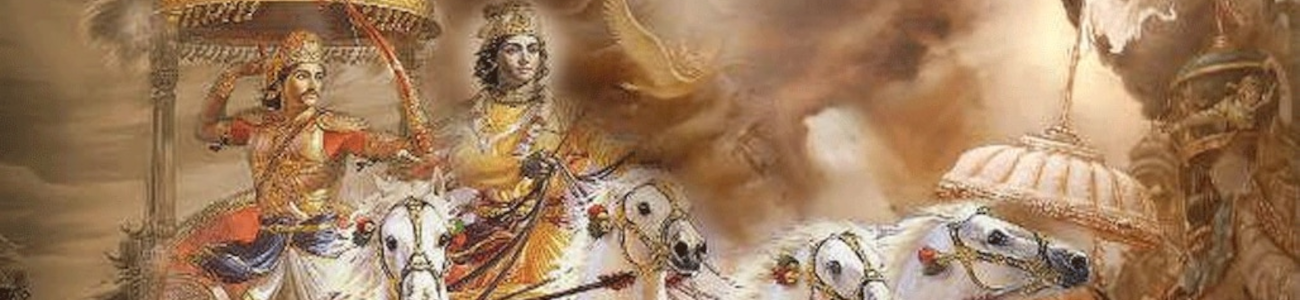
The Bhagavad Gita, often called the "Song of God," is a 700-verse sacred Hindu scripture embedded within the ancient Indian epic, the Mahabharata. It is a philosophical dialogue between the warrior Arjuna and his charioteer, the god Krishna, offering profound guidance on duty, ethics, and spiritual liberation.
Chapter 1: Arjuna Vishada Yoga
Arjuna's despair on the battlefield.
Verse #1
सञ्जय उवाच दृष्ट्वा तु |
पाण्डवानीकम् व्यूढम् दुर्योधनः तदा आचार्यम् |
उपसङ्गम्य राजा वचनम् अब्रवीत् ||
sañjaya uvāca dṛṣṭvā tu |
pāṇḍavānīkam vyūḍham duryodhanaḥ tadā ācāryam |
upasaṅgamya rājā vacanam abravīt ||
sanjaya uvaca dstva tu |
panavanikam vyuham duryodhana tada acaryam |
upasangamya raja vacanam abravit ||
Sanjaya said: Having seen the army of the Pandavas drawn up in battle array, King Duryodhana then approached his teacher (Drona) and spoke these words.
Verse #2
पश्य एताम् पाण्डुपुत्राणाम् आचार्य महतीम् चमूम् |
व्यूढाम् द्रुपदपुत्रेण तव शिष्येण धीमता ||
paśya etām pāṇḍuputrāṇām ācārya mahatīm camūm |
vyūḍhām drupadaputreṇa tava śiṣyeṇa dhīmatā ||
pasya etam panuputranam acarya mahatim camum |
vyuham drupadaputrena tava sisyena dhimata ||
Behold, O Teacher! this mighty army of the sons of Pandu, arrayed by the son of Drupada, thy wise disciple.
Verse #3
अत्र शूरा महेष्वासा भीमार्जुनसमा युधि युयुधानः |
विराटः च द्रुपदः च महारथः ||
atra śūrā maheṣvāsā bhīmārjunasamā yudhi yuyudhānaḥ |
virāṭaḥ ca drupadaḥ ca mahārathaḥ ||
atra sura mahesvasa bhimarjunasama yudhi yuyudhana |
virata ca drupada ca maharatha ||
Here are heroes, mighty archers, equal in battle to Bhima and Arjuna, Yuyudhana, Virata and Drupada, each commanding eleven-thousand archers.
Verse #4
धृष्टकेतुः च चेकितानः काशिराजः च वीर्यवान् |
पुरुजित् कुन्तिभोजः च शैब्यः च नरपुङ्गवः ||
dhṛṣṭaketuḥ ca cekitānaḥ kāśirājaḥ ca vīryavān |
purujit kuntibhojaḥ ca śaibyaḥ ca narapuṅgavaḥ ||
dhstaketu ca cekitana kasiraja ca viryavan |
purujit kuntibhoja ca saibya ca narapungava ||
Dhrishtaketu, Chekitana, and the valiant king of Kashi, Purujit and Kuntibhoja and Saibya, the best of men.
Verse #5
युधामन्युः च विक्रान्तः उत्तमौजाः च वीर्यवान् |
सौभद्रः द्रौपदेयाः च सर्वे एव महारथाः ||
yudhāmanyuḥ ca vikrāntaḥ uttamaujāḥ ca vīryavān |
saubhadraḥ draupadeyāḥ ca sarve eva mahārathāḥ ||
yudhamanyu ca vikranta uttamauja ca viryavan |
saubhadra draupadeya ca sarve eva maharatha ||
The strong Yudhamanyu and the brave Uttamaujas, the son of Subhadra and the sons of Draupadi, all of them, divisional commanders.
Verse #6
अस्माकं तु विशिष्टा ये तान् निबोध द्विजोत्तम |
नायका मम सैन्यस्य संज्ञार्थं तान् ब्रवीमि ते ||
asmākaṃ tu viśiṣṭā ye tān nibodha dvijottama |
nāyakā mama sainyasya saṃjñārthaṃ tān bravīmi te ||
asmaka tu visista ye tan nibodha dvijottama |
nayaka mama sainyasya sajnartha tan bravimi te ||
Know also, O best among the twice-born, the names of those who are the most distinguished amongst ourselves, the leaders of my army; these I name to thee for thy information.
Verse #7
भवान् भीष्मः च कर्णः च कृपः च समिति-इञ्जयः |
अश्वत्थामा विकर्णः च सौमदत्तिः तथा एव च ||
bhavān bhīṣmaḥ ca karṇaḥ ca kṛpaḥ ca samitiñjayaḥ |
aśvatthāmā vikarṇaḥ ca saumadattiḥ tathā eva ca ||
bhavan bhisma ca karna ca kpa ca samitinjaya |
asvatthama vikarna ca saumadatti tatha eva ca ||
Yourself and Bishma, and Karna and also Kripa, the victorious in war; Aswatthama, Vikarna and so also the son of Somadatta.
Verse #8
अन्ये च बहवः शूराः मदर्थे |
त्यक्तजीविताः नानाशस्त्रप्रहरणाः सर्वे युद्धविशारदाः ||
anye ca bahavaḥ śūrāḥ madarthe |
tyaktajīvitāḥ nānāśastrapraharaṇāḥ sarve yuddhaviśāradāḥ ||
anye ca bahava sura madarthe |
tyaktajivita nanasastrapraharana sarve yuddhavisarada ||
And many other heroes also who are determined to give up their lives for my sake, armed with various weapons and missiles, all well-skilled in battle.
Verse #9
अपर्याप्तं तत् अस्माकं बलं भीष्म-अभिरक्षितम् पर्याप्तं |
तु इदम् एतेषां बलं भीम-अभिरक्षितम् ||
aparyāptaṃ tat asmākaṃ balaṃ bhīṣma-abhirakṣitam paryāptaṃ |
tu idam eteṣāṃ balaṃ bhīma-abhirakṣitam ||
aparyapta tat asmaka bala bhisma-abhiraksitam paryapta |
tu idam etesa bala bhima-abhiraksitam ||
This army of ours defended by Bhishma is insufficient, whereas that army of theirs defended by Bhima is sufficient. Or, This army of ours protected by Bhishma is unlimited, whereas that army of theirs protected by Bhima is limited.
Verse #10
अयनेषु च सर्वेषु यथाभागम् अवस्थिताः भीष्मम् |
एव अभिरक्षन्तु भवन्तः सर्व एव हि ||
ayaneṣu ca sarveṣu yathābhāgam avasthitāḥ bhīṣmam |
eva abhirakṣantu bhavantaḥ sarva eva hi ||
ayanesu ca sarvesu yathabhagam avasthita bhismam |
eva abhiraksantu bhavanta sarva eva hi ||
Therefore do you all, stationed in your respective positions in the several divisions of the army, protect Bhishma alone.
Verse #11
तस्य सञ्जनयन् हर्षं कुरुवृद्धः पितामहः सिंहनादं |
विनद्य उच्चैः शङ्खं दध्मौ प्रतापवान् ||
tasya sañjanayan harṣaṃ kuruvṛddhaḥ pitāmahaḥ siṃhanādaṃ |
vinadya uccaiḥ śaṅkhaṃ dadhmau pratāpavān ||
tasya sanjanayan harsa kuruvddha pitamaha sihanada |
vinadya uccai sankha dadhmau pratapavan ||
His glorious grandsire (Bhishma) , the oldest of the Kauravas, in order to cheer Duryodhana, now sounded aloud a lion's roar and blew his conch.
Verse #12
ततः शङ्खाः च भेर्यः च पणव-आनक-गोमुखाः सहसा |
एव अभ्यहन्यन्त स शब्दः तुमुलः अभवत् ||
tataḥ śaṅkhāḥ ca bheryaḥ ca paṇava-ānaka-gomukhāḥ sahasā |
eva abhyahanyanta sa śabdaḥ tumulaḥ abhavat ||
tata sankha ca bherya ca panava-anaka-gomukha sahasa |
eva abhyahanyanta sa sabda tumula abhavat ||
Then (following Bhishma) , conches and kettle-drums, tabors, drums and cow-horns blared forth quite suddenly and the sound was tremendous.
Verse #13
ततः श्वेतैः हयैः युक्ते महति स्यन्दने स्थितौ |
माधवः पाण्डवः च एव दिव्यौ शङ्खौ प्रदध्मतुः ||
tataḥ śvetaiḥ hayaiḥ yukte mahati syandane sthitau |
mādhavaḥ pāṇḍavaḥ ca eva divyau śaṅkhau pradadhmatuḥ ||
tata svetai hayai yukte mahati syandane sthitau |
madhava panava ca eva divyau sankhau pradadhmatu ||
Then, also Madhava and the son of Pandu, seated in their magnificent chariot yoked with white horses, blew their divine conches.
Verse #14
पाञ्चजन्यं हृषीकेशः देवदत्तं धनञ्जयः पौण्ड्रं |
दध्मौ महाशङ्खं भीमकर्मा वृकोदरः ||
pāñcajanyaṃ hṛṣīkeśaḥ devadattaṃ dhanañjayaḥ pauṇḍraṃ |
dadhmau mahāśaṅkhaṃ bhīmakarmā vṛkodaraḥ ||
pancajanya hsikesa devadatta dhananjaya paunra |
dadhmau mahasankha bhimakarma vkodara ||
Hrishikesha blew the Panchajanya and Dhananjaya (Arjuna) blew the Devadatta and Vrikodara (Bhima) , the doer of terrible deeds, blew the great conch, named Paundra.
Verse #15
अनन्तविजयं राजा कुन्तीपुत्रः युधिष्ठिरः |
नकुलः सहदेवः च सुघोषमणिपुष्पकौ ||
anantavijayam rājā kuntīputraḥ yudhiṣṭhiraḥ |
nakulaḥ sahadevaḥ ca sughoṣamaṇipuṣpakau ||
anantavijayam raja kuntiputra yudhisthira |
nakula sahadeva ca sughosamanipuspakau ||
King Yudhisthira, the son of Kunti, blew the Anantavijaya; Nakula and Sahadeva blew the Sughosha and the Manipushpaka.
Verse #16
काश्यः च परमेष्वासः शिखण्डी च महारथः |
धृष्टद्युम्नः विराटः च सात्यकिः च अपराजितः ||
kāśyaḥ ca parameṣvāsaḥ śikhaṇḍī ca mahārathaḥ |
dhṛṣṭadyumnaḥ virāṭaḥ ca sātyakiḥ ca aparājitaḥ ||
kasya ca paramesvasa sikhani ca maharatha |
dhstadyumna virata ca satyaki ca aparajita ||
The king of Kashi, an excellent archer, Shikhandi, the mighty commander of eleven thousand archers, Dhristadyumna and Virata and Satyaki, the unconquered;
Verse #17
द्रुपदः द्रौपदेयाः च सर्वशः पृथिवीपते सौभद्रः |
च महाबाहुः शङ्खान् दध्मुः पृथक् पृथक् ||
drupadaḥ draupadeyāḥ ca sarvaśaḥ pṛthivīpate saubhadraḥ |
ca mahābāhuḥ śaṅkhān dadhmuḥ pṛthak pṛthak ||
drupada draupadeya ca sarvasa pthivipate saubhadra |
ca mahabahu sankhan dadhmu pthak pthak ||
Drupada and the sons of Draupadi, O Lord of the Earth, and the son of Subhadra, the mighty armed, blew their respective conches.
Verse #18
स घोषः धार्तराष्ट्राणाम् हृदयानि व्यदारयत् नभः |
च पृथिवीम् च एव तुमुलः अभ्यनुनादयन् ||
sa ghoṣaḥ dhārtarāṣṭrāṇām hṛdayāni vyadārayat nabhaḥ |
ca pṛthivīm ca eva tumulaḥ abhyanunādayan ||
sa ghosa dhartarastranam hdayani vyadarayat nabha |
ca pthivim ca eva tumula abhyanunadayan ||
That tumultuous sound rent the hearts of (the people of) Dhritarashtra's party and made both heaven and earth reverberate.
Verse #19
अथ व्यवस्थितान् दृष्ट्वा धार्तराष्ट्रान् कपिध्वजः |
प्रवृत्ते शस्त्रसम्पाते धनुः उद्यम्य पाण्डवः हृषीकेशं |
तदा वाक्यम् इदम् आह महीपते ||
atha vyavasthitān dṛṣṭvā dhārtarāṣṭrān kapidhvajaḥ |
pravṛtte śastrasampāte dhanuḥ udyamya pāṇḍavaḥ hṛṣīkeśaṃ |
tadā vākyam idam āha mahīpate ||
atha vyavasthitan dstva dhartarastran kapidhvaja |
pravtte sastrasampate dhanu udyamya panava hsikesa |
tada vakyam idam aha mahipate ||
Then, seeing the people of Dhritarashtra's party standing arrayed and the discharge of weapons about to begin, Arjuna, the son of Pandu, whose ensign was a monkey, took up his bow and said these words to Krishna (Hrishikesha) , O Lord of the Earth!
Verse #20
अर्जुन उवाच सेनयोः उभयोः मध्ये |
रथं स्थापय मे अच्युत ||
arjuna uvāca senayoḥ ubhayor madhye |
rathaṃ sthāpaya me acyuta ||
arjuna uvaca senayo ubhayor madhye |
ratha sthapaya me acyuta ||
Arjuna said: In the midst of the two armies, place my chariot, O Achyuta, that I may behold those who stand here desirous of fighting and, on the eve of this battle, let me know with whom I must fight.
Verse #21
यावत् एतान् निरीक्षे अहम् योद्धुकामान् अवस्थितान् |
कैः मया सह योद्धव्यम् अस्मिन् रणसमुद्यमे ||
yāvat etān nirīkṣe aham yoddhukāmān avasthitān |
kaiḥ mayā saha yoddhavyam asmin raṇasamudyame ||
yavat etan nirikse aham yoddhukaman avasthitan |
kai maya saha yoddhavyam asmin ranasamudyame ||
In the midst of the two armies, place my chariot, O Achyuta, that I may behold those who stand here desirous of fighting and, on the eve of this battle, let me know with whom I must fight.
Verse #22
योत्स्यमानान् अवेक्षे अहम् य एते अत्र |
समागताः धार्तराष्ट्रस्य दुर्बुद्धेः युद्धे प्रियचिकीर्षवः ||
yotsyamānān avekṣe aham ya ete atra |
samāgatāḥ dhārtarāṣṭrasya durbuddheḥ yuddhe priyacikīrṣavaḥ ||
yotsyamanan avekse aham ya ete atra |
samagata dhartarastrasya durbuddhe yuddhe priyacikirsava ||
For I desire to observe those who are assembled here for the fight, wishing to please in battle, the evil-minded sons of Dhritarashtra.
Verse #23
सञ्जय उवाच एवम् उक्तः |
हृषीकेशः गुडाकेशेन भारत सेनयोः |
उभयोः मध्ये स्थापयित्वा रथोत्तमम् ||
sañjaya uvāca evam uktaḥ |
hṛṣīkeśaḥ guḍākeśena bhārata senayoḥ |
ubhayor madhye sthāpayitvā rathottamam ||
sanjaya uvaca evam ukta |
hsikesa guakesena bharata senayo |
ubhayor madhye sthapayitva rathottamam ||
Sanjaya said: Thus addressed by Gudakesha, O Bharata, Hrishikesha, having stationed the best of chariots between the two armies;
Verse #24
भीष्म द्रोण प्रमुखतः सर्वेषाम् च महीक्षिताम् उवाच |
पार्थ पश्य एतान् समवेतान् कुरून् इति ||
bhīṣma droṇa pramukhataḥ sarveṣām ca mahīkṣitām uvāca |
pārtha paśya etān samavetān kurūn ||
bhisma drona pramukhata sarvesam ca mahiksitam uvaca |
partha pasya etan samavetan kurun ||
In front of Bhishma and Drona, and all the rulers of the earth, he said, O Partha, behold these Kurus gathered together.
Verse #25
तत्र अपश्यत् स्थितान् पार्थः पितॄन् अथ पितामहान् |
आचार्यान् मातुलान् भ्रातॄन् पुत्रान् पौत्रान् सखीन् तथा ||
tatra apaśyat sthitān pārthaḥ pitṝn atha pitāmahān |
ācāryān mātulān bhrātṝn putrān pautrān sakhīn tathā ||
tatra apasyat sthitan partha pitn atha pitamahan |
acaryan matulan bhratn putran pautran sakhin tatha ||
Then Partha saw stationed there in both the armies, fathers, grandfathers, teachers, maternal uncles, brothers, sons, grandsons and friends too.
Verse #26
श्वशुरान् सुहृदः च एव सेनयोः उभयोः अपि |
तान् समीक्ष्य स कौन्तेयः सर्वान् बन्धून् अवस्थितान् |
कृपया परया आविष्टः विषीदन् इदम् अब्रवीत् ||
śvaśurān suhṛdaḥ ca eva senayoḥ ubhayor api |
tān samīkṣya sa kaunteyaḥ sarvān bandhūn avasthitān |
kṛpayā parayā āviṣṭaḥ viṣīdan idam abravīt ||
svasuran suhda ca eva senayo ubhayor api |
tan samiksya sa kaunteya sarvan bandhun avasthitan |
kpaya paraya avista visidan idam abravit ||
(He saw) Fathers-in-law and friends also in both the armies. Then the son of Kunti, seeing all these kinsmen thus standing arrayed, spoke thus sorrowfully, filled with deep pity.
Verse #27
अर्जुन उवाच दृष्ट्वा इमं |
स्वजनं कृष्ण युयुत्सुम् समुपस्थितम् ||
arjuna uvāca dṛṣṭvā imaṃ |
svajanam kṛṣṇa yuyutsum samupasthitam ||
arjuna uvaca dstva ima |
svajanam ksna yuyutsum samupasthitam ||
Arjuna said: Seeing these my kinsmen, O Krishna, arrayed, eager to fight,
Verse #28
सीदन्ति मम गात्राणि मुखं च परिशुष्यति वेपथुः |
च शरीरे मे रोमहर्षः च जायते ||
sīdanti mama gātrāṇi mukhaṃ ca pariśuṣyati vepathuḥ |
ca śarīre me romaharṣaḥ ca jāyate ||
sidanti mama gatrani mukha ca parisusyati vepathu |
ca sarire me romaharsa ca jayate ||
My limbs fail and my mouth is parched, my body quivers and my hair stands on end.
Verse #29
गाण्डीवं स्रंसते हस्तात् त्वक् च एव परिदह्यते न |
च शक्नोमि अवस्थातुम् भ्रमति इव च मे मनः ||
gāṇḍīvam sraṃsate hastāt tvak ca eva paridahyate na |
ca śaknomi avasthātum bhramati iva ca me manaḥ ||
ganivam srasate hastat tvak ca eva paridahyate na |
ca saknomi avasthatum bhramati iva ca me mana ||
The Gandiva-bow slips from my hand, and my skin burns all over; I am also unable to stand and my mind is whirling round, as it were.
Verse #30
निमित्तानि च पश्यामि विपरीतानि केशव न |
च श्रेयः अनुपश्यामि हत्वा स्वजनम् आहवे ||
nimittāni ca paśyāmi viparītāni keśava na |
ca śreyaḥ anupaśyāmi hatvā svajanam āhave ||
nimittani ca pasyami viparitani kesava na |
ca sreya anupasyami hatva svajanam ahave ||
And I see adverse omens, O Keshava. Nor do I see any good in killing my kinsmen in battle.
Verse #31
न काङ्क्षे विजयम् कृष्ण न च राज्यम् सुखानि च |
किम् नः राज्येन गोविन्द किम् भोगैः जीवितेन वा ||
na kāṅkṣe vijayam kṛṣṇa na ca rājyam sukhāni ca |
kim naḥ rājyena govinda kim bhogaiḥ jīvitena vā ||
na kankse vijayam ksna na ca rajyam sukhani ca |
kim na rajyena govinda kim bhogai jivitena va ||
For, I desire not victory, O Krishna, nor kingdom, nor pleasures. Of what avail is dominion to us, O Govinda? Of what avail are pleasures or even life itself?
Verse #32
येषाम् अर्थे काङ्क्षितम् नः राज्यम् भोगाः सुखानि च |
ते इमे अवस्थिताः युद्धे प्राणान् त्यक्त्वा धनानि च ||
yeṣām arthe kāṅkṣitam naḥ rājyam bhogāḥ sukhāni ca |
te ime avasthitāḥ yuddhe prāṇān tyaktvā dhanāni ca ||
yesam arthe kanksitam na rajyam bhoga sukhani ca |
te ime avasthita yuddhe pranan tyaktva dhanani ca ||
They for whose sake we desire kingdom, enjoyment and pleasures stand here in battle, having renounced life and wealth.
Verse #33
आचार्याः पितरः पुत्राः तथा एव च पितामहाः |
मातुलाः श्वशुराः पौत्राः श्यालाः सम्बन्धिनः तथा ||
ācāryāḥ pitaraḥ putrāḥ tathā eva ca pitāmahāḥ |
mātulāḥ śvaśurāḥ pautrāḥ śyālāḥ sambandhinaḥ tathā ||
acarya pitara putra tatha eva ca pitamaha |
matula svasura pautra syala sambandhina tatha ||
Teachers, fathers, sons and also grandfathers, maternal uncles, fathers-in-law, grandsons, brothers-in-law and other relatives.
Verse #34
एतान् न हन्तुम् इच्छामि घ्नतः अपि मधुसूदन |
अपि त्रैलोक्यराज्यस्य हेतोः किं नु महीकृते ||
etān na hantum icchāmi ghnataḥ api madhusūdana |
api trailokyarājyasya hetoḥ kiṃ nu mahīkṛte ||
etan na hantum icchami ghnata api madhusudana |
api trailokyarajyasya heto ki nu mahikte ||
These I do not wish to kill, though they kill me, O Madhusudana, even for the sake of dominion over the three worlds; how much less for the sake of the earth.
Verse #35
निहत्य धार्तराष्ट्रान् नः का प्रीतिः स्यात् जनार्दन |
पापम् एव आश्रयेत् अस्मान् हत्वा एतान् आततायिनः ||
nihatya dhārtarāṣṭrān naḥ kā prītiḥ syāt janārdana |
pāpam eva āśrayet asmān hatvā etān ātatāyinaḥ ||
nihatya dhartarastran na ka priti syat janardana |
papam eva asrayet asman hatva etan atatayina ||
Killing these sons of Dhritarashtra, what pleasure can be ours, O Janardana? Sin alone will be our gain by killing these felons.
Verse #36
तस्मात् न अर्हाः वयम् हन्तुम् धार्तराष्ट्रान् स्वबान्धवान् |
स्वजनम् हि कथम् हत्वा सुखिनः स्याम माधव ||
tasmāt na arhāḥ vayam hantum dhārtarāṣṭrān svabāndhavān |
svajanam hi katham hatvā sukhinaḥ syāma mādhava ||
tasmat na arha vayam hantum dhartarastran svabandhavan |
svajanam hi katham hatva sukhina syama madhava ||
Therefore we shall not kill the sons of Dhritarashtra, our relatives; for how can we be happy by killing our own people, O Madhava?
Verse #37
यद्यपि एते न पश्यन्ति लोभोपहतचेतसः |
कुलक्षयकृतं दोषं मित्रद्रोहे च पातकम् ||
yadyapi ete na paśyanti lobhopahatacetasaḥ |
kulakṣayakṛtaṃ doṣaṃ mitradrohe ca pātakam ||
yadyapi ete na pasyanti lobhopahatacetasa |
kulaksayakta dosa mitradrohe ca patakam ||
Though these, with their intelligence clouded by greed, see no evil in the destruction of the families in the society, and no sin in their cruelty to friends; . . .
Verse #38
कथं न ज्ञेयम् अस्माभिः पापात् अस्मात् |
निवर्तितुम् कुलक्षयकृतम् दोषम् प्रपश्यद्भिः जनार्दन ||
kathaṃ na jñeyam asmābhiḥ pāpāt asmāt |
nivartitum kulakṣayakṛtam doṣam prapaśyadbhiḥ janārdana ||
katha na jneyam asmabhi papat asmat |
nivartitum kulaksayaktam dosam prapasyadbhi janardana ||
Why should not we, who clearly see evil in the destruction of the family-units, learn to turn away from this sin, O Janardana?
Verse #39
कुलक्षये प्रणश्यन्ति कुलधर्माः सनातनाः धर्मे नष्टे |
कुलं कृत्स्नम् अधर्मः अभिभवति उत ||
kulakṣaye praṇaśyanti kuladharmāḥ sanātanāḥ dharme naṣṭe |
kulaṃ kṛtsnam adharmaḥ abhibhavati uta ||
kulaksaye pranasyanti kuladharma sanatana dharme naste |
kula ktsnam adharma abhibhavati uta ||
In the destruction of a family, the immemorial religious rites of that family perish; on the destruction of spirituality, impiety overcomes the whole family.
Verse #40
अधर्माभिभवात् कृष्ण प्रदुष्यन्ति कुलस्त्रियः स्त्रीषु |
दुष्टासु वार्ष्णेय जायते वर्णसङ्करः ||
adharmābhibhavāt kṛṣṇa praduṣyanti kulastriyaḥ strīṣu |
duṣṭāsu vārṣṇeya jāyate varṇasaṅkaraḥ ||
adharmabhibhavat ksna pradusyanti kulastriya strisu |
dustasu varsneya jayate varnasankara ||
By the prevalence of impiety, O Krishna, the women of the family become corrupt; and women being corrupted, O descendent of the Vrishni-clan, there arises intermingling of castes (VARNA-SAMKARA) .
Verse #41
सङ्करः नरकाय एव कुलघ्नानाम् कुलस्य च |
पतन्ति पितरः हि एषाम् लुप्तपिण्डोदकक्रियाः ||
saṅkaraḥ narakāya eva kulaghnānām kulasya ca |
patanti pitaraḥ hi eṣām luptapiṇḍodakakriyāḥ ||
sankara narakaya eva kulaghnanam kulasya ca |
patanti pitara hi esam luptapinodakakriya ||
Confusion of castes leads the slayer of the family to hell; for their forefathers fall, deprived of the offerings of PINDA (rice-ball) and water (libations) .
Verse #42
दोषैः एतैः कुलघ्नानाम् वर्णसङ्करकारकैः उत्साद्यन्ते |
जातिधर्माः कुलधर्माः च शाश्वताः ||
doṣaiḥ etaiḥ kulaghnānām varṇasaṅkarakārakaiḥ utsādyante |
jātidharmāḥ kuladharmāḥ ca śāśvatāḥ ||
dosai etai kulaghnanam varnasankarakarakai utsadyante |
jatidharma kuladharma ca sasvata ||
By these evil deeds of the destroyers of the family, which cause confusion of castes, the eternal religious rites of the caste and the family are destroyed.
Verse #43
उत्सन्नकुलधर्माणां मनुष्याणां जनार्दन नरके |
नियतं वासः भवतीति अनुशुश्रुम ||
utsannakuladharmāṇām manuṣyāṇām janārdana narake |
niyatam vāsaḥ bhavatīti anuśuśruma ||
utsannakuladharmanam manusyanam janardana narake |
niyatam vasa bhavatiti anususruma ||
We have heard, O Janardana, that it is inevitable for those men, in whose families the religious practices have been destroyed, to dwell in hell for an unknown period of time.
Verse #44
अहो बत महत् पापं कर्तुं व्यवसिता |
वयम् यत् राज्यसुखलोभेन हन्तुं स्वजनम् उद्यताः ||
aho bata mahat pāpaṃ kartuṃ vyavasitā |
vayam yat rājyasukhalobhena hantuṃ svajanam udyatāḥ ||
aho bata mahat papa kartu vyavasita |
vayam yat rajyasukhalobhena hantu svajanam udyata ||
Alas! We are involved in a great sin, in that we are prepared to kill our kinsmen, from greed for the pleasures of the kingdom.
Verse #45
यदि माम् अप्रतीकारम् अशस्त्रं शस्त्रपाणयः धार्तराष्ट्राः |
रणे हन्युः तत् मे क्षेमतरं भवेत् ||
yadi mām apratīkāram aśastram śastrapāṇayaḥ dhārtarāṣṭrāḥ |
raṇe hanyuḥ tat me kṣemataraṃ bhavet ||
yadi mam apratikaram asastram sastrapanaya dhartarastra |
rane hanyu tat me ksematara bhavet ||
If the sons of Dhritarashtra, weapons-in-hand, slay me in battle, unresisting and unarmed, that would be better for me.
Verse #46
सञ्जय |
उवाच |
एवम् |
उक्त्वा |
अर्जुनः |
सङ्ख्ये रथोपस्थे उपाविशत् विसृज्य सशरम् चापम् शोकसंविग्नमानसः ||
sañjaya |
uvāca |
evam |
uktvā |
arjunaḥ |
saṅkhye rathopasthe upāviśat visṛjya saśaram cāpam śokasaṃvignamānasaḥ ||
sanjaya |
uvaca |
evam |
uktva |
arjuna |
sankhye rathopasthe upavisat visjya sasaram capam sokasavignamanasa ||
Sanjaya said: Having thus spoken in the midst of the battle-field, Arjuna sat down on the seat of the chariot, casting away his bow and arrow, with a mind distressed with sorrow.<br><br>Thus in the Upanishads of the glorious Bhagavad Gita, the science of the Eternal, the scripture of Yoga, the dialogue between Sri Krishna and Arjuna, ends the first discourse entitled "The Yoga of Arjuna's Despondency."
Verse #47
धृतराष्ट्र उवाच धर्मक्षेत्रे कुरुक्षेत्रे |
समवेताः युयुत्सवः मामकाः पाण्डवाः च |
एव किम् अकुर्वत सञ्जय ||
dhṛtarāṣṭra uvāca dharmakṣetre kurukṣetre |
samavetāḥ yuyutsavaḥ māmakāḥ pāṇḍavāḥ ca |
eva kim akurvata sañjaya ||
dhtarastra uvaca dharmaksetre kuruksetre |
samaveta yuyutsava mamaka panava ca |
eva kim akurvata sanjaya ||
Dhritarashtra said: What did the sons of Pandu and also my people do when, desirous to fight, they assembled together on the holy plain of Kurukshetra, O Sanjaya?
Commentary:
Samsiddhi is Moksha (perfection or liberation). Janaka, (Asvapati) and. others had perfect knowledge of the Self, and yet they performed actions in order to set an example to the masses. They worked for the guidance of men
Commentary:
Samsiddhi is Moksha (perfection or liberation). Janaka, (Asvapati) and. others had perfect knowledge of the Self, and yet they performed actions in order to set an example to the masses. They worked for the guidance of men