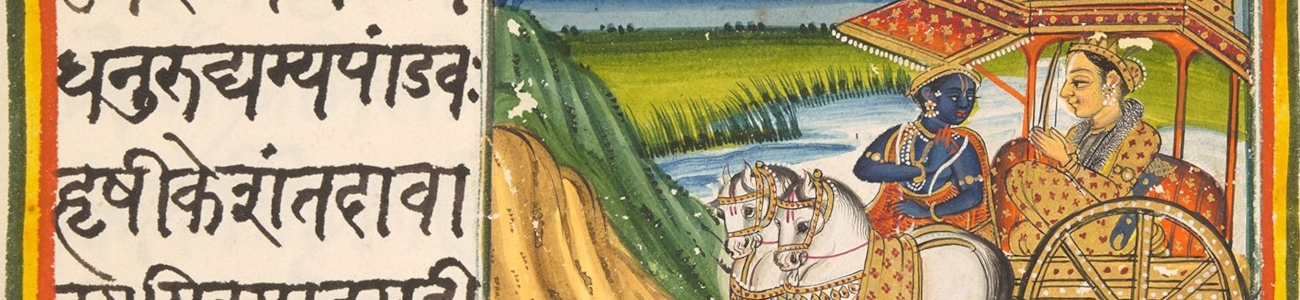
Author: Sri Swami Shivananda
Dedicated to Bhagavan Vyasa and Lord Krishna Avatara of Lord Vishnu Flute-Bearer of Vrindavana Joy of Devaki, Beloved of Radho Redeemer of the Fallen
Chapter 12: MEDITATION ON THE GITA
Verse #1
श्रीगीताध्यान ||
श्रीगीताध्यान ||
ShaRaGaTaThhaYaNa ||
MEDITATION ON THE GITA
Verse #2
ॐ पार्थाय प्रतिबोधितां भगवता नारायणेन स्वयम् |
व्यासेन ग्रथितां पुराणमुनिना मध्ये महाभारतम् । |
अद्वैतामृतवर्षिणीं भगवतीमष्टादशाध्यायिनीम् |
अम्ब त्वामनुसन्दधामि भगवद्गीते भवद्वेषिणीम् ॥२॥ ||
oṃ pārthāya प्रतिबोधितां भगवता नारायणेन svayam |
व्यासेन ग्रथितां पुराणमुनिना madhye महाभारतम् । |
अद्वैतामृतवर्षिणीं भगवतीमष्टादशाध्यायिनीम् |
अम्ब त्वामनुसन्दधामि भगवद्गीते भवद्वेषिणीम् ॥२॥ ||
o parthaya PaRaTaBThhaTa BhaGaVaTa NaRaYaNaeNa svayam |
VaYaSaNa GaRaThaTa PaRaNaeMaNaNa madhye MaHaBhaRaTaMa . |
aThaVaTaMaTaVaRaShhaNae BhaGaVaTaMaShhaTaThaShaThhaYaYaNaMa |
aMaB TaVaMaNaSaNaThaThhaMa BhaGaVaThaGaTa BhaVaThaVaShhaNaeMa  ||
Om (the monosyllable indicative of the Supreme Brahman), पार्थाय प्रतिबोधिताम् with which Partha (Arjuna) was illumined, भगवता by the Lord, नारायणेन by Narayana, स्वयम् Himself, व्यासेन by Vyasa, ग्रथिताम् composed, पुराणमुनिना by the ancient Muni, मध्येमहाभारतम् in the midst of Mahabharata, अद्वैतामृतवर्षिणीम् the showerer of the nectar of Advaita, भगवतीम् the Divine Mother, अष्टादशाध्यायिनीम् in the form of eighteen chapters, अम्ब affectionate Mother, त्वाम् Thee, अनुसन्दधामि I meditate, भगवद्गीते O Bhagavad Gita, भवद्वेषिणीम् destroyer of rebirth.
1. Om, O Bhagavad Gita, with which Partha (Arjuna) was illumined by Lord Narayana Himself and which was composed in the middle of the Mahabharata by the ancient sage Vyasa, O Divine Mother, the destroyer of rebirth, the showerer of the nectar of Advaita (teaching on the Oneness of all things) and consisting of eighteen chapters—upon Thee, O Bhagavad Gita! O affectionate mother! I meditate.
1. Om, O Bhagavad Gita, with which Partha (Arjuna) was illumined by Lord Narayana Himself and which was composed in the middle of the Mahabharata by the ancient sage Vyasa, O Divine Mother, the destroyer of rebirth, the showerer of the nectar of Advaita (teaching on the Oneness of all things) and consisting of eighteen chapters—upon Thee, O Bhagavad Gita! O affectionate mother! I meditate.
Verse #3
नमोऽस्तु ते व्यास विशालबुद्धे फुल्लारविन्दायतपत्ने |
येन त्वया भारततैलपूर्ण : प्रज्वालितो ज्ञानमयः प्रदीपः ॥२॥ ||
नमोऽस्तु te vyāsa विशालबुद्धे फुल्लारविन्दायतपत्ने |
yena tvayā भारततैलपूर्ण : प्रज्वालितो jñānamayaḥ प्रदीपः ॥२॥ ||
NaMaSaTa te vyasa VaShaLBThaThha FaLLRaVaNaThaYaTaPaTaNa |
yena tvaya BhaRaTaTaLPaRaNae : PaRaJaVaLTa jnanamaya PaRaThaPa  ||
नमः. salutation, अस्तु be, ते unto thee, व्यास (O) Vyasa, विशालबुद्धे 0 broad intellect, फुल्लारविन्दायतपत्रनेत्र with eyes like the petals of a full-blown lotus, येन by which, त्वया by thee, भारततैलपूर्णः full of the oil of the Mahabharata, प्रज्वालितः lighted, ज्ञानमयः consisting of wisdom, प्रदीपः lamp.
2. Salutations unto thee, O Vyasa of broad intellect and with eyes like the petals of full-blown lotus, by whom the lamp of knowledge, filled with the oil of the Mahabharata, has been lighted.
2. Salutations unto thee, O Vyasa of broad intellect and with eyes like the petals of full-blown lotus, by whom the lamp of knowledge, filled with the oil of the Mahabharata, has been lighted.
Verse #4
प्रपन्नपारिजाताय तोत्रवेत्रैकपाणये । |
ज्ञाममुद्राय कृष्णाय गीतामृतदुहे नमः ॥३॥ ||
प्रपन्नपारिजाताय तोत्रवेत्रैकपाणये । |
ज्ञाममुद्राय kṛṣṇāya गीतामृतदुहे namaḥ ॥३॥ ||
PaRaPaNaNaPaRaJaTaYa TaTaRaVaTaRaKaPaNaeYa . |
JaNiaMaMaThaRaYa ksnaya GaTaMaTaThaHa nama  ||
प्रपन्नपारिजाताय the Parijata, or the Kalpataru, the bestower of
all desires, for those who take refuge in Him, तोत्रवेत्रैकपाणये who
holds a whip in one hand, ज्ञानमुद्राय the holder of knowledge-
symbol, कृष्णाय to Krishna, गीतामृतदुहे the milker of the Gita
Nectar, नमः salutation.
3. Salutations to Krishna, the Parijata tree or the Kalpataru or
the bestower of all desires for those who take refuge in Him, the
holder of the whip in one hand, the wielder of the symbol of
knowledge, and the milker of the nectar of the Bhagavad Gita.
all desires, for those who take refuge in Him, तोत्रवेत्रैकपाणये who
holds a whip in one hand, ज्ञानमुद्राय the holder of knowledge-
symbol, कृष्णाय to Krishna, गीतामृतदुहे the milker of the Gita
Nectar, नमः salutation.
3. Salutations to Krishna, the Parijata tree or the Kalpataru or
the bestower of all desires for those who take refuge in Him, the
holder of the whip in one hand, the wielder of the symbol of
knowledge, and the milker of the nectar of the Bhagavad Gita.
Verse #5
सर्वोपनिषदो गावो दोग्धा गोपालनन्दनः । |
पार्थो वत्सः सुधीर्भोक्ता दुग्धं गीतामृतं महत् ॥४॥ ||
सर्वोपनिषदो गावो दोग्धा गोपालनन्दनः । | पार्थो वत्सः सुधीर्भोक्ता दुग्धं गीतामृतं महत् ॥४॥ ||
SaRaVaPaNaShhaTha GaVa ThaGaThha GaPaLNaNaThaNa . |
PaRaTha VaTaSa SaThhaRaBhaKaTa ThaGaThha GaTaMaTa MaHaTa  ||
सर्वोपनिषदः all the Upanishads, गावः the cows, दोग्धा the
milker, गोपालनन्दनः Krishna, the cowherd boy, पार्थः Arjuna, वत्सः
the calf, सुधीः (man) of purified intellect, भोक्ता the drinker, दुग्धम्
the milk, गीता Gita, अमृतम् nectar, महत् the great.
4. All the Upanishads are the cows; the Milker is Krishna, the cowherd-boy; Partha (Arjuna) is the calf; men of purified intellect are the drinkers, the milk is the great nectar of the Gita.
milker, गोपालनन्दनः Krishna, the cowherd boy, पार्थः Arjuna, वत्सः
the calf, सुधीः (man) of purified intellect, भोक्ता the drinker, दुग्धम्
the milk, गीता Gita, अमृतम् nectar, महत् the great.
4. All the Upanishads are the cows; the Milker is Krishna, the cowherd-boy; Partha (Arjuna) is the calf; men of purified intellect are the drinkers, the milk is the great nectar of the Gita.
Verse #6
वसुदेवसुतं देवं कंसचाणूरमर्दनम् । |
देवकीपरमानन्दं कृष्णं वन्दे जगद्गुरुम् ॥५॥ ||
वसुदेवसुतं देवं कंसचाणूरमर्दनम् । | देवकीपरमानन्दं kṛṣṇam वन्दे जगद्गुरुम् ॥५॥ ||
VaSaThaVaSaTa ThaVa KaSaCaNaeRaMaRaThaNaMa . |
ThaVaKaPaRaMaNaNaTha ksnam VaNaTha JaGaThaGaRaMa  ||
वसुदेवसुतम् the son of Vasudeva, देवम् God, कंसचाणूरमर्दनम् the
destroyer of Kamsa and Chanura, देवकीपरमानन्दम् the Supreme
bliss of Devaki (mother of Krishna), कृष्णम् to Krishna, वन्दे 1
salute, जगद्गुरुम् the world-teacher.
5. I salute Lord Krishna, the world-teacher, the son of
Vasudeva, the destroyer of Kamsa and Chanura, the supreme bliss
of Devaki.
destroyer of Kamsa and Chanura, देवकीपरमानन्दम् the Supreme
bliss of Devaki (mother of Krishna), कृष्णम् to Krishna, वन्दे 1
salute, जगद्गुरुम् the world-teacher.
5. I salute Lord Krishna, the world-teacher, the son of
Vasudeva, the destroyer of Kamsa and Chanura, the supreme bliss
of Devaki.
Verse #7
भीष्मद्रोणतटा जयद्रथजला गान्धारनीलोत्पला |
शल्यग्राहवती कृपेण वहनी कर्णेन वेलाकुला । |
अश्वत्थामविकर्णघोरमकरा दुर्योधनावर्तिनी |
सोत्तीर्णा खलु पाण्डवै रणनदी कैवर्तकः केशवः ॥६॥ ||
भीष्मद्रोणतटा जयद्रथजला गान्धारनीलोत्पला |
शल्यग्राहवती कृपेण वहनी कर्णेन वेलाकुला । |
अश्वत्थामविकर्णघोरमकरा दुर्योधनावर्तिनी |
सोत्तीर्णा khalu पाण्डवै रणनदी कैवर्तकः केशवः ..6.. ||
BhaShhaMaThaRaNaeTaTa JaYaThaRaThaJaL GaNaThhaRaNaLTaPaL |
ShaLYaGaRaHaVaTa KaPaNae VaHaNa KaRaNaeNa VaLKaL . |
aShaVaTaThaMaVaKaRaNaeGhaRaMaKaRa ThaRaYaThhaNaVaRaTaNa |
SaTaTaRaNae khalu PaNaeDaVa RaNaeNaTha KaVaRaTaKa KaShaVa ..6.. ||
भीष्मद्रोणतटा with Bhishma and Drona as the banks, जयद्रथजला
with Jayadratha as the water, गान्धारनीलोत्पला with the king of
Gandhara as the blue water-lily, शल्यग्राहवती with Salya as the
crocodile, कृपेण वहनी with Kripa as the current, कर्णेन वेलाकुला with
Karna as the billow, अश्वत्थामविकर्णघोरमकरा with Asvatthama and
Vikarna as terrible alligators, दुर्योधनावर्तिनी with Duryodhana as
the whirlpool, 3: that, उत्तीर्णा crossed over, खलु indeed, पाण्डवैः by
Pandavas, रणनदी the battle-river, कैवर्तकः the helmsman, केशवः
Kesava (Krishna).
6. With Kesava as the helmsman, verily was crossed by the
Pandavas, the battle-river whose banks were Bhishma and Drona,
whose water was Jayadratha, whose blue lotus was the king of
Gandhara, whose crocodile was Salya, whose current was Kripa,
whose billow was Karna, whose terrible alligators were
Asvatthama and Vikarna, whose whirlpool was Duryodhana.
with Jayadratha as the water, गान्धारनीलोत्पला with the king of
Gandhara as the blue water-lily, शल्यग्राहवती with Salya as the
crocodile, कृपेण वहनी with Kripa as the current, कर्णेन वेलाकुला with
Karna as the billow, अश्वत्थामविकर्णघोरमकरा with Asvatthama and
Vikarna as terrible alligators, दुर्योधनावर्तिनी with Duryodhana as
the whirlpool, 3: that, उत्तीर्णा crossed over, खलु indeed, पाण्डवैः by
Pandavas, रणनदी the battle-river, कैवर्तकः the helmsman, केशवः
Kesava (Krishna).
6. With Kesava as the helmsman, verily was crossed by the
Pandavas, the battle-river whose banks were Bhishma and Drona,
whose water was Jayadratha, whose blue lotus was the king of
Gandhara, whose crocodile was Salya, whose current was Kripa,
whose billow was Karna, whose terrible alligators were
Asvatthama and Vikarna, whose whirlpool was Duryodhana.
Verse #8
पाराशर्यवच:सरोजममलं गीतार्थगन्धोत्कटं |
नानाख्यानककेसरं हरिकथासम्बोधनाबोधितम् । |
लोके सज्जनषट्पदैरहरहः पेपीयमानं मुदा |
भूयाद्भारतपङ्कजं कलिमलप्रध्वंसिन: श्रेयसे ॥७॥ ||
पाराशर्यवच:सरोजममलं गीतार्थगन्धोत्कटं | नानाख्यानककेसरं हरिकथासम्बोधनाबोधितम् । | loke सज्जनषट्पदैरहरहः पेपीयमानं mudā | भूयाद्भारतपङ्कजं कलिमलप्रध्वंसिन: śreyase ॥७॥ ||
PaRaShaRaYaVaCa:SaRaJaMaMaL GaTaRaThaGaNaThhaTaKaTa |
NaNaKhaYaNaKaKaSaRa HaRaKaThaSaMaBThhaNaBThhaTaMa . |
loke SaJaJaNaShhaTaPaThaRaHaRaHa PaPaYaMaNa muda |
BhaYaThaBhaRaTaPaNaKaJa KaLMaLPaRaThhaVaSaNa: sreyase  ||
पाराशर्यवचःसरोजम् born in the lake of the words of the son of
Parasara (Vyasa), अमलम् spotless, गीतार्थगन्धोत्कटम् sweet with the
fragrance of the meaning of the Gita, नानाख्यानककेसरम् with many
stories as its stamens, हरिकथासम्बोधनाबोधितम्- fully opened by the
discourses on Hari, लोके in the world, सज्जनषटपदै : by the bees of
good men, अहरह: day by day, पेपीयमानम् drunk, मुदा joyously, भूयात्
may be, MANTA the lotus of the Mahabharata, कलिमलप्रध्वंसि the
destroyer of the dirt of Kali age, न: to us, श्रेयसे for the supreme
good.
7. May this lotus of the Mahabharata, born in the lake of the
words of Vyasa, sweet with the fragrance of the meaning of the
Gita, with many stories as its stamens, fully opened by the
discourses on Hari, the destroyer of the sins of the Kali age, and
drunk joyously by the bees of good men in the world, day by day,
become the bestower of good to us.
Parasara (Vyasa), अमलम् spotless, गीतार्थगन्धोत्कटम् sweet with the
fragrance of the meaning of the Gita, नानाख्यानककेसरम् with many
stories as its stamens, हरिकथासम्बोधनाबोधितम्- fully opened by the
discourses on Hari, लोके in the world, सज्जनषटपदै : by the bees of
good men, अहरह: day by day, पेपीयमानम् drunk, मुदा joyously, भूयात्
may be, MANTA the lotus of the Mahabharata, कलिमलप्रध्वंसि the
destroyer of the dirt of Kali age, न: to us, श्रेयसे for the supreme
good.
7. May this lotus of the Mahabharata, born in the lake of the
words of Vyasa, sweet with the fragrance of the meaning of the
Gita, with many stories as its stamens, fully opened by the
discourses on Hari, the destroyer of the sins of the Kali age, and
drunk joyously by the bees of good men in the world, day by day,
become the bestower of good to us.
Verse #9
मूकं करोति वाचालं wg लङ्कयते गिरिम् । |
यत्कृपा तमहं वन्दे परमानन्दमाधवम् ॥८॥ ||
मूकं karoti वाचालं wg लङ्कयते गिरिम् । | यत्कृपा तमहं वन्दे परमानन्दमाधवम् ॥८॥ ||
MaKa karoti VaCaL wg LNaKaYaTa GaRaMa . |
YaTaKaPa TaMaHa VaNaTha PaRaMaNaNaThaMaThhaVaMa  ||
मूकम् the dumb, करोति makes, वाचालम् eloquent, पङ्गुम् the cripple, लङ्घयते enables to climb, गिरिम् mountain, यत्कृप whose grace, तम् that, अहम् I, वन्दे salute, परमानन्दमाधवम् Madhava, the source of supreme Bliss.
8. I salute that Madhava, the source of supreme bliss, whose grace makes the dumb man eloquent and the cripple cross
mountains.
8. I salute that Madhava, the source of supreme bliss, whose grace makes the dumb man eloquent and the cripple cross
mountains.
Verse #10
यं ब्रह्मावरुणेनद्ररुद्रमरुतः स्तुन्वन्ति दिव्यैः स्तवै- |
वेदैः सांगपदक्रमोपनिषदैर्गायन्ति यं सामगाः | |
ध्यानावस्थिततदगतेन मनसा पश्यन्ति यं योगिनो |
यस्यान्तं न विदु > सुरासुरगणा देवाय तस्मै नमः ॥९॥ ||
yaṃ ब्रह्मावरुणेनद्ररुद्रमरुतः स्तुन्वन्ति दिव्यैः स्तवै- |
vedaiḥ सांगपदक्रमोपनिषदैर्गायन्ति yaṃ सामगाः | |
ध्यानावस्थिततदगतेन manasā paśyanti yaṃ योगिनो |
यस्यान्तं na विदु > सुरासुरगणा देवाय tasmai namaḥ ॥९॥ ||
ya BRaHaMaVaRaNaeNaThaRaRaThaRaMaRaTa SaTaNaVaNaTa ThaVaYa SaTaVa- |
vedai SaGaPaThaKaRaMaPaNaShhaThaRaGaYaNaTa ya SaMaGa | |
ThhaYaNaVaSaThaTaTaThaGaTaNa manasa pasyanti ya YaGaNa |
YaSaYaNaTa na VaTha > SaRaSaRaGaNae ThaVaYa tasmai nama  ||
यम् whom, ब्रह्मावरुणेन्द्ररुद्रमरुतः Brahma, Varuna, Indra, Rudra and Maruts, स्तुन्वन्ति praise, दिव्यैः divine, स्तवैः with hymns, वेदैः with the Vedas, सांगपदक्रमोपनिषदै : with their Angas in the Pada and Krama methods and by the Upanishads, गायन्ति sing, यम् whom, सामगा: the Sama-chanters, ध्यानावस्थिततद्गतेन मनसा with the mind absorbed in Him through meditation, पश्यन्ति see, यम् whom, योगिनः the Yogins, यस्य whose, अन्तम् end, 4 not, fag: know, सुरासुरगणाः the hosts of Devas and Asuras, देवाय to God, तस्मै that, नमः salutation.
9. Salutations to that God Whom Brahma, Varuna, Indra, Rudra and the Maruts praise with divine hymns, of Whom the Sama-chanters sing by the Vedas and their Angas, in the Pada and
the Krama methods, and by the Upanishads, Whom the Yogins see with their minds absorbed in Him through meditation, and Whose end the hosts of Devas and Asuras know not.
9. Salutations to that God Whom Brahma, Varuna, Indra, Rudra and the Maruts praise with divine hymns, of Whom the Sama-chanters sing by the Vedas and their Angas, in the Pada and
the Krama methods, and by the Upanishads, Whom the Yogins see with their minds absorbed in Him through meditation, and Whose end the hosts of Devas and Asuras know not.