Udaye Brahmasvarupoyam
Surya
Bhajan
उदयेudaye:
at sunrise ब्रह्मस्वरूपोऽयंbrahmasvarūpo'yaṃ: मध्याह्नेतुmadhyāhnetu:
at mid-noon; indeed महेश्वरम्Maheshwara:
maheśvaram । अस्तमानेastamāne:
at sunset स्वयंsvayaṃ:
himself विष्णुंviṣṇuṃ:
Vishnu त्रयीमूर्तिंtrayīmūrtiṃ:
embodiment of three forms (trayī:three | mūrtiṃ:form) दिवाकरम्divākaram: ॥
at sunrise ब्रह्मस्वरूपोऽयंbrahmasvarūpo'yaṃ: मध्याह्नेतुmadhyāhnetu:
at mid-noon; indeed महेश्वरम्Maheshwara:
maheśvaram । अस्तमानेastamāne:
at sunset स्वयंsvayaṃ:
himself विष्णुंviṣṇuṃ:
Vishnu त्रयीमूर्तिंtrayīmūrtiṃ:
embodiment of three forms (trayī:three | mūrtiṃ:form) दिवाकरम्divākaram: ॥
At sunrise, this (Sun) is in the form of Brahma; at noon indeed, (he becomes) Maheśvara; at sunset, he himself is Vishnu - (thus meditate on) the Sun who embodies the three divine forms (trimūrti).
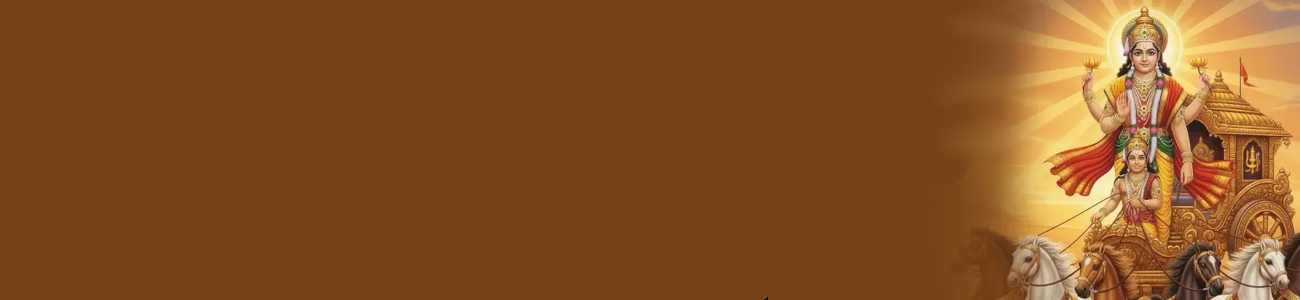
Lord Surya, also known as the Sun God, is a central figure in Hinduism, representing the source of light, life, and energy. He is revered as the sustainer of life and is often associated with health, vitality, and the dispelling of darkness and ignorance.
The verse describes how the Sun God (Surya) manifests as the three primary deities of the Hindu Trinity—the Trimurti—at different times of the day.
Sunrise (Brahma): At dawn, the Sun represents Brahma, the Creator. Just as Brahma brings the universe into being, the sunrise brings a new day and fresh life into the world.
Mid-noon (Maheshwara): At midday, the Sun's intensity is at its peak, representing Shiva (Maheshwara), the Transformer/Destroyer. This stage symbolizes the peak energy and the "destructive" heat required for various natural cycles.
Sunset (Vishnu): At dusk, the Sun takes the form of Vishnu, the Preserver. As the day ends, the world enters a period of rest and preservation.
Divākaram (The Sun): The Sun is referred to as "Divākara," the "maker of the day," who unites these three divine powers into one visible celestial body.
udaye brahmasvarūpo'yaṃ madhyāhnetu maheśvaram .
astamāne svayaṃ viṣṇuṃ trayīmūrtiṃ divākaram
Translations
| Sanskrit | English | Transliteration |
|---|---|---|
| उदये | at sunrise | udaye |
| ब्रह्मस्वरूपः अयम् | this one is in the form of Brahma (brahma:Brahma | svarūpaṃ:form) | brahmasvarūpo 'yaṃ |
| मध्याह्ने | at mid-noon | madhyāhne |
| तु | indeed | tu |
| महेश्वरम् | maheśvaram | Maheshwara |
| अस्तमाने | at sunset | astamāne |
| स्वयं | himself | svayaṃ |
| विष्णुं | Vishnu | viṣṇuṃ |
| त्रयीमूर्तिं | embodiment of three forms (trayī:three | mūrtiṃ:form) | trayīmūrtiṃ |
| दिवाकरम् | divākaram |