Shiva Aparadha Kshamapana Stotram
Shiva
Stotram
Adi Shankara
Sanskrit
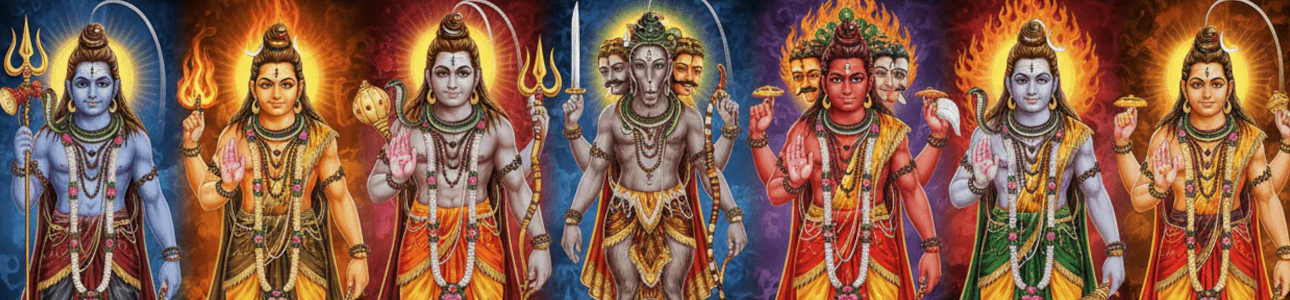
ādau karmaprasaṅgātkalayati kaluṣaṃ mātṛkukṣau sthitaṃ māṃ
viṇmūtrāmedhyamadhye kvathayati nitarāṃ jāṭharo jātavedāḥ .
yadyadvai tatra duḥkhaṃ vyathayati nitarāṃ śakyate kena vaktuṃ
kṣantavyo me'parādhaḥ śiva śiva śiva bho śrīmahādeva śambho .. 1..
bālye duḥkhātireko malalulitavapuḥ stanyapāne pipāsā
no śaktaścendriyebhyo bhavaguṇajanitāḥ jantavo māṃ tudanti .
nānārogādiduḥkhādrudanaparavaśaḥ śaṅkaraṃ na smarāmi
kṣantavyo me'parādhaḥ śiva śiva śiva bho śrīmahādeva śambho .. 2..
prauḍho'haṃ yauvanastho viṣayaviṣadharaiḥ pañcabhirmarmasandhau
daṣṭo naṣṭo vivekaḥ sutadhanayuvatisvādusaukhye niṣaṇṇaḥ .
śaivīcintāvihīnaṃ mama hṛdayamaho mānagarvādhirūḍhaṃ
kṣantavyo me'parādhaḥ śiva śiva śiva bho śrīmahādeva śambho .. 3..
vārdhakye cendriyāṇāṃ vigatagatimatiścādhidaivāditāpaiḥ
pāpai rogairviyogaistvanavasitavapuḥ prauḍhahīnaṃ ca dīnam .
mithyāmohābhilāṣairbhramati mama mano dhūrjaṭerdhyānaśūnyaṃ
kṣantavyo me'parādhaḥ śiva śiva śiva bho śrīmahādeva śambho .. 4..
snātvā pratyūṣakāle snapanavidhividhau nāhṛtaṃ gāṅgatoyaṃ
pūjārthaṃ vā kadācidbahutaragahanātkhaṇḍabilvīdalāni .
nānītā padmamālā sarasi vikasitā gandhadhūpaiḥ tvadarthaṃ
kṣantavyo me'parādhaḥ śiva śiva śiva bho śrīmahādeva śambho .. 5..
dugdhairmadhvājyayuktairdadhisitasahitaiḥ snāpitaṃ naiva liṅgaṃ
no liptaṃ candanādyaiḥ kanakaviracitaiḥ pūjitaṃ na prasūnaiḥ .
dhūpaiḥ karpūradīpairvividharasayutairnaiva bhakṣyopahāraiḥ
kṣantavyo me'parādhaḥ śiva śiva śiva bho śrīmahādeva śambho .. 6..
no śakyaṃ smārtakarma pratipadagahanapratyavāyākulākhyaṃ
śraute vārtā kathaṃ meme:
in dvijakulavihite brahmamārgānusāre . jñāto dharmo vicāraiḥ śravaṇamananayoḥ kiṃ nididhyāsitavyaṃ kṣantavyo me'parādhaḥ śiva śiva śiva bho śrīmahādeva śambho .. 7.. dhyātvā citte śivākhyaṃ pracurataradhanaṃ naiva dattaṃ dvijebhyo havyaṃ te lakṣasaṅkhyairhutavahavadane nārpitaṃ bījamantraiḥ . no taptaṃ gāṅgātīre vratajapaniyamaiḥ rudrajāpyairna vedaiḥ kṣantavyo me'parādhaḥ śiva śiva śiva bho śrīmahādeva śambho .. 8.. nagno niḥsaṅgaśuddhastriguṇavirahito dhvastamohāndhakāro nāsāgre nyastadṛṣṭirviditabhavaguṇo naiva dṛṣṭaḥ kadācit . unmanyā'vasthayā tvāṃ vigatakalimalaṃ śaṅkaraṃ na smarāmi kṣantavyo me'parādhaḥ śiva śiva śiva bho śrīmahādeva śambho .. 9.. sthitvā sthāne saroje praṇavamayamarutkumbhake (kuṇḍale) sūkṣmamārge śānte svānte pralīne prakaṭitavibhave jyotirūpe'parākhye . liṅgajñe brahmavākye sakalatanugataṃ śaṅkaraṃ na smarāmi kṣantavyo me'parādhaḥ śiva śiva śiva bho śrīmahādeva śambho .. 10.. hṛdyaṃ vedāntavedyaṃ hṛdayasarasije dīptamudyatprakāśaṃ satyaṃ śāntasvarūpaṃ sakalamunimanaḥpadmaṣaṇḍaikavedyam . jāgratsvapne suṣuptau triguṇavirahitaṃ śaṅkaraṃ na smarāmi kṣantavyo me'parādhaḥ śiva śiva śiva bho śrīmahādeva śambho .. 11.. candrodbhāsitaśekhare smarahare gaṅgādhare śaṅkare sarpairbhūṣitakaṇṭhakarṇavivare netrotthavaiśvānare . yugale dantitvakkṛtasundarāmbaradhare trailokyasāre hareHare:
O Hari (Vishnu) mokṣārthaṃ kuru cittavṛttimacalāmanyaistu kiṃ karmabhiḥ .. 12.. kiṃ vā'nena dhanena vājikaribhiḥ prāptena rājyena kiṃ kiṃ vā putrakalatramitrapaśubhirdehena gehena kim . jñātvaitatkṣaṇabhaṅguraṃ sapadi re tyājyaṃ mano dūrataḥ svātmārthaṃ guruvākyato bhaja mana śrīpārvatīvallabham .. 13.. paurohityaṃ rajanicaritaṃ grāmaṇītvaṃ niyogo māṭhāpatyaṃ hyanṛtavacanaṃ sākṣivādaḥ parānnam . brahmadveṣaḥ khalajanaratiḥ prāṇināṃ nirdayatvaṃ mā bhūdevaṃ mama paśupate janmajanmāntareṣu .. 14.. āyurnaśyati paśyatāṃ pratidinaṃ yāti kṣayaṃ yauvanaṃ pratyāyānti gatāḥ punarna divasāḥ kālo jagadbhakṣakaḥ . lakṣmīstoyataraṅgabhaṅgacapalā vidyuccalaṃ jīvitaṃ tasmāttvāṃ śaraṇāgataṃ śaraṇada tvaṃ rakṣa rakṣādhunā .. 15.. vande devamumāpatiṃ suraguruṃ vande jagatkāraṇaṃ vande pannagabhūṣaṇaṃ mṛgadharaṃ vande paśūnāṃ patim . vande sūryaśaśāṅkavahninayanaṃ vande mukundapriyaṃ vande bhaktajanāśrayaṃ ca varadaṃ vande śivaṃ śaṅkaram ..16.. gātraṃ bhasmasitaṃ sitaṃ ca hasitaṃ haste kapālaṃ sitaṃ khaṭvāṅgaṃ ca sitaṃ sitaśca vṛṣabhaḥ karṇe site kuṇḍale . gaṅgā phenasitā jaṭā paśupateścandraḥ sito mūrdhani so'yaṃ sarvasito dadātu vibhavaṃ pāpakṣayaṃ sarvadā .. 17.. karacaraṇakṛtaṃ vākkāyajaṃ karmajaṃ vā śravaṇanayanajaṃ vā mānasaṃ vā'parādham . vihitamavihitaṃ vā sarvametatkṣmasva śiva śiva karuṇābdhe śrīmahādeva śambho .. 18..
in dvijakulavihite brahmamārgānusāre . jñāto dharmo vicāraiḥ śravaṇamananayoḥ kiṃ nididhyāsitavyaṃ kṣantavyo me'parādhaḥ śiva śiva śiva bho śrīmahādeva śambho .. 7.. dhyātvā citte śivākhyaṃ pracurataradhanaṃ naiva dattaṃ dvijebhyo havyaṃ te lakṣasaṅkhyairhutavahavadane nārpitaṃ bījamantraiḥ . no taptaṃ gāṅgātīre vratajapaniyamaiḥ rudrajāpyairna vedaiḥ kṣantavyo me'parādhaḥ śiva śiva śiva bho śrīmahādeva śambho .. 8.. nagno niḥsaṅgaśuddhastriguṇavirahito dhvastamohāndhakāro nāsāgre nyastadṛṣṭirviditabhavaguṇo naiva dṛṣṭaḥ kadācit . unmanyā'vasthayā tvāṃ vigatakalimalaṃ śaṅkaraṃ na smarāmi kṣantavyo me'parādhaḥ śiva śiva śiva bho śrīmahādeva śambho .. 9.. sthitvā sthāne saroje praṇavamayamarutkumbhake (kuṇḍale) sūkṣmamārge śānte svānte pralīne prakaṭitavibhave jyotirūpe'parākhye . liṅgajñe brahmavākye sakalatanugataṃ śaṅkaraṃ na smarāmi kṣantavyo me'parādhaḥ śiva śiva śiva bho śrīmahādeva śambho .. 10.. hṛdyaṃ vedāntavedyaṃ hṛdayasarasije dīptamudyatprakāśaṃ satyaṃ śāntasvarūpaṃ sakalamunimanaḥpadmaṣaṇḍaikavedyam . jāgratsvapne suṣuptau triguṇavirahitaṃ śaṅkaraṃ na smarāmi kṣantavyo me'parādhaḥ śiva śiva śiva bho śrīmahādeva śambho .. 11.. candrodbhāsitaśekhare smarahare gaṅgādhare śaṅkare sarpairbhūṣitakaṇṭhakarṇavivare netrotthavaiśvānare . yugale dantitvakkṛtasundarāmbaradhare trailokyasāre hareHare:
O Hari (Vishnu) mokṣārthaṃ kuru cittavṛttimacalāmanyaistu kiṃ karmabhiḥ .. 12.. kiṃ vā'nena dhanena vājikaribhiḥ prāptena rājyena kiṃ kiṃ vā putrakalatramitrapaśubhirdehena gehena kim . jñātvaitatkṣaṇabhaṅguraṃ sapadi re tyājyaṃ mano dūrataḥ svātmārthaṃ guruvākyato bhaja mana śrīpārvatīvallabham .. 13.. paurohityaṃ rajanicaritaṃ grāmaṇītvaṃ niyogo māṭhāpatyaṃ hyanṛtavacanaṃ sākṣivādaḥ parānnam . brahmadveṣaḥ khalajanaratiḥ prāṇināṃ nirdayatvaṃ mā bhūdevaṃ mama paśupate janmajanmāntareṣu .. 14.. āyurnaśyati paśyatāṃ pratidinaṃ yāti kṣayaṃ yauvanaṃ pratyāyānti gatāḥ punarna divasāḥ kālo jagadbhakṣakaḥ . lakṣmīstoyataraṅgabhaṅgacapalā vidyuccalaṃ jīvitaṃ tasmāttvāṃ śaraṇāgataṃ śaraṇada tvaṃ rakṣa rakṣādhunā .. 15.. vande devamumāpatiṃ suraguruṃ vande jagatkāraṇaṃ vande pannagabhūṣaṇaṃ mṛgadharaṃ vande paśūnāṃ patim . vande sūryaśaśāṅkavahninayanaṃ vande mukundapriyaṃ vande bhaktajanāśrayaṃ ca varadaṃ vande śivaṃ śaṅkaram ..16.. gātraṃ bhasmasitaṃ sitaṃ ca hasitaṃ haste kapālaṃ sitaṃ khaṭvāṅgaṃ ca sitaṃ sitaśca vṛṣabhaḥ karṇe site kuṇḍale . gaṅgā phenasitā jaṭā paśupateścandraḥ sito mūrdhani so'yaṃ sarvasito dadātu vibhavaṃ pāpakṣayaṃ sarvadā .. 17.. karacaraṇakṛtaṃ vākkāyajaṃ karmajaṃ vā śravaṇanayanajaṃ vā mānasaṃ vā'parādham . vihitamavihitaṃ vā sarvametatkṣmasva śiva śiva karuṇābdhe śrīmahādeva śambho .. 18..
Even before I saw the light of this world, my sins from previous births,
Through which I passed because of desire for the fruit of my deeds,
Punished me as I lay in my mother’s womb.
There I was boiled in the midst of filthy things:
Who can describe the pain that afflicts the child in its mother’s womb?
Therefore, O Siva! O Mahadeva! O Sambhu! Forgive me, I pray, for my transgressions.
आदौ (ādau) – in the beginning; कर्मप्रसङ्गात् (karmaprasaṅgāt) – due to past actions (karma:actions | prasaṅgāt:due to); कलयति (kalayati) – considers; कलुषं (kaluṣaṃ) – impurity; मातृकुक्षौ (mātṛkukṣau) – in mother's womb (mātṛ:mother | kukṣau:in the womb); स्थितं (sthitaṃ) – situated; मां (māṃ) – me; विण्मूत्रामेध्यमध्ये (viṇmūtrāmedhyamadhye) – amidst filth and urine (viṇ:filth | mūtra:urine | amedhya:impurity | madhye:amidst); क्वथयति (kvathayati) – boils; नितरां (nitarāṃ) – excessively; जाठरः (jāṭharaḥ) – stomach; जातवेदाः (jātavedāḥ) – fire; यद्यद्वै (yadyadvai) – whatever indeed; तत्र (tatra) – there; दुःखं (duḥkhaṃ) – pain; व्यथयति (vyathayati) – afflicts; नितरां (nitarāṃ) – excessively; शक्यते (śakyate) – can be; केन (kena) – by whom; वक्तुं (vaktuṃ) – described; क्षन्तव्यः (kṣantavyaḥ) – to be forgiven; मे (me) – my; अपराधः (aparādhaḥ) – offense; शिव (śiva) – Shiva; शिव (śiva) – Shiva; शिव (śiva) – Shiva; भो (bho) – O; श्रीमहादेव (śrīmahādeva) – O great god (śrī:O | mahādeva:great god); शम्भो (śambho) – O Shambhu;
In childhood my suffering never came to an end;
My body was covered with filth and I craved for my mother’s breasts.
Over my body and limbs I had no control;
I was pursued by troublesome flies and mosquitoes;
Day and night I cried with the pain of many an ailment, forgetting thee, O Sankara!
Therefore, O Siva! O Mahadeva! O Sambhu! Forgive me, I pray, for my transgressions.
बाल्ये (bālye) – in childhood; दुःखातिरेकः (duḥkhātirekaḥ) – excess of suffering (duḥkha:suffering | atirekaḥ:excess); मललुलितवपुः (malalulitavapuḥ) – body covered with filth (mala:filth | lulita:covered | vapuḥ:body); स्तन्यपाने (stanyapāne) – in drinking milk (stanya:milk | pāne:in drinking); पिपासा (pipāsā) – thirst; न (na) – not; शक्तः (śaktaḥ) – capable; च (ca) – and; इन्द्रियेभ्यः (indriyebhyaḥ) – from the senses; भवगुणजनिताः (bhavaguṇajanitāḥ) – born of worldly qualities (bhava:worldly | guṇa:qualities | janitāḥ:born of); जन्तवः (jantavaḥ) – creatures; मां (māṃ) – me; तुदन्ति (tudanti) – torment; नानारोगादिदुःखात् (nānārogādiduḥkhāt) – from various diseases and pains (nānā:various | roga:diseases | ādi:and others | duḥkhāt:from pains); रुदनपरवशः (rudanaparavaśaḥ) – helpless due to crying (rudana:crying | paravaśaḥ:helpless); शङ्करं (śaṅkaraṃ) – Shankara; न (na) – not; स्मरामि (smarāmi) – remember; क्षन्तव्यः (kṣantavyaḥ) – to be forgiven; मे (me) – my; अपराधः (aparādhaḥ) – offense; शिव (śiva) – Shiva; शिव (śiva) – Shiva; शिव (śiva) – Shiva; भो (bho) – O; श्रीमहादेव (śrīmahādeva) – O great god (śrī:O | mahādeva:great god); शम्भो (śambho) – O Shambhu;
In youth the venomous snakes of sound, sight, taste, touch, and smell,
Bit into my vitals and slew my discrimination;
I was engrossed in the pleasures of wealth, sons, and a youthful wife.
Alas! My heart, bereft of the thought of Siva,
Was filled with arrogance and pride,
Therefore, O Siva! O Mahadeva! O Sambhu! Forgive me, I pray, for my transgressions.
प्रौढः (prauḍhaḥ) – mature; अहम् (aham) – I; यौवनस्थः (yauvanasthaḥ) – in youth; विषयविषधरैः (viṣayaviṣadharaiḥ) – by the venomous senses (viṣaya:senses | viṣadharaiḥ:by the venomous ones); पञ्चभिः (pañcabhiḥ) – by five; मर्मसन्धौ (marmasandhau) – in the vital spot (marma:vital | sandhau:in the spot); दष्टः (daṣṭaḥ) – bitten; नष्टः (naṣṭaḥ) – destroyed; विवेकः (vivekaḥ) – discrimination; सुतधनयुवतिस्वादुसौख्ये (sutadhanayuvatisvādusaukye) – in pleasures of wealth, sons, wife (suta:sons | dhana:wealth | yuvati:wife | svādu:sweet | saukye:in pleasures); निषण्णः (niṣaṇṇaḥ) – engrossed; शैवीचिन्ताविहीनम् (śaivīcintāvihīnam) – bereft of thought of Siva (śaivī:of Siva | cintā:thought | vihīnam:bereft of); मम (mama) – my; हृदयम् (hṛdayam) – heart; अहो (aho) – alas; मानगर्वाधिरूढम् (mānagarvādhirūḍham) – filled with arrogance and pride (māna:arrogance | garva:pride | adhirūḍham:filled with); क्षन्तव्यः (kṣantavyaḥ) – forgive; मे (me) – my; अपराधः (aparādhaḥ) – transgressions; शिव (śiva) – O Siva; शिव (śiva) – O Siva; शिव (śiva) – O Siva; भो (bho) – O; श्रीमहादेव (śrīmahādeva) – O Mahadeva (śrī:O | mahādeva:Mahadeva); शम्भो (śambho) – O Sambhu;
Now in old age my senses have lost the power of proper judging and acting;
My body, though still not wholly bereft of life,
Is weak and senile from many afflictions, from sins and illnesses and bereavements;
But even now my mind, instead of meditating on Siva,
Runs after vain desires and hollow delusions.
Therefore, O Siva! O Mahadeva! O Sambhu! Forgive me, I pray, for my transgressions.
वार्धक्ये (vārdhakye) – in old age; च (ca) – and; इन्द्रियाणां (indriyāṇāṃ) – of the senses; विगतगतिमतिः (vigatagatimatiḥ) – lost power of judging (vigata:lost | gati:movement | matiḥ:intellect); च (ca) – and; अधिदैवादितापैः (adhidaivāditāpaiḥ) – by divine afflictions (adhidaiva:divine | ādi:and others | tāpaiḥ:afflictions); पापैः (pāpaiḥ) – by sins; रोगैः (rogaiḥ) – by illnesses; वियोगैः (viyogaiḥ) – by separations; त्वनवसितवपुः (tvanavasitavapuḥ) – not wholly bereft of life (tva:not | avasita:bereft | vapuḥ:body); प्रौढहीनं (prauḍhahīnaṃ) – weak and senile (prauḍha:mature | hīnaṃ:deprived); च (ca) – and; दीनम् (dīnam) – miserable; मिथ्यामोहाभिलाषैः (mithyāmohābhilāṣaiḥ) – by vain desires (mithyā:false | moha:delusion | abhilāṣaiḥ:desires); भ्रमति (bhramati) – wanders; मम (mama) – my; मनः (manaḥ) – mind; धूर्जटेः (dhūrjaṭeḥ) – of Dhurjati (Shiva); ध्यानशून्यं (dhyānaśūnyaṃ) – devoid of meditation (dhyāna:meditation | śūnyaṃ:empty); क्षन्तव्यः (kṣantavyaḥ) – to be forgiven; मे (me) – my; अपराधः (aparādhaḥ) – offense; शिव (śiva) – Shiva; शिव (śiva) – Shiva; शिव (śiva) – Shiva; भो (bho) – O; श्रीमहादेव (śrīmahādeva) – O great god (śrī:revered | mahādeva:great god); शम्भो (śambho) – O Shambhu;
Not even once have I finished my bath before sunrise and brought from the Ganges
Water to bathe thy holy image;
Never, from the deep woods, have I brought the sacred vilwa leaves for thy worship;
Nor have I gathered full-blown lotuses from the lakes,
Nor ever arranged the lights and the incense for worshipping Thee.
Therefore, O Siva! O Mahadeva! O Sambhu! Forgive me, I pray, for my transgressions.
स्नात्वा (snātvā) – having bathed; प्रत्यूषकाले (pratyūṣakāle) – at dawn (pratyūṣa:dawn | kāle:at time); स्नपनविधिविधौ (snapanavidhividhau) – in the bathing ritual (snapana:bathing | vidhividhau:in the ritual); नाहृतं (nāhṛtaṃ) – not brought; गाङ्गतोयं (gāṅgatoyaṃ) – Ganges water (gāṅga:Ganges | toyaṃ:water); पूजार्थं (pūjārthaṃ) – for worship (pūjā:worship | arthaṃ:for); वा (vā) – or; कदाचित् (kadācit) – ever; बहुतरगहनात् (bahutaragahanāt) – from the deep woods (bahutara:deep | gahanāt:from woods); खण्डबिल्वीदलानि (khaṇḍabilvīdalāni) – sacred vilwa leaves (khaṇḍa:sacred | bilvī:vilwa | dalāni:leaves); नानीता (nānītā) – not gathered; पद्ममाला (padmamālā) – lotus garland (padma:lotus | mālā:garland); सरसि (sarasi) – in the lake; विकसिता (vikasitā) – bloomed; गन्धधूपैः (gandhadhūpaiḥ) – with incense (gandha:fragrance | dhūpaiḥ:with incense); त्वदर्थं (tvadarthaṃ) – for you (tvad:you | arthaṃ:for); क्षन्तव्यः (kṣantavyaḥ) – to be forgiven; मे (me) – my; अपराधः (aparādhaḥ) – offense; शिव (śiva) – Shiva; शिव (śiva) – Shiva; शिव (śiva) – Shiva; भो (bho) – O; श्रीमहादेव (śrīmahādeva) – O great god (śrī:O | mahādeva:great god); शम्भो (śambho) – O Shambhu;
I have not bathed thine image with milk and honey, with butter and other oblations;
I have not decked it with fragrant sandal paste;
I have not worshipped Thee with golden flowers, with incense, with camphor-flame and savoury offerings.
Therefore, O Siva! O Mahadeva! O Sambhu! Forgive me, I pray, for my transgressions.
दुग्धैः (dugdhaiḥ) – with milk; मधु (madhu) – honey; आज्य (ājya) – ghee; युक्तैः (yuktaiḥ) – combined with; दधि (dadhi) – curd; सित (sita) – sugar; सहितैः (sahitaiḥ) – along with; स्नापितं (snāpitaṃ) – bathed; न (na) – not; एव (eva) – indeed; लिङ्गं (liṅgaṃ) – image; न (na) – not; लिप्तं (liptaṃ) – smeared; चन्दन (candana) – sandalwood; आद्यैः (ādyaiḥ) – and others; कनक (kanaka) – gold; विरचितैः (viracitaiḥ) – made of; पूजितं (pūjitaṃ) – worshipped; न (na) – not; प्रसूनैः (prasūnaiḥ) – with flowers; धूपैः (dhūpaiḥ) – with incense; कर्पूर (karpūra) – camphor; दीपैः (dīpaiḥ) – with lamps; विविध (vividha) – various; रस (rasa) – juices; युतैः (yutaiḥ) – combined with; न (na) – not; एव (eva) – indeed; भक्ष्य (bhakṣya) – edibles; उपहारैः (upahāraiḥ) – offerings; क्षन्तव्यः (kṣantavyaḥ) – to be forgiven; मे (me) – my; अपराधः (aparādhaḥ) – offense; शिव (śiva) – Shiva; शिव (śiva) – Shiva; शिव (śiva) – Shiva; भो (bho) – O; श्रीमहादेव (śrīmahādeva) – O Great God (śrī:revered | mahādeva:Great God); शम्भो (śambho) – O Shambhu;
Unable I am to observe the complex rules of Dharma daily,
Unable I am to follow the rules of Veda as told by Brahmins,
Unable I am to know Dharma by listening to Vedas and meditating,
And so what is the use of daily learning all these.
Therefore, O Siva! O Mahadeva! O Sambhu! Forgive me, I pray, for my transgressions.
नो (no) – not; शक्यं (śakyaṃ) – possible; स्मार्तकर्म (smārtakarma) – ritualistic duties (smārta:ritualistic | karma:duties); प्रतिपदगहनप्रत्यवायाकुलाख्यं (pratipadagahanapratyavāyākulākhyaṃ) – complex and error-prone (pratipada:step-by-step | gahana:complex | pratyavāya:error | ākula:prone | ākhyaṃ:known as); श्रौते (śraute) – Vedic; वार्ता (vārtā) – news; कथं (kathaṃ) – how; मे (me) – my; द्विजकुलविहिते (dvijakulavihite) – prescribed by Brahmins (dvija:Brahmin | kula:family | vihite:prescribed); ब्रह्ममार्गानुसारे (brahmamārgānusāre) – following the path of Brahman (brahma:Brahman | mārga:path | anusāre:following); ज्ञातो (jñāto) – known; धर्मो (dharmaḥ) – dharma; विचारैः (vicāraiḥ) – by thoughts; श्रवणमननयोः (śravaṇamananayoḥ) – by hearing and reflection (śravaṇa:hearing | manana:reflection | yoḥ:by); किं (kiṃ) – what; निदिध्यासितव्यं (nididhyāsitavyaṃ) – to be meditated upon; क्षन्तव्यो (kṣantavyo) – to be forgiven; मेऽपराधः (me'parādhaḥ) – my transgressions (me:my | aparādhaḥ:transgressions); शिव (śiva) – Shiva; शिव (śiva) – Shiva; शिव (śiva) – Shiva; भो (bho) – O; श्रीमहादेव (śrīmahādeva) – O great god (śrī:O | mahādeva:great god); शम्भो (śambho) – O Shambhu;
I have not made rich gifts to the Brahmins, cherishing in my heart,
O Mahadeva, thy sacred form;
I have not made in the sacred fire the million oblations of butter,
Repeating the holy mantra given to me by my guru;
Never have I done penance along the Ganges with japa and study of the Vedas.
Therefore, O Siva! O Mahadeva! O Sambhu! Forgive me, I pray, for my transgressions.
ध्यात्वा (dhyātvā) – having meditated; चित्ते (citte) – in the mind; शिवाख्यं (śivākhyaṃ) – named Shiva (śiva:Shiva | ākhyam:named); प्रचुरतरधनं (pracurataradhanaṃ) – abundant wealth (pracurataram:abundant | dhanam:wealth); नैव (naiva) – not even; दत्तं (dattaṃ) – given; द्विजेभ्यो (dvijebhyo) – to the Brahmins; हव्यं (havyaṃ) – oblations; ते (te) – your; लक्षसङ्ख्यैः (lakṣasaṅkhyaiḥ) – by hundreds of thousands (lakṣa:hundred thousand | saṅkhyaiḥ:by numbers); हुतवहवदने (hutavahavadane) – in the fire's mouth (hutavaha:fire | vadane:in the mouth); नार्पितं (nārpitaṃ) – not offered; बीजमन्त्रैः (bījamantraiḥ) – with seed mantras (bīja:seed | mantraiḥ:with mantras); नो (no) – not; तप्तं (taptaṃ) – performed penance; गाङ्गातीरे (gāṅgātīre) – on the Ganges' bank (gāṅga:Ganges | tīre:on the bank); व्रतजपनियमैः (vrajapaniyamaiḥ) – with vows and chants (vrata:vows | japa:chants | niyamaiḥ:with disciplines); रुद्रजाप्यैः (rudrajāpyaiḥ) – with Rudra chants (rudra:Rudra | jāpyaiḥ:with chants); न (na) – not; वेदैः (vedaiḥ) – with Vedas; क्षन्तव्यः (kṣantavyaḥ) – to be forgiven; मे (me) – my; अपराधः (aparādhaḥ) – offense; शिव (śiva) – O Shiva; शिव (śiva) – O Shiva; शिव (śiva) – O Shiva; भो (bho) – O; श्रीमहादेव (śrīmahādeva) – O great god (śrī:O | mahādeva:great god); शम्भो (śambho) – O Shambhu;
Never, O Siva! have I seen Thee, the Pure, the Unattached, the Naked One,
Beyond the three gunas, free from delusion and darkness, absorbed in meditation,
And ever aware of the true nature of the world;
Nor, with a longing heart, have I meditated on Thine auspicious and sin-destroying form.
Therefore, O Siva! O Mahadeva! O Sambhu! Forgive me, I pray, for my transgressions.
नग्नः (nagno) – naked; निःसङ्गशुद्धः (niḥsaṅgaśuddhaḥ) – pure and unattached (niḥsaṅga:unattached | śuddhaḥ:pure); त्रिगुणविरहितः (triguṇavirahitaḥ) – beyond the three gunas (tri:three | guṇa:qualities | virahitaḥ:devoid of); ध्वस्तमोहान्धकारः (dhvastamohāndhakāraḥ) – free from delusion and darkness (dhvasta:destroyed | moha:delusion | andhakāraḥ:darkness); नासाग्रे (nāsāgre) – at the tip of the nose (nāsā:nose | agre:at the tip); न्यस्तदृष्टिः (nyastadṛṣṭiḥ) – gaze fixed (nyasta:placed | dṛṣṭiḥ:gaze); विदितभवगुणः (viditabhavaguṇaḥ) – aware of the world's nature (vidita:known | bhava:world | guṇaḥ:qualities); नैव (naiva) – never; दृष्टः (dṛṣṭaḥ) – seen; कदाचित् (kadācit) – ever; उन्मन्याऽवस्थया (unmanyā'vasthayā) – absorbed in meditation (unmanyā:meditative state | avasthayā:by the state); त्वाम् (tvām) – you; विगतकलिमलम् (vigatakalimalaṃ) – free from sin (vigata:gone | kali:sin | malaṃ:impurity); शङ्करम् (śaṅkaram) – Shankara; न (na) – not; स्मरामि (smarāmi) – I remember; क्षन्तव्यः (kṣantavyaḥ) – to be forgiven; मेऽपराधः (me'parādhaḥ) – my transgressions (me:my | aparādhaḥ:transgressions); शिव (śiva) – Shiva; शिव (śiva) – Shiva; शिव (śiva) – Shiva; भो (bho) – O; श्रीमहादेव (śrīmahādeva) – O great god (śrī:revered | mahādeva:great god); शम्भो (śambho) – O Shambhu;
I have not sat in the lotus posture, nor have I ever controlled
The prana along the Sushumna, repeating the syllable Om;
Never have I suppressed the turbulent waves of my mind, nor merged the self-effulgent Om
In the ever-shining Witness-Consciousness, whose nature is that of the highest Brahman;
Nor have I, in samadhi, meditated on Sankara, who dwells in every form as the inner guide.
Therefore, O Siva! O Mahadeva! O Sambhu! Forgive me, I pray, for my transgressions.
स्थित्वा (sthitvā) – having remained; स्थाने (sthāne) – in the place; सरोजे (saroje) – in the lotus; प्रणवमय (praṇavamaya) – consisting of Om (praṇava:Om | maya:consisting of); मरुत्कुम्भके (marutkumbhake) – in the breath retention (marut:breath | kumbhake:in retention); कुण्डले (kuṇḍale) – in the coiled energy; सूक्ष्ममार्गे (sūkṣmamārge) – in the subtle path (sūkṣma:subtle | mārge:in the path); शान्ते (śānte) – in the calm; स्वान्ते (svānte) – in the inner self; प्रलीने (pralīne) – merged; प्रकटितविभवे (prakaṭitavibhave) – manifested glory (prakaṭita:manifested | vibhave:glory); ज्योतिरूपे (jyotirūpe) – in the form of light (jyoti:light | rūpe:in the form); अपराख्ये (aparākhye) – of the other name; लिङ्गज्ञे (liṅgajñe) – knower of the symbol (liṅga:symbol | jñe:knower); ब्रह्मवाक्ये (brahmavākye) – in the words of Brahman (brahma:Brahman | vākye:in the words); सकलतनुगतम् (sakalatanugatam) – pervading all bodies (sakala:all | tanugatam:pervading bodies); शङ्करम् (śaṅkaram) – Shankara; न (na) – not; स्मरामि (smarāmi) – I remember; क्षन्तव्यः (kṣantavyaḥ) – to be forgiven; मे (me) – my; अपराधः (aparādhaḥ) – offense; शिव (śiva) – Shiva; शिव (śiva) – Shiva; शिव (śiva) – Shiva; भो (bho) – O; श्रीमहादेव (śrīmahādeva) – O great god (śrī:O | mahādeva:great god); शम्भो (śambho) – O Shambhu;
The One who resides in the lotus of the heart, known through Vedanta, shining forth with the brilliance of rising light, the embodiment of truth and peace, revered by the lotus-minds of all sages, beyond the three states of waking, dream, and deep sleep, and untouched by the three guṇas—I do not remember that Śaṅkara. Therefore, O Siva! O Mahadeva! O Sambhu! Forgive me, I pray, for my transgressions.
हृद्यं (hṛdyaṃ) – in the heart; वेदान्तवेद्यं (vedāntavedyaṃ) – known through Vedanta (vedānta:Vedanta | vedyaṃ:known); हृदयसरसिजे (hṛdayasarasije) – in the lotus of the heart (hṛdaya:heart | sarasije:in the lotus); दीप्तम् (dīptam) – shining forth; उद्यत्प्रकाशं (udyatprakāśaṃ) – with the brilliance of rising light (udyat:rising | prakāśaṃ:brilliance); सत्यं (satyaṃ) – truth; शान्तस्वरूपं (śāntasvarūpaṃ) – embodiment of peace (śānta:peace | svarūpaṃ:embodiment); सकलमुनिमनःपद्मषण्डैकवेद्यम् (sakalamunimanaḥpadmaṣaṇḍaikavedyam) – revered by all sages' lotus-minds (sakala:all | muni:sages | manaḥ:minds | padma:lotus | ṣaṇḍa:group | eka:one | vedyam:revered); जाग्रत्स्वप्ने (jāgratsvapne) – in waking and dream (jāgrat:waking | svapne:dream); सुषुप्तौ (suṣuptau) – in deep sleep; त्रिगुणविरहितं (triguṇavirahitaṃ) – beyond the three guṇas (tri:three | guṇa:qualities | virahitaṃ:beyond); शङ्करं (śaṅkaraṃ) – Śaṅkara; न (na) – not; स्मरामि (smarāmi) – I remember; क्षन्तव्यः (kṣantavyaḥ) – forgive; मे (me) – my; अपराधः (aparādhaḥ) – transgressions; शिव (śiva) – O Siva; शिव (śiva) – O Siva; शिव (śiva) – O Siva; भो (bho) – O; श्रीमहादेव (śrīmahādeva) – O Mahadeva (śrī:O | mahādeva:great god); शम्भो (śambho) – O Sambhu;
O mind, to gain liberation, concentrate wholly on Siva,
The sole reality underlying the worlds, the giver of good;
Whose head is illumined by the crescent moon and in whose hair the Ganges is hidden;
Whose fire-darting eyes consumed the god of earthly love; whose throat and ears are decked with snakes;
Whose upper garment is a comely elephant-skin.
Of what avail are all the other rituals?
चन्द्र (candra) – moon; उद्भासित (udbhāsita) – illuminated; शेखरे (śekhare) – on the head; स्मरहरे (smarahare) – destroyer of love (smara:love | hare:destroyer); गङ्गाधरे (gaṅgādhare) – bearer of the Ganges (gaṅgā:Ganges | dhare:bearer); शङ्करे (śaṅkare) – Shankara; सर्पैः (sarpaiḥ) – with snakes; भूषित (bhūṣita) – adorned; कण्ठ (kaṇṭha) – throat; कर्णविवरे (karṇavivare) – in the ear cavities (karṇa:ear | vivare:cavities); नेत्रोत्थ (netrottha) – arising from the eye (netra:eye | uttha:arising); वैश्वानरे (vaiśvānare) – universal fire; युगले (yugale) – in the pair; दन्तित्वक् (dantitvak) – elephant skin (danti:elephant | tvak:skin); कृत (kṛta) – made; सुन्दर (sundara) – beautiful; अम्बरधरे (ambaradhare) – wearer of garment (ambara:garment | dhare:wearer); त्रैलोक्यसारे (trailokyasāre) – essence of three worlds (trailokya:three worlds | sāre:essence); हरे (hare) – Hara; मोक्षार्थं (mokṣārthaṃ) – for liberation (mokṣa:liberation | arthaṃ:for); कुरु (kuru) – do; चित्तवृत्तिम् (cittavṛttim) – mind's activity (citta:mind | vṛttim:activity); अचलाम् (acalām) – steady; अन्यैः (anyaiḥ) – by others; तु (tu) – but; किं (kiṃ) – what; कर्मभिः (karmabhiḥ) – with actions;
O mind, of what are wealth or horses, elephants or a kingdom?
Of what avail the body or a house?
Know all these to be but momentary and quickly shun them;
Worship Siva, as your guru instructs you, for the attaining of Self-Knowledge.
किं (kiṃ) – what; वा (vā) – or; अनेन (anena) – with this; धनेन (dhanena) – with wealth; वाजिकरिभिः (vājikaribhiḥ) – with horses and elephants (vāji:horses | karibhiḥ:with elephants); प्राप्तेन (prāptena) – obtained; राज्येन (rājyena) – with kingdom; किं (kiṃ) – what; किं (kiṃ) – what; वा (vā) – or; पुत्रकलत्रमित्रपशुभिः (putrakalatramitrapaśubhiḥ) – with sons, wives, friends, cattle (putra:sons | kalatra:wives | mitra:friends | paśubhiḥ:with cattle); देहेन (dehena) – with body; गेहेन (gehena) – with house; किम् (kim) – what; ज्ञात्वा (jñātvā) – knowing; एतत् (etat) – this; क्षणभङ्गुरम् (kṣaṇabhaṅguram) – momentary and fragile (kṣaṇa:moment | bhaṅguram:fragile); सपदि (sapadi) – immediately; रे (re) – O; त्याज्यम् (tyājyam) – to be abandoned; मनो (mano) – mind; दूरतः (dūrataḥ) – from afar; स्वात्मार्थम् (svātmārtham) – for Self-Knowledge (sva:own | ātma:self | artham:for the purpose); गुरुवाक्यतः (guruvākyataḥ) – from guru's words (guru:guru | vākyataḥ:from words); भज (bhaja) – worship; मन (mana) – mind; श्रीपार्वतीवल्लभम् (śrīpārvatīvallabham) – consort of Śrī Pārvatī (śrī:Śrī | pārvatī:Pārvatī | vallabham:consort);
May these (the following) traits never arise in me in any birth, O Lord of Beings (Paśupati): performing priestly duties for material gain, nocturnal wanderings of questionable deeds, village leadership marked by dominance, attachment to institutional power, deceitful speech, false testimony, consumption of another’s food, enmity toward Brahman, delight in the company of the wicked, and cruelty toward living beings.
पौरोहित्यम् (paurohityam) – priestly duties; रजनिचरितम् (rajanicaritam) – nocturnal wanderings; ग्रामणीत्वम् (grāmaṇītvam) – village leadership; नियोगः (niyogaḥ) – institutional power; माठापत्यम् (māṭhāpatyam) – attachment to institutional power; हि (hi) – indeed; अनृतवचनम् (anṛtavacanam) – deceitful speech; साक्षिवादः (sākṣivādaḥ) – false testimony; परान्नम् (parānnam) – another’s food; ब्रह्मद्वेषः (brahmadveṣaḥ) – enmity toward Brahman (brahma:Brahman | dveṣaḥ:enmity); खलजनरतिः (khalajanaratiḥ) – delight in the company of the wicked (khala:wicked | jana:people | ratiḥ:delight); प्राणिनाम् (prāṇinām) – toward living beings; निर्दयत्वम् (nirdayatvam) – cruelty; मा (mā) – not; भूत् (bhūt) – arise; एवम् (evam) – thus; मम (mama) – my; पशुपते (paśupate) – O Lord of Beings; जन्मजन्मान्तरेषु (janmajanmāntareṣu) – in any birth (janma:birth | janmāntareṣu:in other births);
Day by day does man come nearer to death;
His youth wears away; the day that is gone never returns.
Almighty time devours everything;
Fickle as lightning is the goddess of fortune.
O Siva! O Giver of shelter to those that come to Thee for refuge!
Protect me, who have taken refuge at thy feet.
आयुः (āyuḥ) – life; नश्यति (naśyati) – perishes; पश्यतां (paśyatām) – of those who see; प्रतिदिनं (pratidinaṃ) – day by day; याति (yāti) – goes; क्षयम् (kṣayam) – to decay; यौवनं (yauvanaṃ) – youth; प्रत्यायान्ति (pratyāyānti) – return; गताः (gatāḥ) – gone; पुनः (punaḥ) – again; न (na) – not; दिवसाः (divasāḥ) – days; कालः (kālaḥ) – time; जगद्भक्षकः (jagadbhakṣakaḥ) – devourer of the world (jagat:world | bhakṣakaḥ:devourer); लक्ष्मीः (lakṣmīḥ) – fortune; तोयतरङ्गभङ्गचपला (toyataraṅgabhaṅgacapalā) – fickle as water waves (toya:water | taraṅga:waves | bhaṅga:breaking | capalā:fickle); विद्युत् (vidyut) – lightning; चलं (calaṃ) – fickle; जीवितं (jīvitaṃ) – life; तस्मात् (tasmāt) – therefore; त्वां (tvāṃ) – you; शरणागतं (śaraṇāgataṃ) – seeking refuge; शरणद (śaraṇada) – giver of refuge (śaraṇa:refuge | da:giver); त्वं (tvaṃ) – you; रक्ष (rakṣa) – protect; रक्षाधुना (rakṣādhunā) – protect now (rakṣa:protect | adhunā:now);
I salute the self-effulgent guru of the gods, the lord of Uma;
I salute the cause of the Universe
I salute the lord of beasts, adorned with snakes;
I salute Siva, whose three eyes shine like the sun, the moon, and fire;
I salute the beloved of Krishna; I salute Sankara, who bestows boons on His devotees and gives them shelter;
I salute the auspicious Siva.
वन्दे (vande) – I salute; देवम् (devam) – god; उमापतिम् (umāpatim) – lord of Uma (umā:Uma | patim:lord); सुरगुरुम् (suragurum) – guru of the gods (sura:gods | gurum:guru); वन्दे (vande) – I salute; जगत्कारणम् (jagatkāraṇam) – cause of the Universe (jagat:universe | kāraṇam:cause); वन्दे (vande) – I salute; पन्नगभूषणम् (pannagabhūṣaṇam) – adorned with snakes (pannaga:snakes | bhūṣaṇam:adorned); मृगधरम् (mṛgadharam) – holder of deer (mṛga:deer | dharam:holder); वन्दे (vande) – I salute; पशूनाम् (paśūnām) – of beasts; पतिम् (patim) – lord; वन्दे (vande) – I salute; सूर्यशशाङ्कवह्निनयनम् (sūryaśaśāṅkavahninayanam) – with sun, moon, fire eyes (sūrya:sun | śaśāṅka:moon | vahni:fire | nayanam:eyes); वन्दे (vande) – I salute; मुकुन्दप्रियम् (mukundapriyam) – beloved of Krishna (mukunda:Krishna | priyam:beloved); वन्दे (vande) – I salute; भक्तजनाश्रयम् (bhaktajanāśrayam) – shelter of devotees (bhakta:devotees | jana:people | āśrayam:shelter); च (ca) – and; वरदम् (varadam) – bestower of boons (vara:boon | dam:giver); वन्दे (vande) – I salute; शिवम् (śivam) – auspicious Siva; शङ्करम् (śaṅkaram) – Shankara;
O Siva! White is thy body, covered with ashes; white shine thy teeth when thou smilest!
White is the skull thou holdest in thy hand; white is thy club, which threatens the wicked!
White is the bull on which thou ridest; white are the rings that hang from thine ears!
White appear thy matted locks, covered with the foam of the Ganges;
White shines the moon on thy forehead!
May He who is all white, all pure, bestow on me the treasure of forgiveness for my transgressions!
गात्रं (gātraṃ) – body; भस्मसितं (bhasmasitaṃ) – covered with ashes (bhasma:ashes | sitaṃ:white); सितं (sitaṃ) – white; च (ca) – and; हसितं (hasitaṃ) – smile; हस्ते (haste) – in the hand; कपालं (kapālaṃ) – skull; सितं (sitaṃ) – white; खट्वाङ्गं (khaṭvāṅgaṃ) – club; च (ca) – and; सितं (sitaṃ) – white; सितः (sitaḥ) – white; च (ca) – and; वृषभः (vṛṣabhaḥ) – bull; कर्णे (karṇe) – in the ear; सिते (site) – white; कुण्डले (kuṇḍale) – earrings; गङ्गा (gaṅgā) – Ganges; फेनसिता (phenasitā) – foam-covered (phena:foam | sitā:white); जटा (jaṭā) – matted locks; पशुपतेः (paśupateḥ) – of Paśupati; चन्द्रः (candraḥ) – moon; सितः (sitaḥ) – white; मूर्धनि (mūrdhani) – on the forehead; सः (saḥ) – he; अयम् (ayam) – this; सर्वसितः (sarvasitaḥ) – all white (sarva:all | sitaḥ:white); ददातु (dadātu) – may give; विभवं (vibhavaṃ) – prosperity; पापक्षयं (pāpakṣayaṃ) – destruction of sins (pāpa:sins | kṣayaṃ:destruction); सर्वदा (sarvadā) – always;
.
O Lord Siva, kindly forgive all the wrong acts and omissions I have committed, whether I committed them knowingly or unknowingly, with my hands, feet, words, ears, eyes, or mind. Glory to you, Mahadeva, who is the ocean of kindness and compassion, and the cause of happiness.
करचरणकृतं (karacaraṇakṛtaṃ) – done by hands and feet (kara:hand | caraṇa:foot | kṛtaṃ:done); वाक्कायजं (vākkāyajaṃ) – born of speech and body (vāk:speech | kāya:body | jaṃ:born of); कर्मजं (karmajaṃ) – born of actions (karma:actions | jaṃ:born of); वा (vā) – or; श्रवणनयनजं (śravaṇanayanajaṃ) – born of ears and eyes (śravaṇa:ears | nayana:eyes | jaṃ:born of); वा (vā) – or; मानसं (mānasaṃ) – mental; वा (vā) – or; अपराधम् (aparādham) – offense; विहितम् (vihitam) – prescribed; अविहितं (avihitaṃ) – not prescribed; वा (vā) – or; सर्वम् (sarvam) – all; एतत् (etat) – this; क्ष्मस्व (kṣmasva) – forgive; शिव (śiva) – Shiva; शिव (śiva) – Shiva; करुणाब्धे (karuṇābdhe) – ocean of compassion (karuṇā:compassion | abdhi:ocean); श्रीमहादेव (śrīmahādeva) – glorious great god (śrī:glorious | mahādeva:great god); शम्भो (śambho) – Shambhu;
इति श्रीमद् शङ्कराचार्यकृत शिवापराधक्षमापणस्तोत्रं सम्पूर्णम् ॥
itiśrīmad śaṅkarācāryakṛta śivāparādhakṣamāpaṇastotraṃ sampūrṇam ..
Thus ends the Śivāparādhakṣamāpaṇa Stotram composed by the revered Śrī Śaṅkarācārya.
इति (iti) – thus; श्रीमद् (śrīmad) – revered; शङ्कराचार्यकृत (śaṅkarācāryakṛta) – composed by Śaṅkarācārya (śaṅkara:Śaṅkara | ācārya:teacher | kṛta:composed); शिवापराधक्षमापणस्तोत्रं (śivāparādhakṣamāpaṇastotraṃ) – Śivāparādhakṣamāpaṇa Stotram (śiva:Śiva | aparādha:offense | kṣamāpaṇa:forgiveness | stotraṃ:hymn); सम्पूर्णम् (sampūrṇam) – complete;